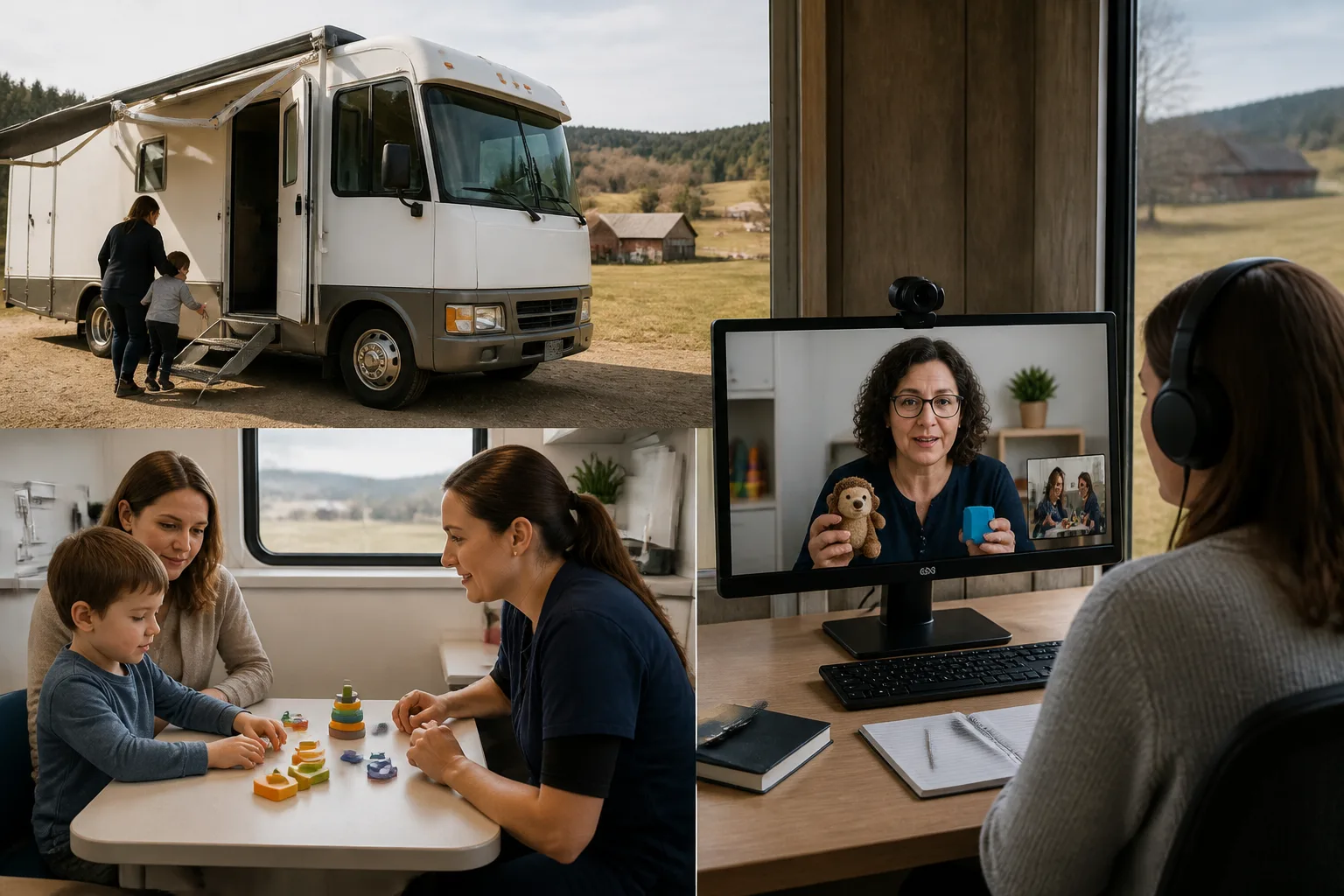
Mobile Clinics and Telehealth Show Promise for Autism Diagnosis in Rural Areas

Study Explores New Ways to Improve Autism Diagnosis Access in Rural Communities
Families living in rural areas often face significant challenges in obtaining timely autism diagnoses due to limited specialist availability, geographic isolation, and other barriers. A recent pilot study investigated two innovative approaches to address these issues: mobile clinics and telehealth assessments.
Key Findings from the Pilot Study
The study involved 30 children aged 1 to 14 years and their caregivers. Half of the children underwent autism evaluations through a mobile clinic that traveled to their communities, while the other half received assessments remotely via telehealth. Following diagnosis, caregivers of 28 children were randomized to either participate in psychoeducation sessions or receive printed educational materials designed to increase autism knowledge and empowerment.
Both mobile clinic and telehealth assessment methods demonstrated strong feasibility and high caregiver satisfaction. Importantly, caregivers who engaged in psychoeducation—regardless of whether it was delivered in person or through printed materials—showed significant improvements in autism knowledge and felt more empowered to advocate for their children. Statistical analysis indicated a meaningful increase in empowerment (η2 = .228, p = .002) and knowledge (η2 = .171, p = .015) after these interventions.
Context and Importance
Rural families frequently encounter delays in autism diagnosis due to scarcity of specialized providers and logistical challenges. By bringing diagnostic services directly to communities via mobile clinics or leveraging telehealth technology, these innovative approaches may reduce wait times and improve access to care. Additionally, enhancing caregiver education through psychoeducation supports families in understanding autism and navigating available resources.
Implications for Families and Providers
This study suggests that both mobile and telehealth platforms can be effective in delivering autism assessments in underserved rural settings. Furthermore, providing caregivers with targeted education appears to boost their confidence and ability to support their autistic children. These findings highlight the potential for expanding such models to improve equity in autism services.
Limitations and Considerations
As a pilot study with a relatively small sample size, these results are preliminary and should be interpreted with caution. Further research with larger populations and diverse rural regions is needed to confirm the effectiveness and scalability of these approaches.
For more detailed information, see the original study published in Practice Innovations at PubMed.
Download the images in this article