Skip to content
Love Beyond Words - autismwords.com Love Beyond Words - autismwords.com Love Beyond Words - autismwords.com

Supporting children with autism through education and care

Love Beyond Words - autismwords.com Love Beyond Words - autismwords.com Love Beyond Words - autismwords.com

Supporting children with autism through education and care

  • Learning & Support
    • Communication Skills
    • Daily Living Skills
    • Emotional Regulation
    • Everyday Challenges
    • Learning Through Play
    • Parent Education & Advocacy
    • Positive Behavior Support
    • Routines & Transitions
    • Social Skills
    • Speech & Language
  • Autism News & Perspectives
  • Hero News
  • Learning & Support
    • Communication Skills
    • Daily Living Skills
    • Emotional Regulation
    • Everyday Challenges
    • Learning Through Play
    • Parent Education & Advocacy
    • Positive Behavior Support
    • Routines & Transitions
    • Social Skills
    • Speech & Language
  • Autism News & Perspectives
  • Hero News
Close

Search

  • https://www.facebook.com/
  • https://twitter.com/
  • https://t.me/
  • https://www.instagram.com/
  • https://youtube.com/
Love Beyond Words - autismwords.com Love Beyond Words - autismwords.com Love Beyond Words - autismwords.com

Supporting children with autism through education and care

Love Beyond Words - autismwords.com Love Beyond Words - autismwords.com Love Beyond Words - autismwords.com

Supporting children with autism through education and care

  • Learning & Support
    • Communication Skills
    • Daily Living Skills
    • Emotional Regulation
    • Everyday Challenges
    • Learning Through Play
    • Parent Education & Advocacy
    • Positive Behavior Support
    • Routines & Transitions
    • Social Skills
    • Speech & Language
  • Autism News & Perspectives
  • Hero News
  • Learning & Support
    • Communication Skills
    • Daily Living Skills
    • Emotional Regulation
    • Everyday Challenges
    • Learning Through Play
    • Parent Education & Advocacy
    • Positive Behavior Support
    • Routines & Transitions
    • Social Skills
    • Speech & Language
  • Autism News & Perspectives
  • Hero News
Close

Search

  • https://www.facebook.com/
  • https://twitter.com/
  • https://t.me/
  • https://www.instagram.com/
  • https://youtube.com/
Home/Learning & Support/Emotional Regulation/Helping Young Children Understand and Manage Frustration
Helping Young Children Understand and Manage Frustration
Emotional Regulation

Helping Young Children Understand and Manage Frustration

By Kevin Hoang
September 5, 2026 3 Min Read
0

Frustration is a common and natural feeling young children experience when things don’t go as they want or expect. For autistic children and those who need extra emotional support, frustration can feel especially intense and hard to manage. Understanding what frustration feels like, recognizing the signs, and learning ways to cope can help children feel safer and more in control of their emotions.

What Is Frustration and How Might a Child Experience It?

Frustration happens when a child faces a challenge, a delay, or something that feels unfair or confusing. They might want to do something but find it too hard or get upset when things don’t work out. This feeling can build quickly and sometimes lead to tears, yelling, or shutting down.

Children might feel their body getting tense, their heart beating faster, or their hands clenching. They might say, “I can’t do it,” or show signs like stomping feet or avoiding the task.

Common Signs and Triggers of Frustration

  • Signs: Frowning, crying, yelling, pushing away toys, refusing to try, or withdrawing.
  • Triggers: Difficult tasks, unexpected changes, waiting too long, being told “no,” or sensory overload.

Practical Strategies to Support a Child Feeling Frustrated

Helping children manage frustration involves teaching them to recognize their feelings and use safe ways to cope. Here are some practical strategies:

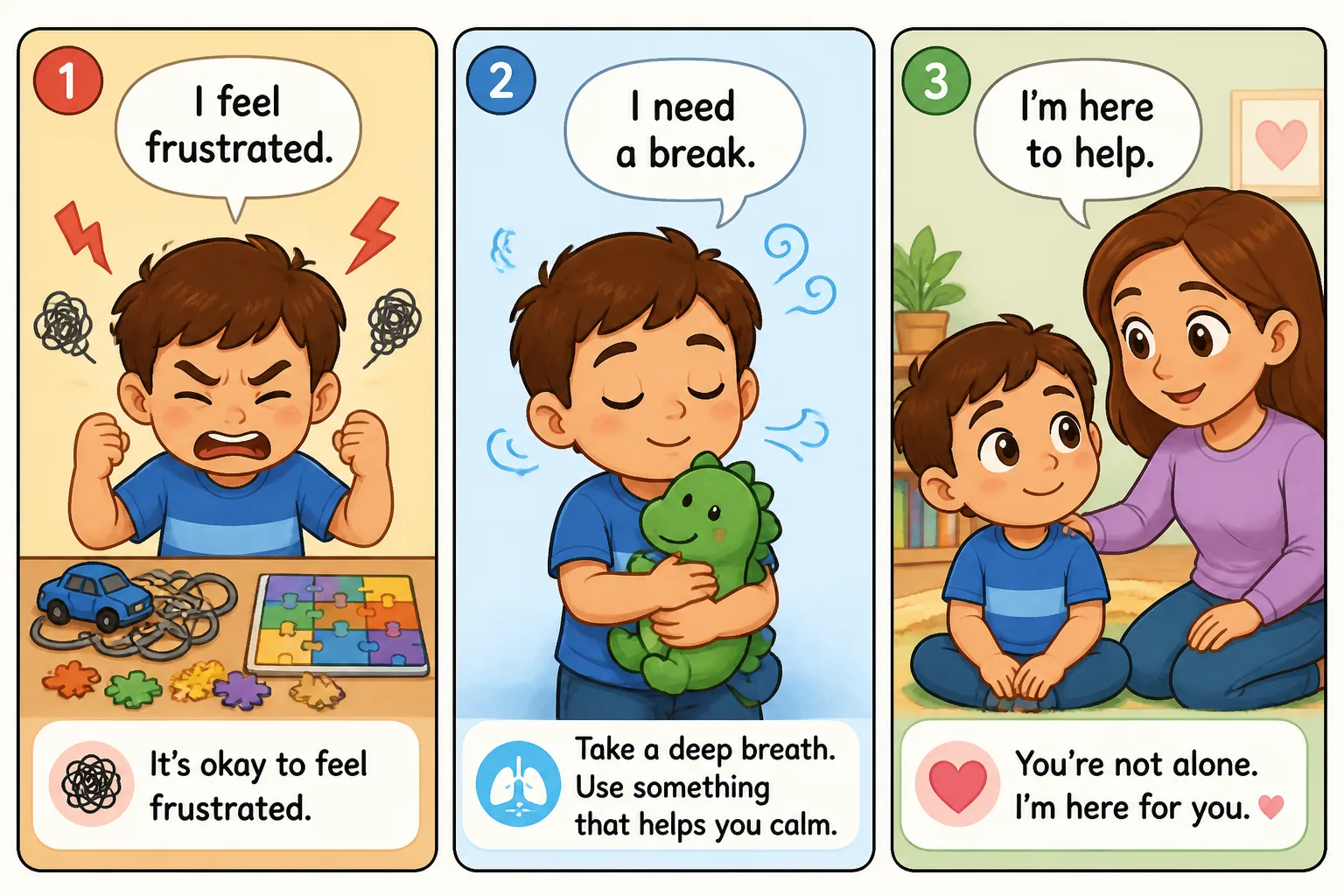
  • Recognize and Name the Feeling: Help your child say, “I feel frustrated” or use a picture or gesture if words are hard.
  • Pause and Breathe: Encourage slow, deep breaths to help calm the body. You can say, “Let’s take a big breath together.”
  • Take a Break: Offer a quiet space or a favorite calming activity like squeezing a soft toy or listening to gentle music.
  • Offer Choices: Give simple options to help your child feel more in control, such as “Do you want to try again now or later?”
  • Stay Close and Calm: Your calm presence helps your child feel safe. Avoid pushing for eye contact or talking if the child isn’t ready.

What Adults Can Say and Do

Use supportive language that validates feelings without judgment or pressure. Examples include:

  • “I see this is really hard for you.”
  • “It’s okay to feel upset. I’m here with you.”
  • “Would you like some space or help?”
  • “We can try again when you’re ready.”

Avoid phrases like “Stop crying,” “Be good,” or “You’re fine,” which can make children feel misunderstood or pressured to hide their feelings.

Practicing Skills During Calm Moments

When your child is calm, talk about frustration and practice coping skills together. Use stories, role-play, or visual aids to help your child recognize frustration and remember what helps. This preparation makes it easier to use these skills when feelings get big.

Individual Differences and What to Avoid Forcing

Every child experiences and expresses frustration differently. Some may need more time or prefer quiet activities, while others might need movement or sensory input to feel better. Avoid forcing eye contact, speech, or quick calming, as this can increase stress.

Key Takeaway

Frustration is a meaningful feeling that tells us something is hard. Supporting children with understanding, patience, and practical coping strategies helps them feel safe and learn to manage their emotions over time.

For more ideas on recognizing emotions and asking for breaks, see My Body Gives Me Clues and When I Need a Break.

Parent question: What signs of frustration do you notice in your child, and which strategies have helped them calm down?

Download the images in this article

  • Helping Young Children Understand and Manage Frustration

Tags:

child emotional supportcoping strategiesemotional regulationfrustration in childrenhelping children calmmanage frustration in young childrensupport autistic children
Author

Kevin Hoang

Follow Me
Other Articles
New Forensic Community Team Supports People with Intellectual Disabilities to Reduce Hospital
Previous

New Forensic Community Team Supports People with Intellectual Disabilities to Reduce Hospital Admissions

Waiting at the Doctor's Office: Supporting Your Child Through the Challenge
Next

Waiting at the Doctor’s Office: Supporting Your Child Through the Challenge

No Comment! Be the first one.

Leave a Reply Cancel reply

Your email address will not be published. Required fields are marked *

ADHD ASD ASD research autism autism communication autism diagnosis autism parenting autism research autism spectrum disorder autism support autistic adults autistic children child communication child development child independence communication communication skills communication support communication supports communication tools coping strategies daily living skills early intervention emotional regulation fine motor skills Functional Communication intellectual disability language development learning through play mental health mouse model neurodevelopment neurodevelopmental disorders neurodiversity neuroinflammation parent advocacy positive behavior support sensory accommodations sensory needs sensory processing sensory support sex differences visual learning set visual routine young children

  • Halliwick Aquatic Therapy Linked to Improved Quality of Life in Children with
    Halliwick Aquatic Therapy Linked to Improved Quality of Life in Children with Autism Spectrum Disorder
    A study suggests that Halliwick-based aquatic physical activity may improve quality of life in children and adolescents with autism spectrum disorder, showing benefits in psychological well-being and autonomy.
  • New Insights into Autism: Linking Brain Fluid Dynamics and Network Development to
    New Insights into Autism: Linking Brain Fluid Dynamics and Network Development to Clinical Outcomes
    New research explores how brain fluid movement and neural network development may influence autism's clinical outcomes, offering insights into its diverse trajectories.
  • Study Links Perceived Stress and Auditory Sensitivity in Autistic and Non-Autistic University
    Study Links Perceived Stress and Auditory Sensitivity in Autistic and Non-Autistic University Students
    A study finds perceived stress is linked to auditory sensitivity in autistic and non-autistic university students, with autistic students showing higher sensitivity.
  • New Study Supports Reliable Autism Intervention Measures Across Clinic and Home Settings
    New Study Supports Reliable Autism Intervention Measures Across Clinic and Home Settings
    A recent study found that brief observational tools measuring social communication and caregiver strategies in young autistic children are reliable and feasible across both clinic and home settings, supporting flexible early intervention assessments.
  • Study Highlights Social Disadvantages Impacting Health of Autistic Adults Without Intellectual Disability
    Study Highlights Social Disadvantages Impacting Health of Autistic Adults Without Intellectual Disability
    A UK study finds autistic adults without intellectual disability face social disadvantages that contribute to higher chronic illness and mortality risks, highlighting the need for systemic policy changes.
Helping Young Children Cope with Transitions: Practical Emotional Support Strategies
September 24, 2026
Helping Young Children Cope with Waiting: Practical Emotional Support Strategies
September 22, 2026
I Need a Break: Helping Young Children Recognize and Ask for a
I Need a Break: Helping Young Children Recognize and Ask for a Break
September 20, 2026
Helping Young Children Cope with Being Told No: Practical Emotional Support Strategies
September 17, 2026
Study Reveals Sex-Specific Behavioral Changes in Mice Lacking α5-Nicotinic Acetylcholine Receptors
157 views
Preparing for Loud Events: 6 Sensory Support Steps for Children
137 views
Expressing Discomfort and Asking for Help: 6 Essential Communication Phrases for Young
Expressing Discomfort and Asking for Help: 6 Essential Communication Phrases for Young Children
131 views
Feeling Worried: 6 Steps to Help Young Children Recognize and Manage Worry
129 views
Using a Calm Voice: 5 Positive Steps for Young Children
127 views

Content on this website is created with the assistance of artificial intelligence (AI), while some portions are still reviewed and overseen by humans. All content and resources are provided completely free of charge.

Some information may be referenced or cited from reputable sources. Whenever possible, we will clearly identify the sources used within each article.

If you have any questions, feedback, or would like to contact us, please email: info@autismwords.com

Copyright 2026 — Love Beyond Words - autismwords.com. All rights reserved. Blogsy WordPress Theme

Join Us on the Journey to Understanding Autism

Subscribe to receive curated autism knowledge, lessons, and the latest news — delivered to you regularly.

We promise to send only helpful autism-related information and knowledge — no ads, no spam. You can unsubscribe anytime.

Thank you for subscribing!