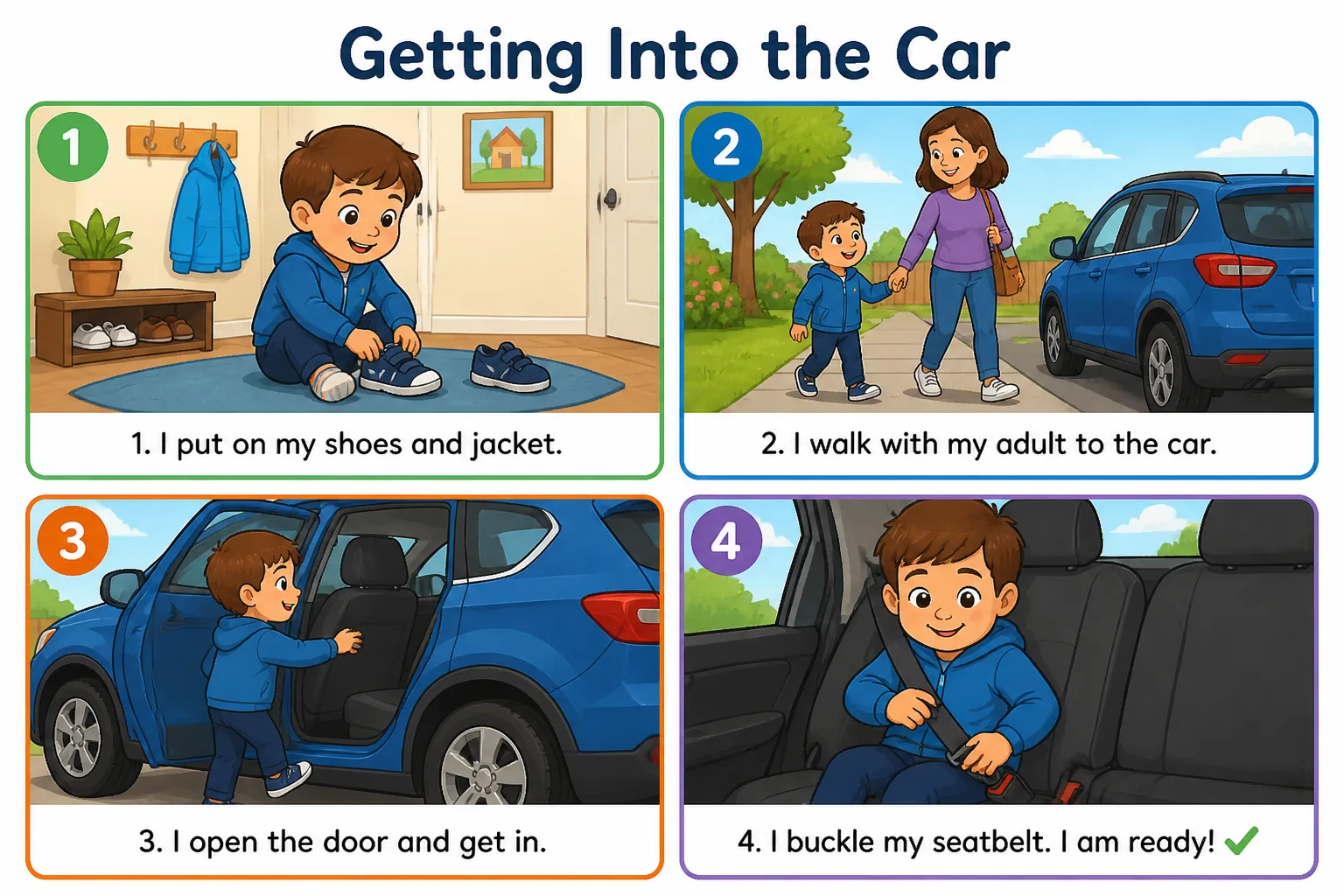

Getting Into the Car: A Simple 4-Step Visual Routine for Young Children
Getting into the car is a daily transition that many young children, including those with autism or additional communication and sensory needs, may find challenging. This routine involves moving from a familiar or preferred environment into a confined, sometimes noisy space, which can cause anxiety, sensory discomfort, or uncertainty. Understanding why this transition can be difficult and using clear, supportive strategies can help children feel more secure and participate more independently.
Why Getting Into the Car Can Be Difficult
Many children struggle with transitions that involve changes in environment, especially when moving from an open, active space to a smaller, enclosed one. Sensory sensitivities to sounds, smells, or the feeling of the car seat can cause discomfort. Uncertainty about what will happen next or leaving a preferred activity can increase anxiety. Communication challenges can make it hard for the child to express feelings or ask for help. Fatigue or processing time needs may also affect how smoothly the transition goes.
Signs Parents May Notice
- Resistance to stopping play or activities to go to the car
- Delays or refusal to put on shoes or jacket
- Difficulty walking to the car or hesitation at the door
- Distress or meltdowns when asked to get in the car
- Difficulty sitting still or buckling the seatbelt
What the Child May Be Experiencing
The child might feel overwhelmed by the change in environment or sensory input. They may be unsure about what comes next or feel rushed. They could be trying to communicate “I need more time” or “I’m not ready” but lack the words or tools. Understanding these experiences helps adults respond with patience and support rather than frustration.
Preparing Beforehand
Preparation is key to easing this transition. Use simple, clear language to give advance notice, such as “In 5 minutes, we will go to the car.” Visual supports like a picture schedule or a step-by-step routine can help the child see what will happen. Practice the routine during calm times so the child becomes familiar with the steps. Allow the child to bring a small comfort item if appropriate.
Visual Supports and Communication Tools
Visual routines showing the steps of getting into the car can be very helpful. For example, a 4-step visual schedule might include:
1. Put on shoes and jacket
2. Walk to the car
3. Open car door and get in
4. Buckle seatbelt
Use simple phrases and encourage the child to use communication tools like pointing to pictures, signs, or AAC devices to express needs such as “Help me,” “More time,” or “All done.”
Step-by-Step Strategies
- Put on shoes and jacket: Offer choices if possible (“Red shoes or blue shoes?”) and provide help as needed. Use a calm, encouraging tone.
- Walk to the car: Hold hands or use a gentle prompt to guide the child. Allow breaks if needed.
- Open the car door and get in: Let the child open the door if they can. Use clear instructions like “Open door,” “Sit down.”
- Buckle seatbelt: Demonstrate buckling and encourage the child to try. Praise efforts and provide support.
What Adults Can Say
Use simple, positive language such as:
“First shoes, then jacket, then car.”
“You’re doing great!”
“I see you need more time. That’s okay.”
“Can you show me when you’re ready?”
Responding to Difficulties
If the child resists or becomes upset, stay calm and patient. Offer a break or use a calming strategy like deep breathing or a quiet space if possible. Avoid rushing or forcing the child. Use communication tools to understand their needs. Remember, the goal is to make the transition manageable, not perfect.
Practicing During Calm Moments
Rehearse the routine when the child is relaxed. Use play or stories to make the steps familiar. This builds confidence and reduces anxiety during actual transitions.
Environmental Adjustments
Reduce sensory stress by minimizing loud noises or bright lights near the car. Use sunshades or soft blankets if needed. Keep the car environment consistent and welcoming.
Building Independence Gradually
Encourage the child to take on small tasks independently, like putting on shoes or buckling the seatbelt, with support. Celebrate successes to motivate continued growth.
What Adults Should Avoid
Avoid rushing, threats, yelling, or forcing the child. Don’t insist on eye contact or speech if the child is not ready. Avoid making the transition a power struggle.
Individual Differences and Professional Support
Every child is unique. Tailor strategies to fit their sensory needs, communication style, and pace. If transitions remain very difficult, consider consulting an occupational therapist, speech therapist, or behavioral specialist for personalized support.
Key Takeaway
Getting into the car can be a challenging transition, but with clear preparation, visual supports, respectful communication, and patience, children can learn to participate more confidently and independently.
How do you currently support your child during car transitions, and what strategies have you found helpful or challenging?
For more routines supporting smooth transitions, see Transition from Mealtime to Playtime and Transition from Playtime to Cleanup.
Download the images in this article