Study Links Sensory Differences in Autism to Brain White Matter Changes Near Amygdala and Hippocampus

New Research Explores Brain Structure and Sensory Traits in Autism
Autism spectrum disorder (ASD) is often marked by unusual sensory experiences, but the brain mechanisms behind these differences are not fully understood. A recent study investigated how sensory traits in adults with ASD relate to the microstructure of white matter pathways connected to two key brain regions: the amygdala and the hippocampus. These areas are known to be involved in emotion and memory and have been implicated in autism.
Key Findings on White Matter Differences
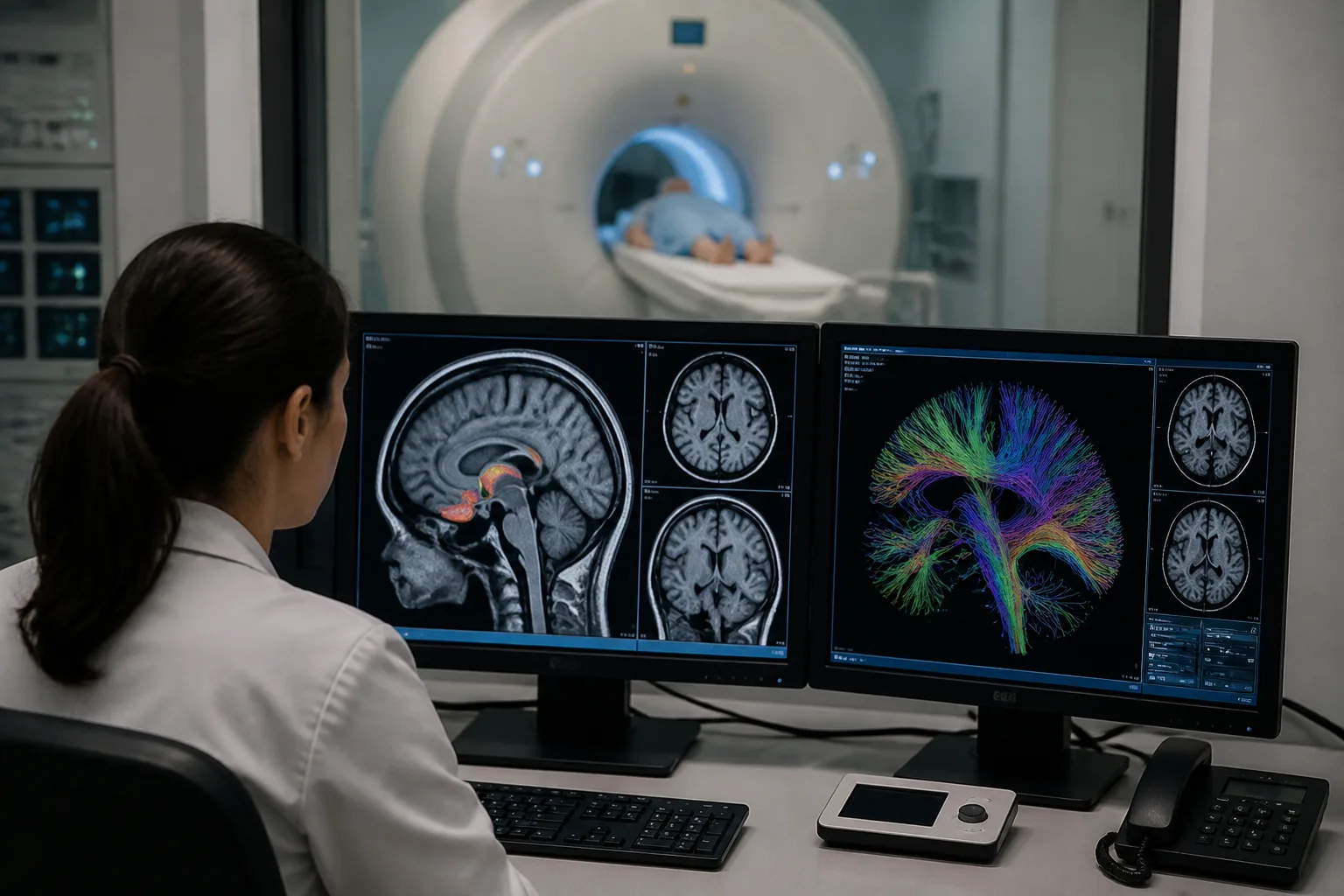
The study included 40 adults diagnosed with ASD and 83 typically developing (TD) adults, all aged 18 or older. Participants completed the Adolescent/Adult Sensory Profile (AASP), a questionnaire assessing sensory processing patterns, and underwent diffusion tensor imaging (DTI), a type of MRI that measures the integrity of white matter pathways in the brain.
Researchers focused on fractional anisotropy (FA), a DTI metric indicating the directionality and integrity of white matter fibers, in pathways connected to the amygdala (amygdala-connected white matter, AWM) and hippocampus (hippocampus-connected white matter, HWM).
Compared to the TD group, adults with ASD showed significantly lower FA in both AWM and HWM, suggesting altered white matter microstructure in these regions.
Associations Between Sensory Traits and Brain Pathways
Within the ASD group, higher sensation-seeking scores—a tendency to seek out sensory experiences—were nominally linked to increased FA in the right AWM. However, this association did not remain statistically significant after correcting for multiple comparisons.
In contrast, among TD adults, sensation-seeking scores were negatively associated with FA in the right HWM.
Statistical tests confirmed that the relationships between sensation seeking and white matter integrity differed significantly between the ASD and TD groups in these brain regions.
Implications for Understanding Sensory Processing in Autism
These findings suggest that atypical sensory traits in autism may be connected to microstructural differences in white matter pathways linked to the amygdala and hippocampus. This could reflect how sensory information is processed differently in the autistic brain, potentially influencing behaviors related to sensation seeking.
Considerations and Future Directions
While the study provides valuable insights, the authors note that some associations did not survive rigorous statistical correction, indicating the need for cautious interpretation. Additionally, the cross-sectional design cannot determine causality between brain structure and sensory traits.
Further research with larger samples and longitudinal designs may help clarify how these brain differences develop and relate to sensory experiences over time.
For more detailed information, see the original study published in Journal of Neural Transmission: https://pubmed.ncbi.nlm.nih.gov/42709168/.
Download the images in this article