
Separating from a parent can be a challenging transition for many young children, especially for autistic children or those who need extra communication and sensory support. This routine helps children understand what will happen when they say goodbye to a parent and move to a new activity, such as starting school or daycare. By using a simple 4-step visual routine, parents and caregivers can reduce anxiety, build predictability, and support children’s independence during this often difficult moment.
Why Separating from a Parent May Be Difficult
Separation can be hard because it involves uncertainty and change. Children may feel anxious about who will take care of them, what the new environment will be like, or when they will see their parent again. For autistic children, sensory sensitivities, communication challenges, and difficulty understanding time can make this transition even more stressful. Signs parents might notice include clinging, crying, resistance to leaving, or physical discomfort.
What the Child May Be Experiencing
Children might feel overwhelmed by the change in routine, unsure about what to expect, or worried about being apart from their trusted caregiver. They may also have difficulty expressing their feelings or asking questions. Recognizing these emotions helps adults respond with empathy and appropriate support.
Preparing for Separation: Visual Supports and Communication Tools
Preparation is key to easing separation anxiety. Using visual supports such as a simple picture schedule or a step-by-step visual routine can help the child see what will happen next. Communication tools, including simple phrases, AAC devices, gestures, or signs, allow the child to ask questions like “Where are we going?” or “When will you come back?” Offering a transition object, such as a favorite toy or photo, can provide comfort and a tangible connection to the parent.
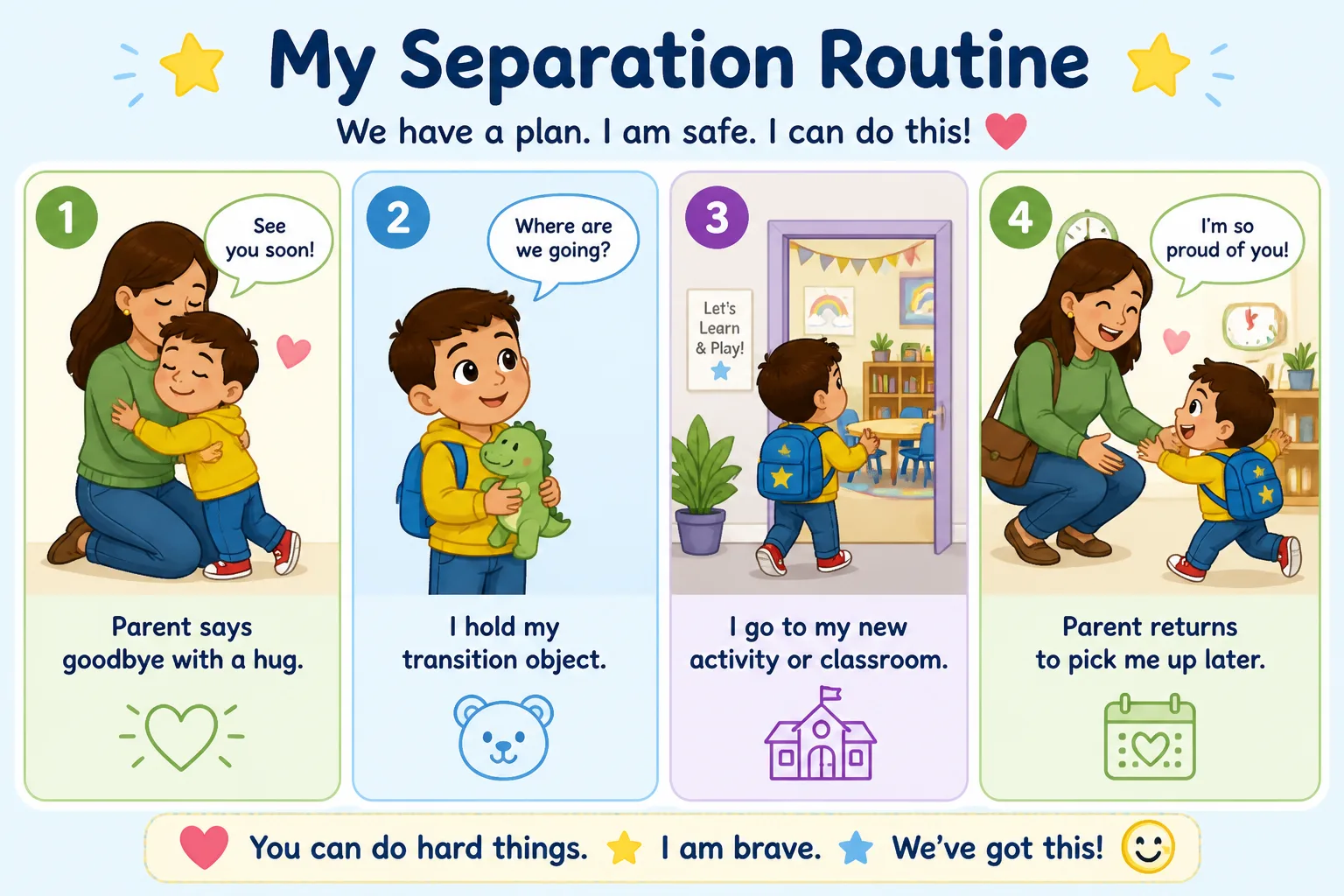
A Simple 4-Step Separation Routine
- Say Goodbye with a Hug: The parent gives a warm, predictable goodbye, such as a hug or wave, using consistent language like “I love you, see you soon!” This signals the start of the transition.
- Hold a Transition Object: The child takes a comforting item to carry with them. This helps reduce anxiety and provides a sense of security.
- Go to the New Activity: The child moves to the new environment, such as the classroom or play area, with adult support if needed. Visual cues or a familiar adult can ease this step.
- Parent Returns Later: The parent explains when they will come back, using clear, simple language or a visual timer. Reassurance that they will return helps the child feel safe.
What Adults Can Say and Do During Separation
Use calm, simple language and positive tone. Examples include:
- “It’s time to say goodbye now. I will be back after your playtime.”
- “You can hold your special toy while I’m gone.”
- “I’m proud of you for trying this new thing!”
If the child becomes upset, offer comfort without forcing the transition. Allow extra processing time and use gentle reassurance. Avoid rushing or expressing frustration.
Practicing During Calm Moments
Practice the routine at home or during low-stress times. Role-play goodbyes, use picture books about separation, or create a visual schedule together. This builds familiarity and confidence.
Environmental Adjustments and Building Independence
Arrange the environment to reduce sensory distractions and provide clear visual cues. Gradually encourage the child to initiate goodbyes or carry their transition object independently. Celebrate small successes to build self-esteem.
What to Avoid
Avoid sudden, unexpected separations, threats, or punishment for difficulty separating. Do not force eye contact or speech. Recognize that resistance is often a sign of anxiety, not defiance.
Individual Differences and When to Seek Professional Support
Every child is unique. Some may need more time, additional supports, or professional guidance from therapists or counselors. If separation anxiety is severe or persistent, consult a pediatrician or specialist.
Key Takeaway
Using a clear, predictable 4-step visual routine with supportive communication and preparation can make separating from a parent less stressful and more manageable for young children.
Parent Engagement Question: What comforting transition objects or phrases have helped your child feel more secure during separations?
For related routines, see our posts on Transition from Classroom to Recess and Leaving the House.
Download the images in this article