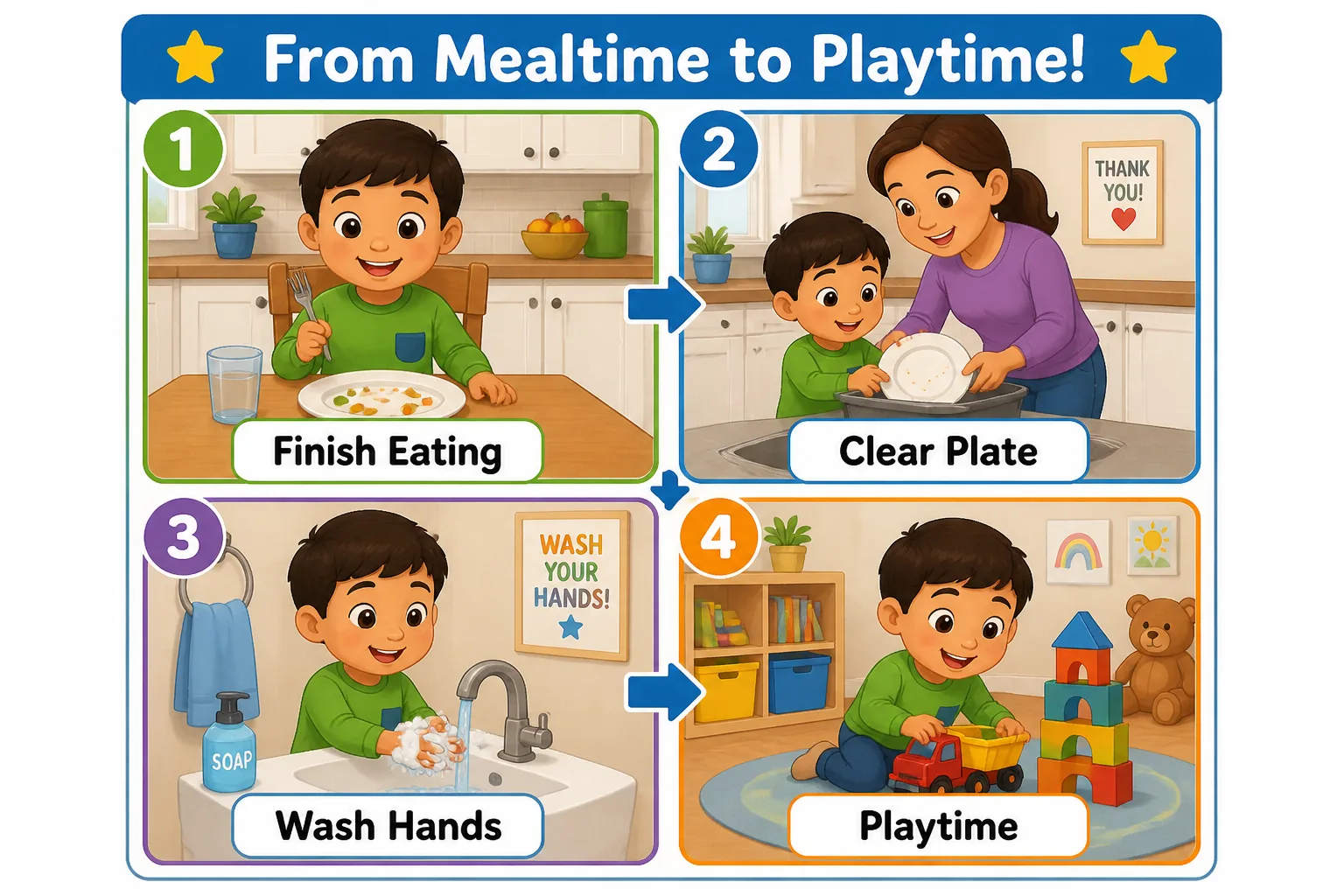
Transition from Mealtime to Playtime: A 4-Step Visual Routine for Young Children

Transitioning from mealtime to playtime can be a challenging routine for many young children, especially those who are autistic or have additional communication, sensory, or emotional needs. This transition involves stopping one activity and starting another that is quite different, which can cause uncertainty, sensory discomfort, or difficulty processing the change. This article explains why this transition might be hard, signs parents may notice, and practical strategies to support children through a smooth and predictable routine.
Why the Transition from Mealtime to Playtime Can Be Difficult
Mealtime is often a preferred and structured part of the day, providing sensory input through taste, smell, and touch. When mealtime ends, children must stop this activity and shift to playtime, which may involve different sensory experiences and social interactions. This sudden change can cause anxiety or resistance because:
- The child may not understand what happens next or when mealtime will end.
- Stopping a preferred activity (eating or tasting) can be upsetting.
- There may be sensory discomfort, such as feeling full or sticky hands.
- Processing time is needed to adjust to the new activity.
- Fatigue or hunger-related irritability can affect mood.
Signs Parents and Caregivers May Notice
Children may show signs of difficulty during this transition, including:
- Refusing to leave the table or stop eating.
- Meltdowns, crying, or tantrums.
- Slow responses or withdrawal.
- Verbal or nonverbal communication indicating confusion or frustration.
- Physical resistance, such as pushing away from the table or hiding.
What the Child May Be Experiencing
The child might be experiencing anxiety about the unknown next steps, sensory discomfort from food residue or fullness, or difficulty communicating their needs. They may need extra time to process the change and reassurance that the new activity will be enjoyable and safe.
Preparing for the Transition: Visual Supports and Communication Tools
Preparation is key to making this transition smoother. Visual schedules or step-by-step picture routines can help the child understand what happens next. For example, a simple 4-step visual routine showing “Finish Eating → Clear Plate → Wash Hands → Playtime” can provide predictability.
Communication tools such as simple phrases, signs, or AAC (Augmentative and Alternative Communication) like “All done,” “Help me,” or “What’s next?” empower the child to express themselves during the transition.
Step-by-Step Strategies for a Smooth Transition
- Give Advance Notice: Let the child know mealtime is almost over using a timer or countdown (e.g., “5 more bites, then we clean up”).
- Use a Visual Routine: Show the child the visual steps they will follow next, reinforcing with simple language.
- Encourage Clearing the Plate: Involve the child in clearing their plate to the sink or bin, offering help as needed.
- Wash Hands: Guide the child to wash hands with soap and water to feel fresh and ready for play.
- Transition to Play: Lead the child to the play area, offering a preferred toy or activity to motivate the change.
Helpful Things Adults Can Say
- “In five minutes, we will finish eating and then wash hands.”
- “Can you help me clear your plate?”
- “Let’s wash our hands so we can play!”
- “After washing hands, it’s playtime!”
- “You can ask me if you need more time or help.”
Responding if the Transition Becomes Difficult
If the child resists or becomes upset, stay calm and patient. Offer extra processing time or a short break if needed. Use calming strategies like deep breathing or a quiet space. Avoid forcing the child abruptly, which can increase anxiety. Instead, validate their feelings and gently guide them through the steps.
Practicing During Calm Moments
Practice the routine when the child is calm and receptive. Use role-play or storybooks to explain the sequence. Repetition helps build familiarity and confidence, making real transitions easier.
Environmental Adjustments to Support the Routine
Keep the mealtime and play areas organized and consistent. Use clear containers or labeled bins for toys. Reduce sensory distractions during transitions, such as loud noises or bright lights, to help the child focus.
Building Independence Gradually
Encourage the child to take more responsibility over time, such as clearing their plate independently or choosing a play activity. Celebrate small successes to boost confidence.
What Adults Should Avoid
- Rushing the child without warning.
- Using threats or punishment for resistance.
- Forcing eye contact or speech.
- Ignoring the child’s communication attempts.
- Sudden, unexpected transitions without preparation.
Individual Differences and When to Seek Professional Support
Every child is unique; some may need more time or different supports. If transitions consistently cause distress or interfere with daily life, consider consulting a speech therapist, occupational therapist, or behavioral specialist for tailored strategies.
Key Takeaway
Making the transition from mealtime to playtime predictable, communicative, and supportive helps reduce anxiety and builds the child’s confidence and independence over time.
What strategies have you found helpful when your child transitions from one activity to another?
For related routines, see our Transition from Playtime to Cleanup: 6-Step Visual Routine for Young Children and Transition from School to Homework: 6-Step Visual Routine for Young Children.
Download the images in this article