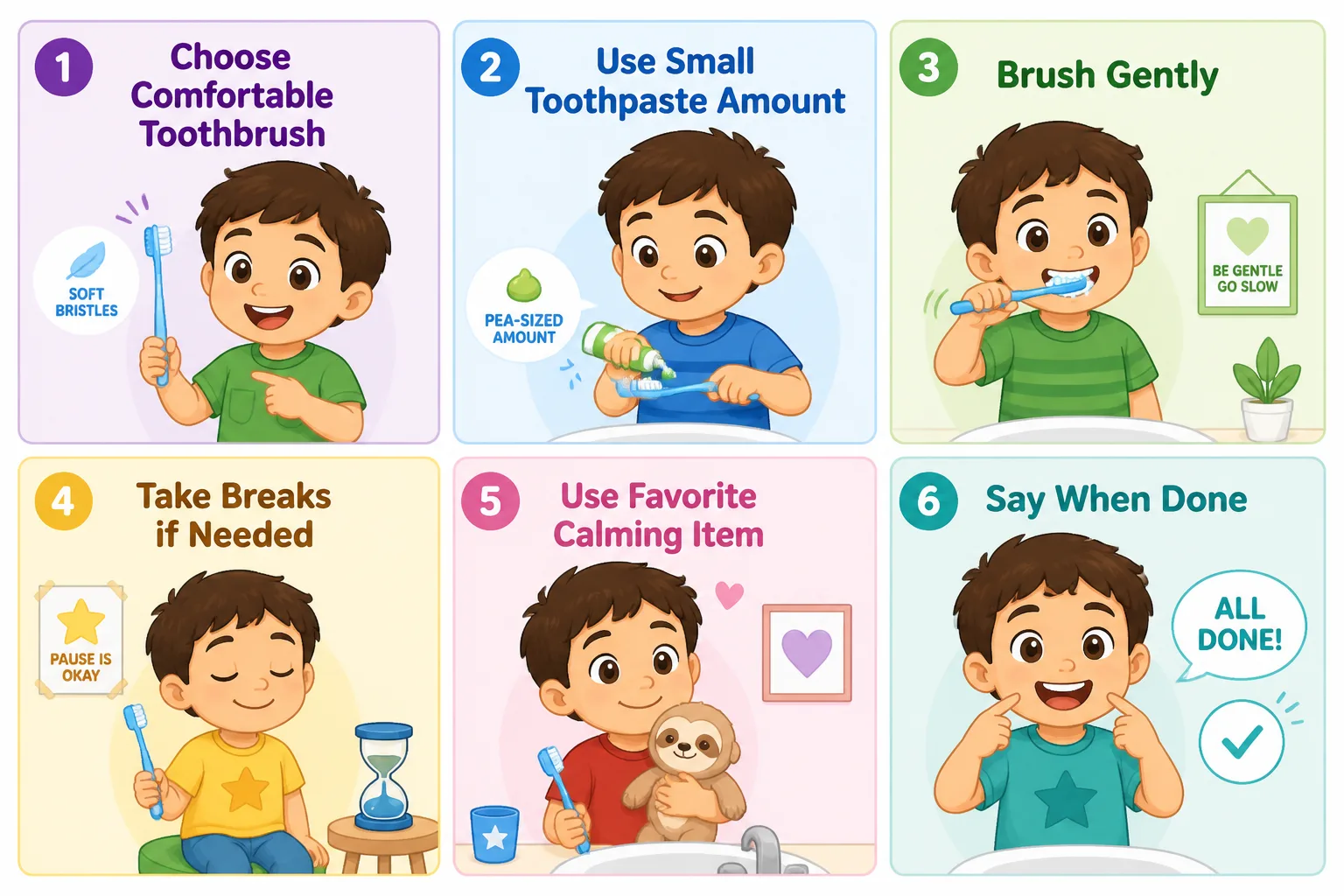

Toothbrushing can be a challenging sensory experience for many children, especially those with sensory sensitivities or autism. Sensory-friendly toothbrushing strategies can help children recognize their comfort levels, communicate their needs, and make toothbrushing a more positive and manageable routine. This visual guide teaches 6 practical steps to support children during toothbrushing, focusing on comfort, choice, and communication.
1. Choose a Comfortable Toothbrush
Select a toothbrush with soft bristles and a small head to reduce discomfort. Let the child touch and hold the toothbrush before starting to build familiarity and comfort.
2. Use a Small Amount of Toothpaste
Use only a pea-sized amount of toothpaste to avoid overwhelming tastes or textures. Some children prefer toothpaste flavors that are mild or unflavored.
3. Brush Gently
Encourage gentle brushing motions rather than vigorous scrubbing. This helps prevent sensory overload and discomfort in the mouth.
4. Take Breaks if Needed
Allow the child to pause during toothbrushing if they feel overwhelmed. Taking short breaks can help them regulate sensory input and reduce stress.
5. Use a Favorite Calming Item
Having a comforting object nearby, such as a small stuffed animal or a soft cloth, can provide reassurance and help the child feel safe during toothbrushing.
6. Communicate When Done
Teach the child to communicate when they are finished brushing, using speech, gestures, or AAC. This respects their autonomy and helps caregivers know when to stop.
Parents can support their child by observing their reactions during toothbrushing, offering choices between toothbrushes or toothpaste flavors, modeling gentle brushing, and respecting the child’s need for breaks or changes. Avoid forcing the child to continue if they are distressed, and introduce new steps gradually without pressure.
For more sensory support strategies related to daily routines, see our Managing Messy Hands: 6 Sensory Support Steps for Children article.
What small change could you try today to make toothbrushing more comfortable for your child?
Download the sensory-friendly toothbrushing visual