
Mealtime is a perfect opportunity to support young children in developing practical communication skills. Teaching children to express their needs, preferences, and feelings during meals helps them participate more independently and reduces frustration. This set of 6 essential mealtime communication phrases is designed for young children, including those with autism or additional communication needs.
6 Essential Mealtime Communication Phrases
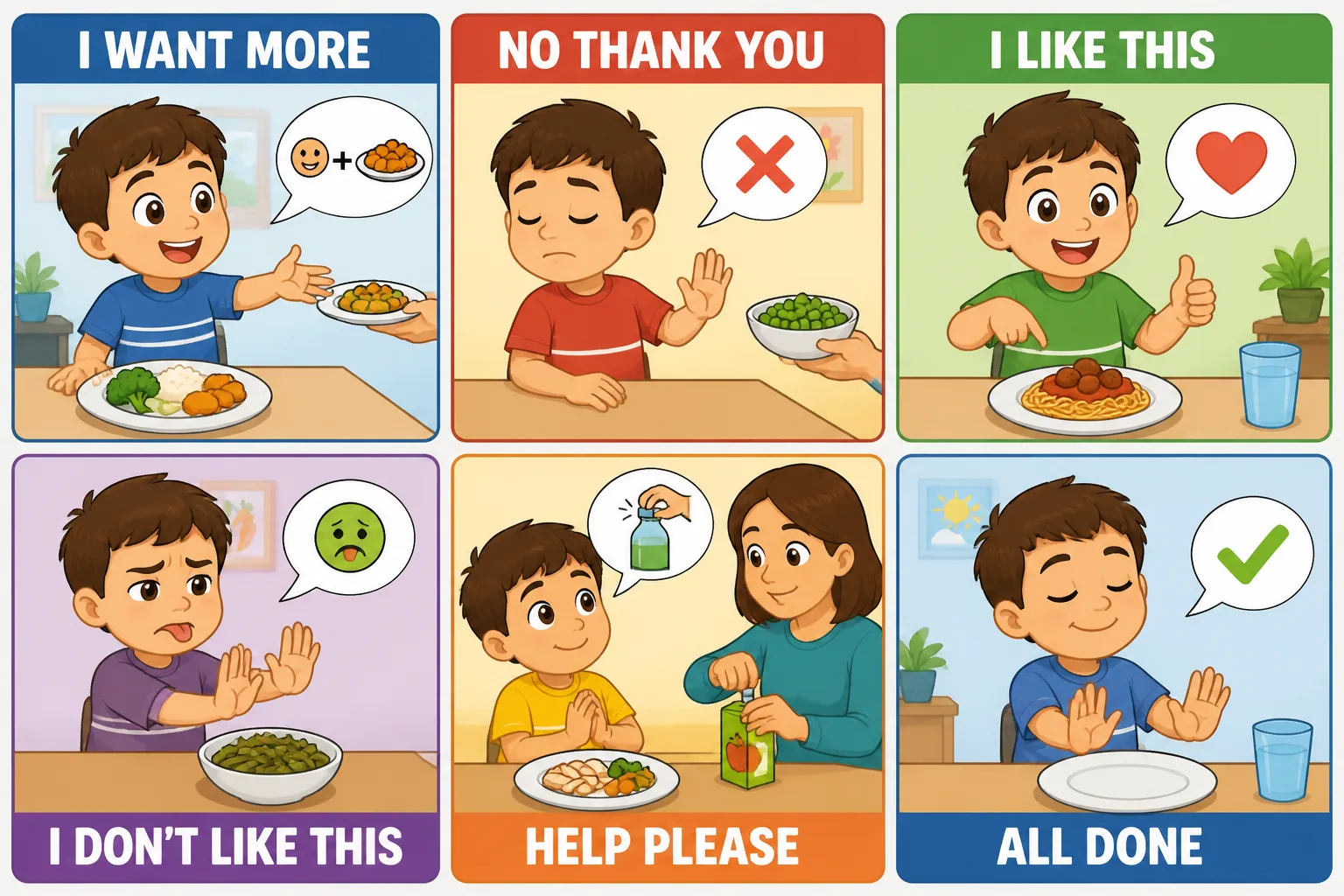
1. I WANT MORE
This phrase helps children request additional food or drink politely. For example, a child might say “I WANT MORE” when they want another serving of their favorite snack.
2. NO THANK YOU
Teaching children to say “NO THANK YOU” empowers them to refuse food politely when they do not want something, supporting autonomy and respect for their preferences.
3. I LIKE THIS
Children can express enjoyment and positive feelings about a particular food by saying “I LIKE THIS,” which encourages positive mealtime experiences.
4. I DON’T LIKE THIS
It is important for children to communicate dislikes respectfully. Saying “I DON’T LIKE THIS” helps caregivers understand and respond appropriately.
5. HELP PLEASE
Some children may need assistance with opening containers or cutting food. “HELP PLEASE” is a functional phrase to request support during mealtime.
6. ALL DONE
When finished eating, children can say “ALL DONE” to indicate they have completed their meal, helping with transitions and routines.
How Parents Can Practice These Phrases Naturally
Model these phrases during real mealtime situations without pressure. Pair words with gestures or visual supports, such as picture cards or sign language. Offer simple choices like “Do you want more apple or banana?” and pause to allow the child to respond. Celebrate attempts to communicate, whether spoken, gestured, or using AAC. Avoid forcing repetition or eye contact; instead, keep the environment positive and supportive.
For additional communication support ideas, see our articles on asking for help and expressing feelings and emotions.
Try It Out!
Which of these mealtime phrases do you think your child would find most useful to start practicing today?
Download the mealtime communication image