Mealtime Routine Visual Learning Set: 6 Steps to Help Your Child Build Independence

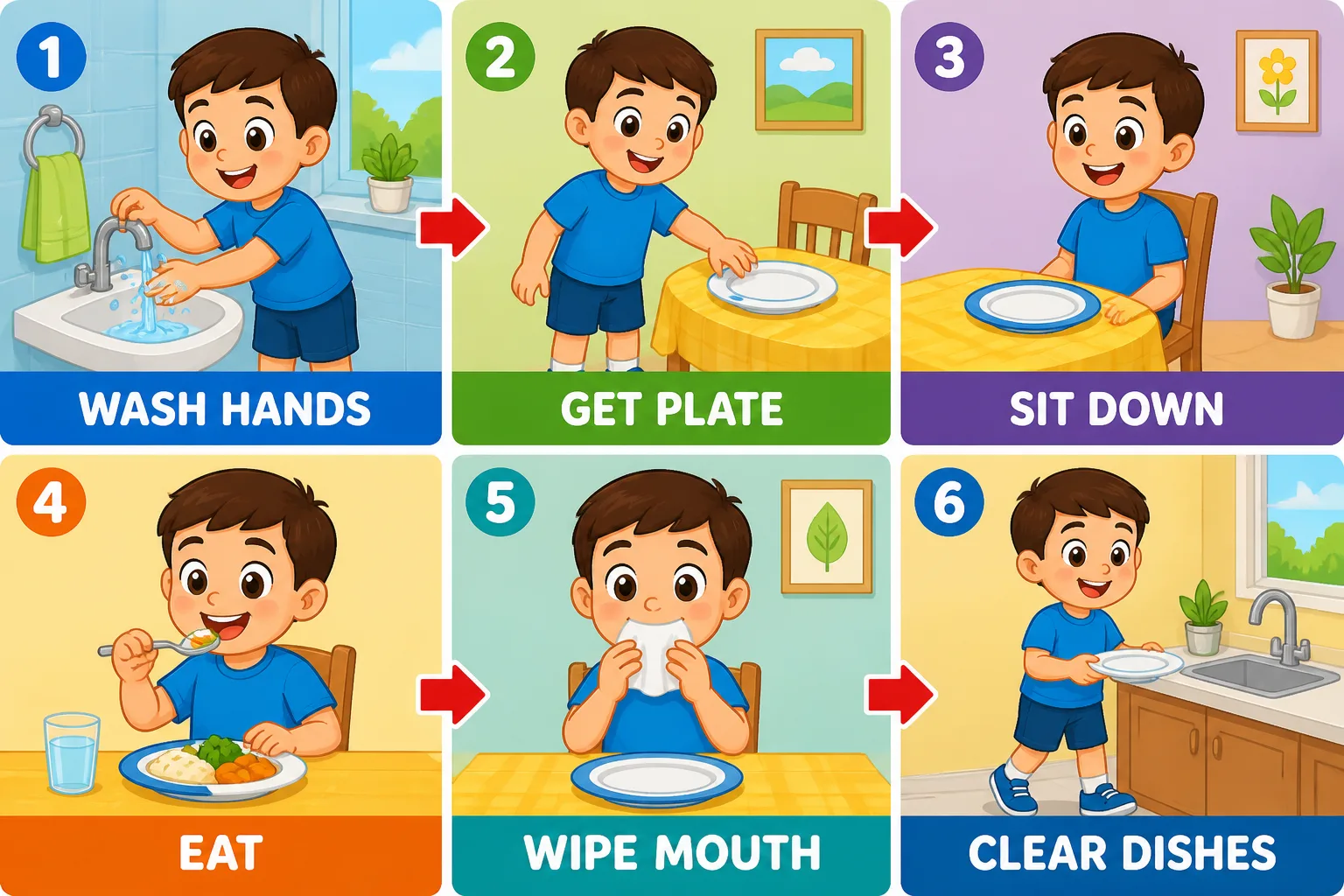
Teaching children to participate in mealtime routines is a valuable way to build their independence and daily living skills. This mealtime routine visual learning set breaks down the process into six simple, sequential steps that children can understand and practice. Using a bright, child-friendly cartoon poster with clear labels and illustrations, parents and educators can support children in learning to wash their hands, get a plate, sit down, eat, wipe their mouth, and clear dishes after eating.
Why Use Visual Learning Sets for Mealtime?
Visual supports help children, especially those with autism or developmental delays, by providing clear, concrete steps to follow. Visual routines reduce anxiety, improve understanding, and encourage participation by showing what happens next. Mealtime is a natural opportunity to practice self-care and responsibility, making it an ideal routine to teach with visuals.
Step-by-Step Mealtime Routine
- WASH HANDS: Before eating, washing hands removes germs and prepares the child for mealtime hygiene.
- GET PLATE: Encouraging the child to get their own plate fosters participation and responsibility.
- SIT DOWN: Sitting properly at the table helps the child focus on eating and develop good manners.
- EAT: Using utensils or hands to eat encourages fine motor skills and independence.
- WIPE MOUTH: Teaching the child to wipe their mouth promotes self-care and cleanliness.
- CLEAR DISHES: Helping to clear the table or bring dishes to the sink builds a sense of contribution and routine completion.
Practical Strategies for Using This Visual Learning Set
- Show the visual before starting: Introduce the routine by reviewing the steps together so the child knows what to expect.
- Practice one step at a time: Focus on mastering each action before moving on to the next to avoid overwhelm.
- Use First → Then: Use simple language like “First wash hands, then get your plate” to clarify sequence.
- Give extra time: Allow the child enough time to complete each step at their own pace.
Remember to celebrate participation and progress, no matter how small. Visual routines support gradual independence and can be adapted based on the child’s needs and abilities.
What daily living skill is your child currently practicing during mealtime or other routines?
For more visual routine ideas, check out our Bedtime Routine Visual Learning Set and Lunchbox Preparation Routine Visual Learning Set.
Download the images in this article