Lunchbox Preparation Routine Visual Learning Set: 6 Steps to Help Your Child Build Independence

Teaching children how to prepare their own lunchbox is a valuable daily living skill that fosters independence, responsibility, and organization. This Lunchbox Preparation Routine visual learning set breaks down the process into 6 simple, sequential steps that your child can understand and practice. Using a friendly cartoon visual routine helps children, including those with autism or developmental delays, to see, understand, and participate in this everyday task with confidence.
Why Teach Lunchbox Preparation?
Preparing a lunchbox encourages children to make choices, develop fine motor skills, and take part in family routines. It also promotes healthy eating habits and self-care. Visual routines like this one support comprehension and memory by showing clear, step-by-step actions, which is especially helpful for children who benefit from visual supports.
The 6 Steps in the Lunchbox Preparation Routine
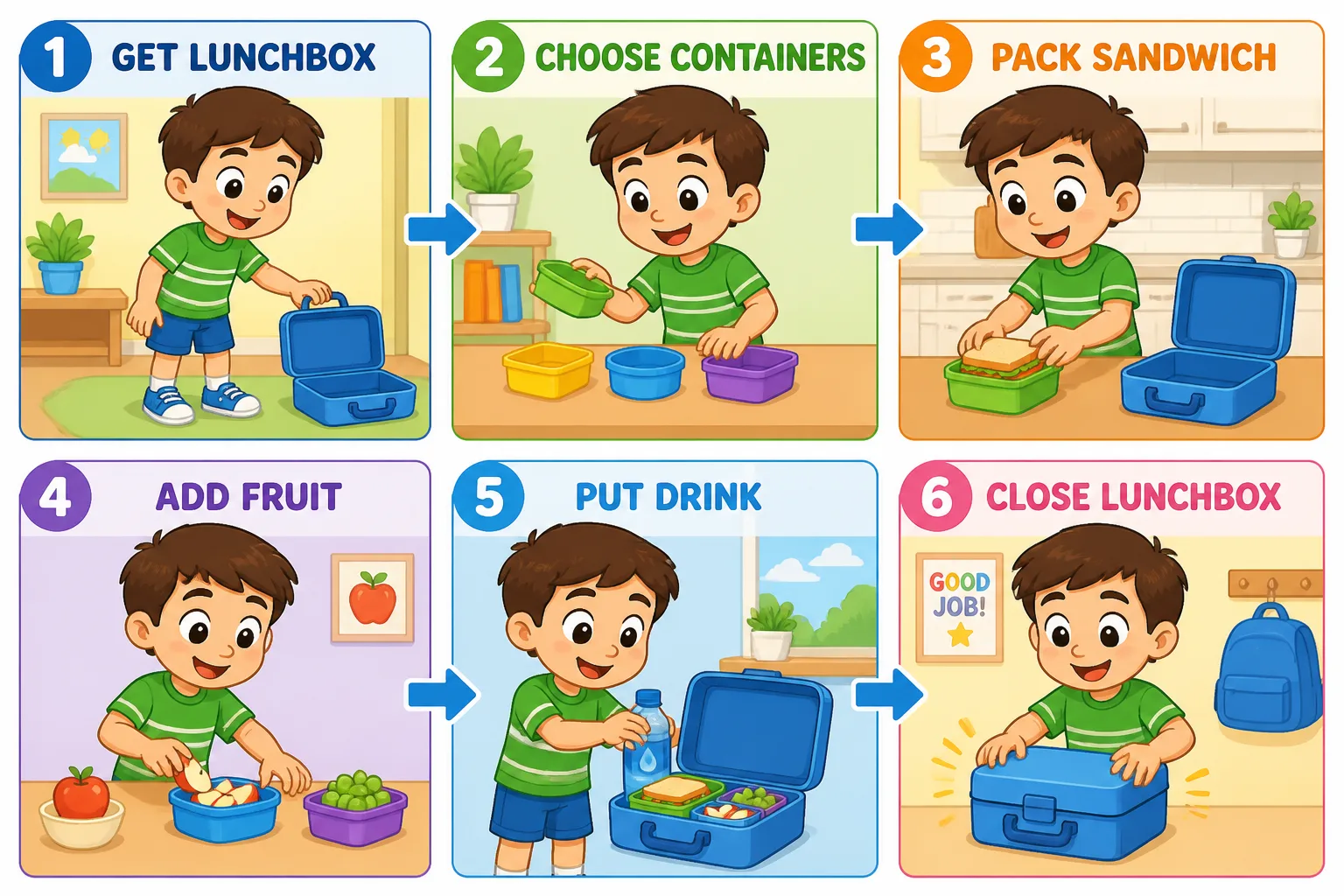
- GET LUNCHBOX: Start by picking up an empty lunchbox or bag to hold the food.
- CHOOSE CONTAINERS: Select the containers or bags needed for different foods.
- PACK SANDWICH: Place a sandwich or main food item into a container.
- ADD FRUIT: Add fruit or snacks to a separate container.
- PUT DRINK: Place a water bottle or juice box into the lunchbox.
- CLOSE LUNCHBOX: Close the lunchbox securely, ready to go.
How Parents Can Use This Visual Learning Set
- Show the visual before starting: Introduce the routine by pointing to each step in order.
- Practice one step at a time: Allow your child to complete each action before moving on.
- Use simple language and First → Then: For example, “First pack the sandwich, then add fruit.”
- Give extra time and model actions: Demonstrate any unfamiliar steps and be patient as your child learns.
Remember, every child develops at their own pace. Encourage participation and celebrate progress, even if your child needs help with some steps. This routine can be adapted to fit your family’s needs and your child’s abilities.
Which daily living skill is your child currently practicing? Share your experience with us!
Download the images in this article