
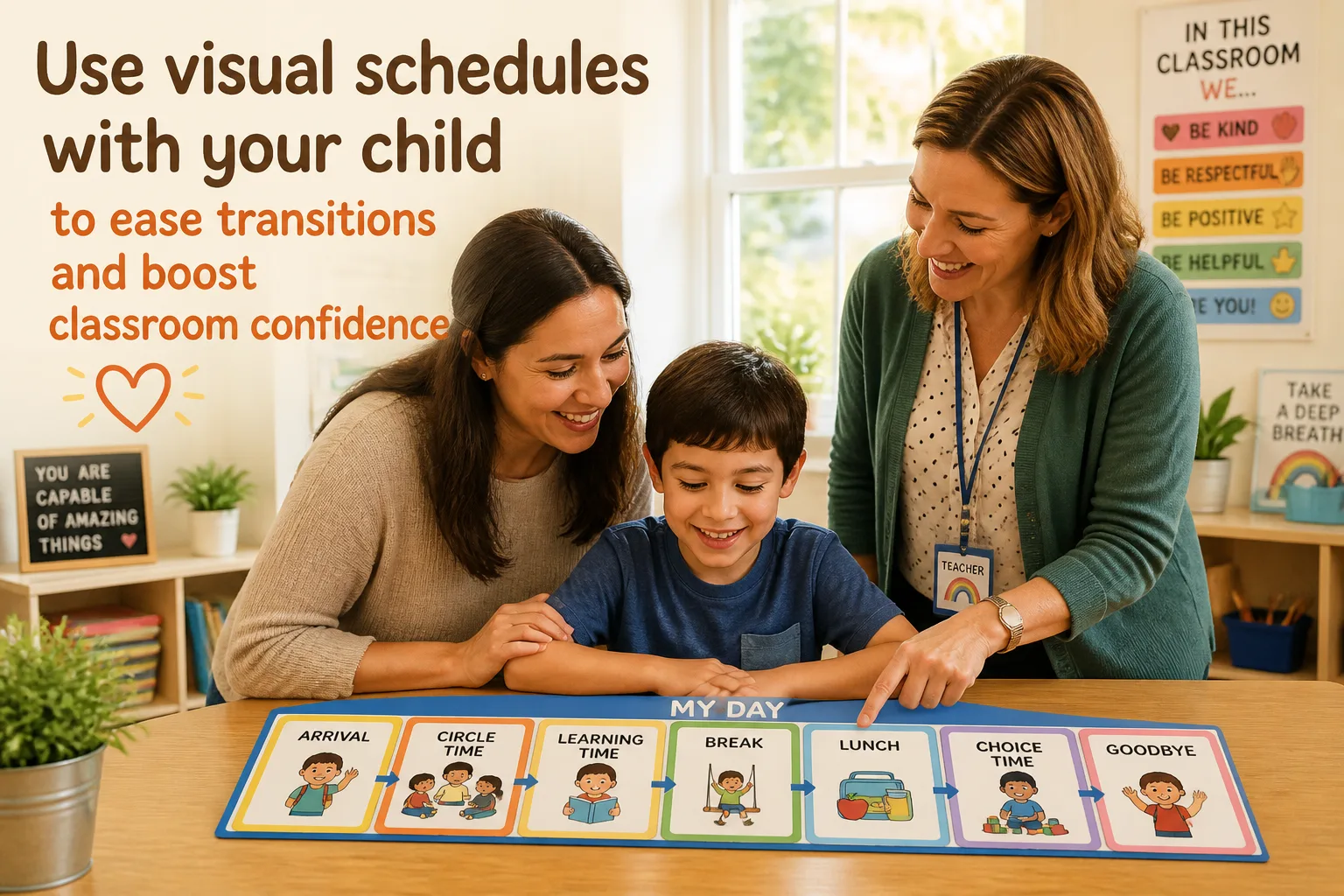

One of the simplest yet most powerful tools I’ve found to help my autistic child thrive in the classroom is using visual schedules. These are easy-to-understand picture or symbol charts showing the day’s activities step-by-step.
What Parents Can Try
Start by talking with your child’s teacher about creating a visual schedule tailored to your child’s daily routine. You can make one together or use ready-made templates. Include clear images or icons representing subjects, breaks, lunch, and transitions.
How to Do It in Simple Steps
- Gather materials: Use pictures, drawings, or printed icons.
- Create the schedule: Arrange the activities in order on a board or binder.
- Introduce it to your child: Review the schedule together each morning or before school.
- Encourage independence: Teach your child to check off or move markers as they complete each activity.
Why This Helps
Visual schedules reduce uncertainty by showing what comes next, which can ease anxiety around transitions. They also help children focus by providing a clear, predictable routine. Many teachers appreciate this tool because it supports smoother classroom flow and better engagement.
Every child is unique, so feel free to adjust the visuals and complexity to your child’s needs. Partnering with your child’s educators to implement this strategy can make a big difference in your child’s school experience.
Have you tried visual schedules or similar tools with your child? What worked best for you? Share your experience below — your insights might help another parent!
For more practical autism parenting tips and support, follow Love Beyond Words. We’re here to share, learn, and grow together.
#AutismParenting #VisualSchedules #IEPSupport
Download the images in this article