Handwashing Routine Visual Learning Set: 6 Steps to Help Your Child Build Independence

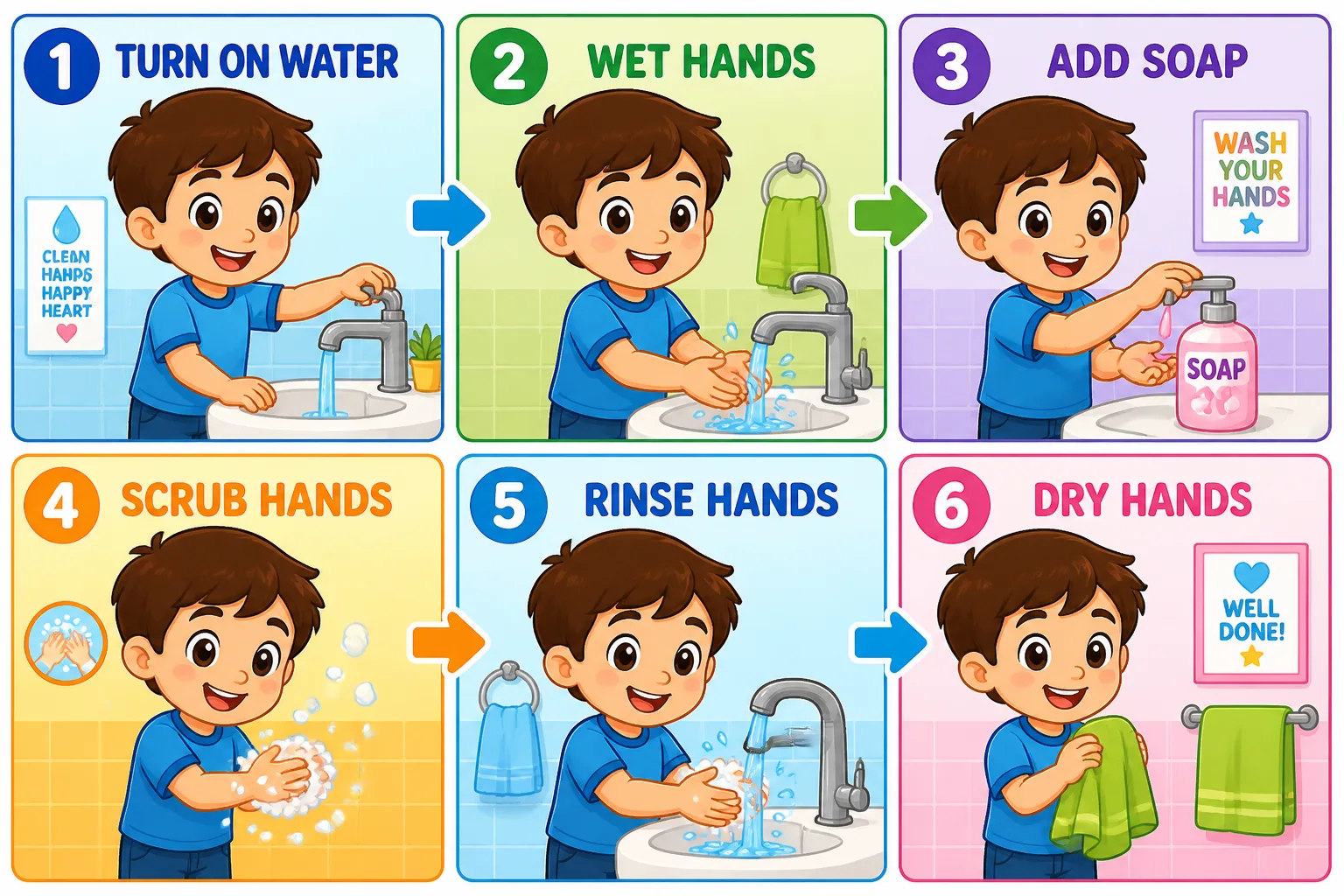
Teaching children the handwashing routine is essential for promoting good hygiene and helping them build independence in daily living skills. This visual learning set breaks down the handwashing process into six clear, manageable steps that children can understand and follow. Using a bright, friendly cartoon poster with step-by-step panels, children can see exactly what to do from turning on the water to drying their hands.
Why Teach the Handwashing Routine?
Handwashing is one of the most effective ways to prevent the spread of germs and illness. For young children, especially those with developmental needs, visual supports can make the routine easier to understand and remember. This routine also encourages participation and gradual independence, helping children feel confident and responsible for their own hygiene.
The 6 Steps in the Handwashing Routine Visual Set
- TURN ON WATER – Show your child how to turn on the faucet to get water flowing.
- WET HANDS – Place hands under the running water to get them wet.
- ADD SOAP – Use a soap dispenser or bar soap to add soap to hands.
- SCRUB HANDS – Rub hands together thoroughly, including between fingers and backs of hands, for at least 20 seconds.
- RINSE HANDS – Rinse all the soap off under running water.
- DRY HANDS – Use a clean towel or air dryer to dry hands completely.
How Parents Can Use This Visual Learning Set
- Show the visual before starting: Let your child see the steps to know what to expect.
- Practice one step at a time: Focus on mastering each action before moving on.
- Use simple language and First → Then: For example, “First wet hands, then add soap.”
- Give your child extra time: Allow them to process and complete each step without rushing.
Remember, every child develops at their own pace. Some may need more support or modeling, and that’s okay. Celebrate every effort and progress your child makes toward independence.
What daily living skill is your child currently practicing? Share your experience with us!
Download the handwashing routine visual learning set image below.