
Visual supports can be powerful tools to help children understand routines, communicate needs, and feel more secure at school. If you think your child could benefit from visual supports, such as picture schedules, timers, or visual cues, knowing how to ask for them effectively is key. This guide offers 6 practical parent steps to prepare, ask, and collaborate with your child’s school to include visual supports that meet your child’s unique needs.
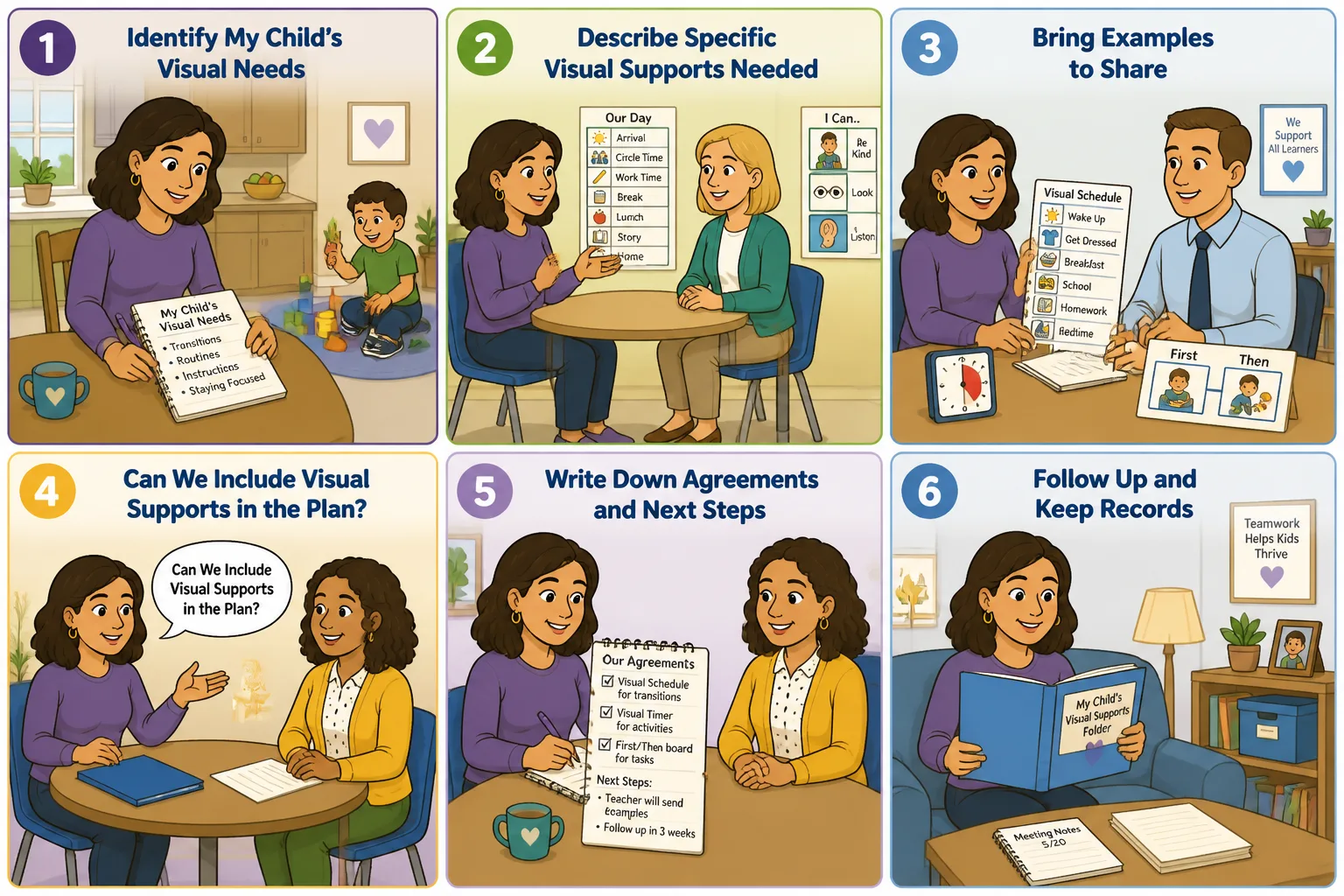
1. Identify Your Child’s Visual Needs
Start by observing when your child seems to need extra help understanding or transitioning. Note specific situations where visual supports might help, such as during classroom routines, transitions, or communication moments. Writing down these observations helps you clearly describe your child’s needs to school staff.
2. Describe Specific Visual Supports Needed
When talking with teachers or support staff, be as specific as possible about which visual supports you believe would help. For example, you might request a picture schedule for daily activities, visual timers to indicate how long a task will last, or visual choice boards for communication. Specific requests make it easier for the school to understand and consider your suggestions.
3. Bring Examples to Share
If you have examples of visual supports that have worked at home or in other settings, bring them to meetings. Showing physical examples or photos can help school staff visualize how these supports work and how they might be adapted for the classroom.
4. Ask if Visual Supports Can Be Included in the Plan
During meetings, such as IEP or 504 plan discussions, ask directly if visual supports can be included as part of your child’s accommodations or supports. Phrase your request respectfully and focus on how these supports will help your child access learning and participate fully.
5. Write Down Agreements and Next Steps
Take notes during meetings about what was agreed upon regarding visual supports. Clarify who will provide the supports, how they will be used, and when progress will be reviewed. Having clear documentation helps everyone stay on the same page.
6. Follow Up and Keep Records
After meetings, review any documents or plans and keep copies for your records. Follow up with the school if you notice the visual supports are not being used or if adjustments are needed. Keeping good records supports ongoing collaboration and advocacy.
Asking for visual supports is a practical way to help your child succeed at school. By preparing carefully, communicating clearly, and collaborating respectfully, you can help ensure your child has the tools they need to thrive.
For more on preparing for school meetings and tracking concerns, see our guides on Preparing for an IEP Meeting and Tracking Concerns About My Child.
What visual supports have you found helpful for your child at school or home?
Download the images in this article