
Being told to wait is a common everyday challenge for young children, especially those who need extra support with patience and understanding time. Learning how to cope with waiting can help children feel more in control and less frustrated. This article presents 6 practical steps children can use when they hear the word “wait,” teaching them to notice, communicate, and manage the situation calmly.
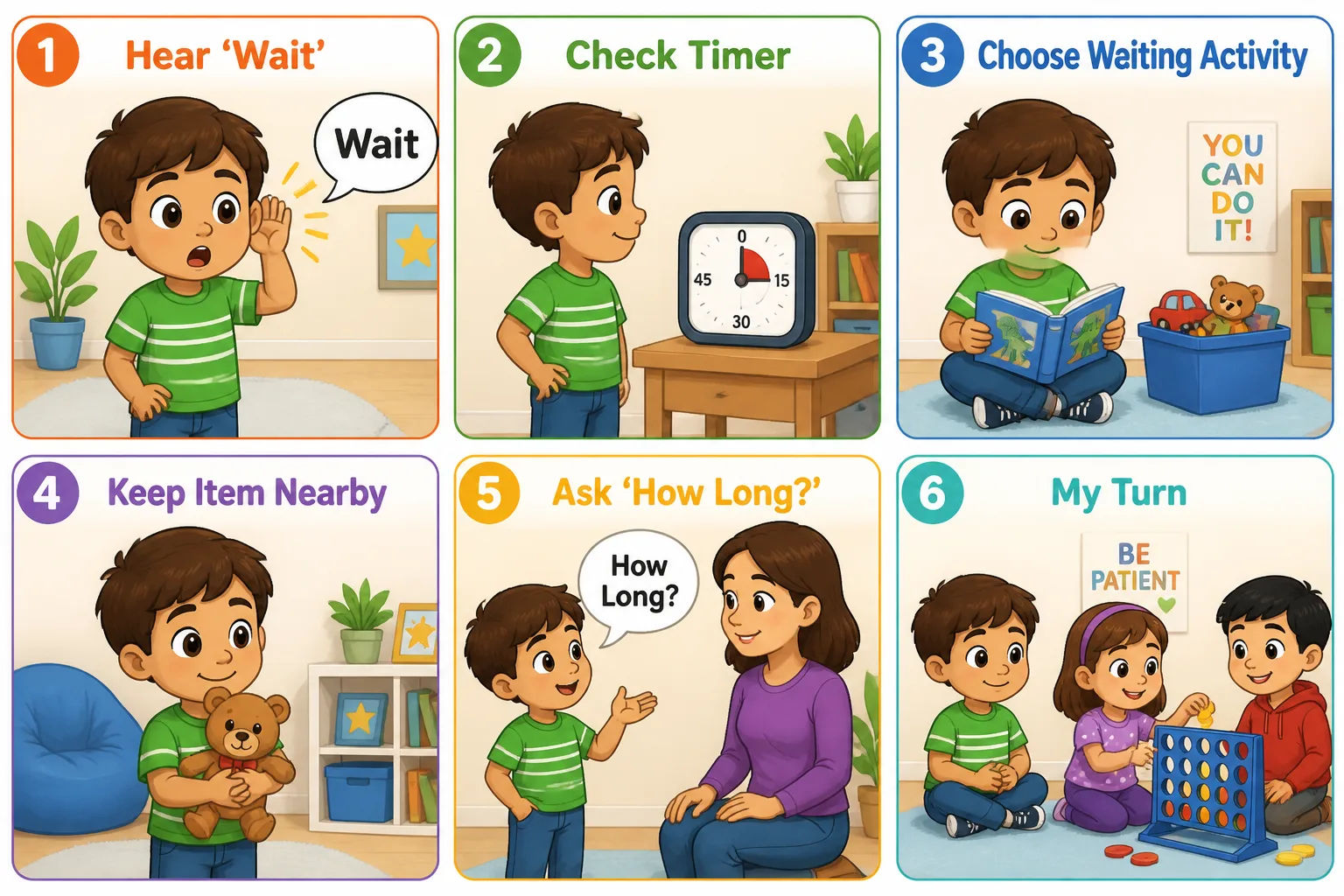
Hear “Wait”
The first step is recognizing the instruction. When a child hears “wait,” it can be confusing or upsetting. Helping the child notice the word calmly is important to begin coping.
Check Timer
Using a visual timer or clock helps make waiting concrete. Children can see how much time is left, which reduces anxiety about the unknown. Timers can be physical or digital, depending on what the child understands best.
Choose Waiting Activity
Engaging in a quiet, enjoyable activity during the wait helps distract and calm the child. This might be looking at a book, playing with a small toy, or drawing. Choosing an activity gives the child a sense of control.
Keep Item Nearby
Having a favorite item close by, like a soft toy or comfort object, can soothe the child during waiting. This familiar item provides reassurance and helps manage feelings of discomfort.
Ask “How Long?”
Encouraging the child to ask “how long?” supports communication and understanding. Adults can respond with simple, clear answers or show the timer to help the child anticipate the wait.
My Turn
Finally, preparing the child for their turn helps them focus on what comes next. This step encourages patience and readiness, making the transition smoother and less stressful.
Parents can support their child by previewing situations where waiting is expected, using simple language, and offering choices for waiting activities. Allowing breaks and acknowledging feelings without pressure helps children build coping skills at their own pace.
For more strategies on managing emotions and transitions, see our articles on Changing Plans: 6 Helpful Steps for Kids to Cope and Feeling Worried: 6 Steps to Help Young Children Recognize and Manage Worry.
How do you help your child when they need to wait? Share your tips or challenges with us!
Download the images in this article