Advocating for Your Child When They Experience Bullying at School: A Practical Parent Guide

Bullying at school is a distressing issue that many parents of autistic children and children with additional support needs may unfortunately encounter. Advocating for your child when they experience bullying is essential to protect their emotional well-being, ensure their safety, and support their right to a respectful and inclusive learning environment. This guide offers practical steps to help you recognize bullying, prepare for conversations with school staff, document incidents effectively, and collaborate on solutions that honor your child’s dignity, communication style, and sensory needs.
Understanding Bullying and Why It Matters
Bullying involves repeated aggressive behavior intended to harm or intimidate another person. For autistic children, bullying can take many forms, including verbal teasing, social exclusion, physical aggression, or even subtle forms like mimicking or mocking sensory behaviors. Because autistic children may communicate differently or have unique social interactions, bullying can sometimes be misunderstood or overlooked by school staff.
Recognizing bullying early is critical because it can lead to anxiety, depression, school avoidance, and reduced participation in classroom and social activities. Protecting your child’s dignity and emotional safety is a key part of advocacy.
Common Situations Parents May Encounter
- Your child comes home upset, withdrawn, or reluctant to attend school.
- Teachers or staff report conflicts but minimize the severity or frequency.
- Your child uses AAC, gestures, or other communication methods and struggles to explain what happened.
- There are repeated incidents involving the same peers, but no clear resolution.
- Your child shows changes in behavior, sleep, or appetite that may relate to stress from bullying.
What Parents Can Prepare Before Addressing Bullying
Preparation helps you approach school staff confidently and constructively. Consider these steps:
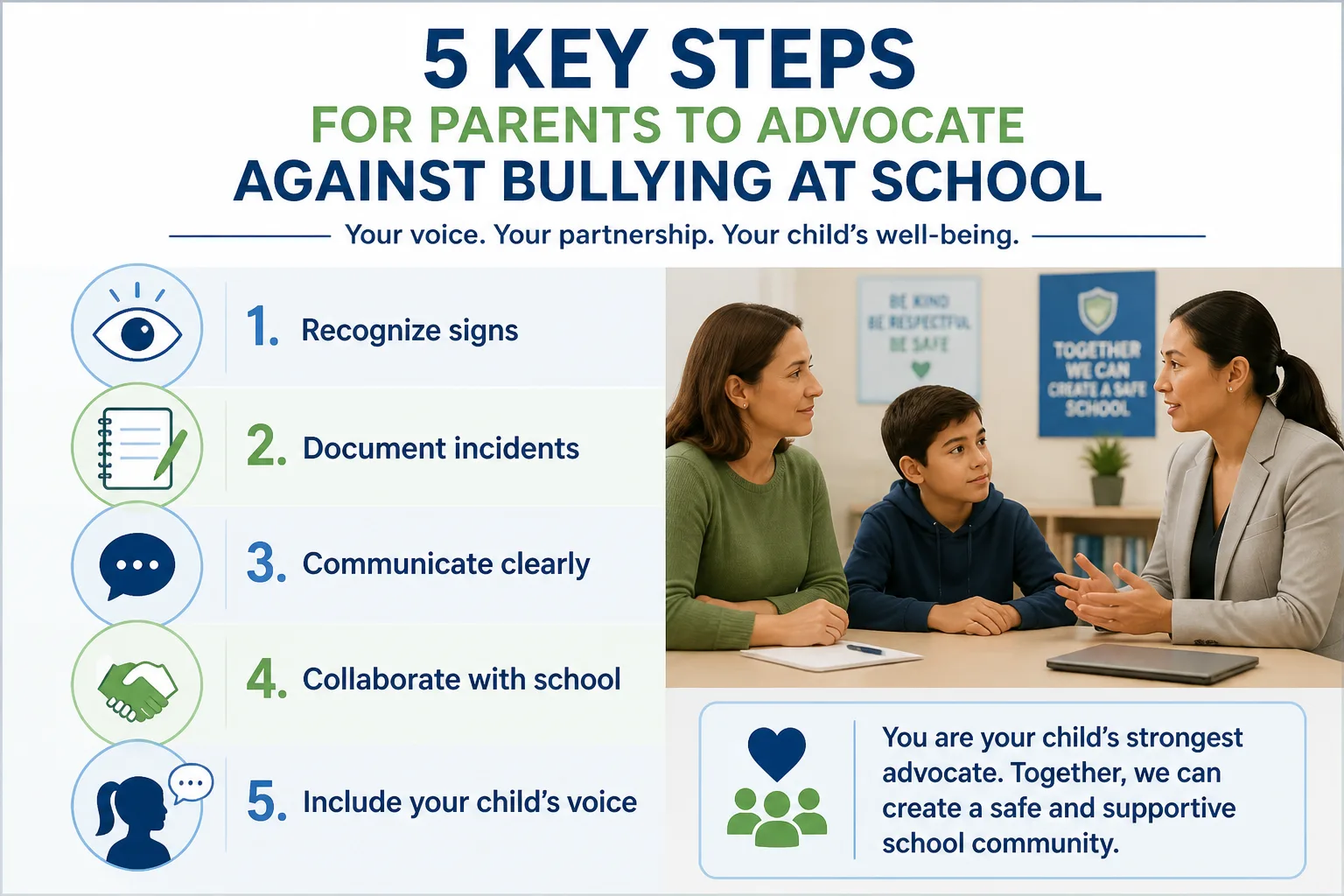
- Observe and document: Keep a detailed log of incidents, including dates, times, locations, what happened, who was involved, and how your child responded. Use your child’s communication method to gather their account, whether through speech, AAC, writing, or drawings.
- Gather supporting information: Note any changes in your child’s mood, behavior, or school participation that may relate to bullying.
- Review school policies: Familiarize yourself with your school’s anti-bullying policies and procedures, often available on the school website or handbook.
- Prepare questions and goals: Think about what you want to understand and achieve, such as ensuring supervision during recess, educating peers on autism, or establishing a safety plan.
Questions to Ask School Staff
When meeting with teachers, counselors, or administrators, clear questions help clarify the situation and next steps. Examples include:
- “Can you share what you have observed regarding my child’s interactions with peers?”
- “What steps does the school take when bullying is reported or suspected?”
- “How can we work together to support my child’s safety and well-being during school hours?”
- “Are there accommodations or supports that can help my child feel more secure and included?”
- “Can we involve my child in creating a plan that respects their communication and sensory needs?”
Practical Advocacy Strategies
- Document everything: Keep copies of emails, meeting notes, incident reports, and your own observations. This record supports clear communication and follow-up.
- Request a formal meeting: Ask for a meeting with relevant staff to discuss concerns and develop a plan. Bringing an advocate or support person can be helpful.
- Suggest specific accommodations: Examples include sensory breaks, safe spaces, peer education about autism, or communication supports tailored to your child.
- Promote positive peer relationships: Encourage the school to facilitate inclusive activities that build understanding and friendships.
- Follow up regularly: Check in on progress and adjust plans as needed. Consistent communication shows your commitment and keeps your child’s needs visible.
Including Your Child’s Voice
Whenever possible and developmentally appropriate, involve your child in conversations about bullying and safety. Use their preferred communication method to learn how they feel and what they want. This can empower your child and ensure interventions respect their autonomy and dignity.
Common Mistakes to Avoid
- Assuming bullying is “just a phase” or “normal” peer conflict without investigation.
- Pressuring your child to mask or suppress natural behaviors to avoid bullying.
- Ignoring your child’s communication style or sensory needs when planning supports.
- Reacting with anger or threats that may escalate conflict rather than foster collaboration.
When to Seek Additional Guidance
If bullying persists despite school interventions, or if your child’s safety is at risk, consider consulting with a special education advocate, counselor, or legal expert familiar with your state’s laws. You may also explore formal plans such as a Behavior Intervention Plan (BIP) or accommodations under a 504 Plan or IEP to address bullying and safety.
Key Takeaway
Advocating against bullying involves careful observation, respectful communication, thorough documentation, and collaborative problem-solving that centers your child’s dignity, communication, and sensory needs. Your informed, consistent involvement is vital to creating a safe and inclusive school environment.
What strategies have you found effective in supporting your child when they face bullying at school?
Download the images in this article