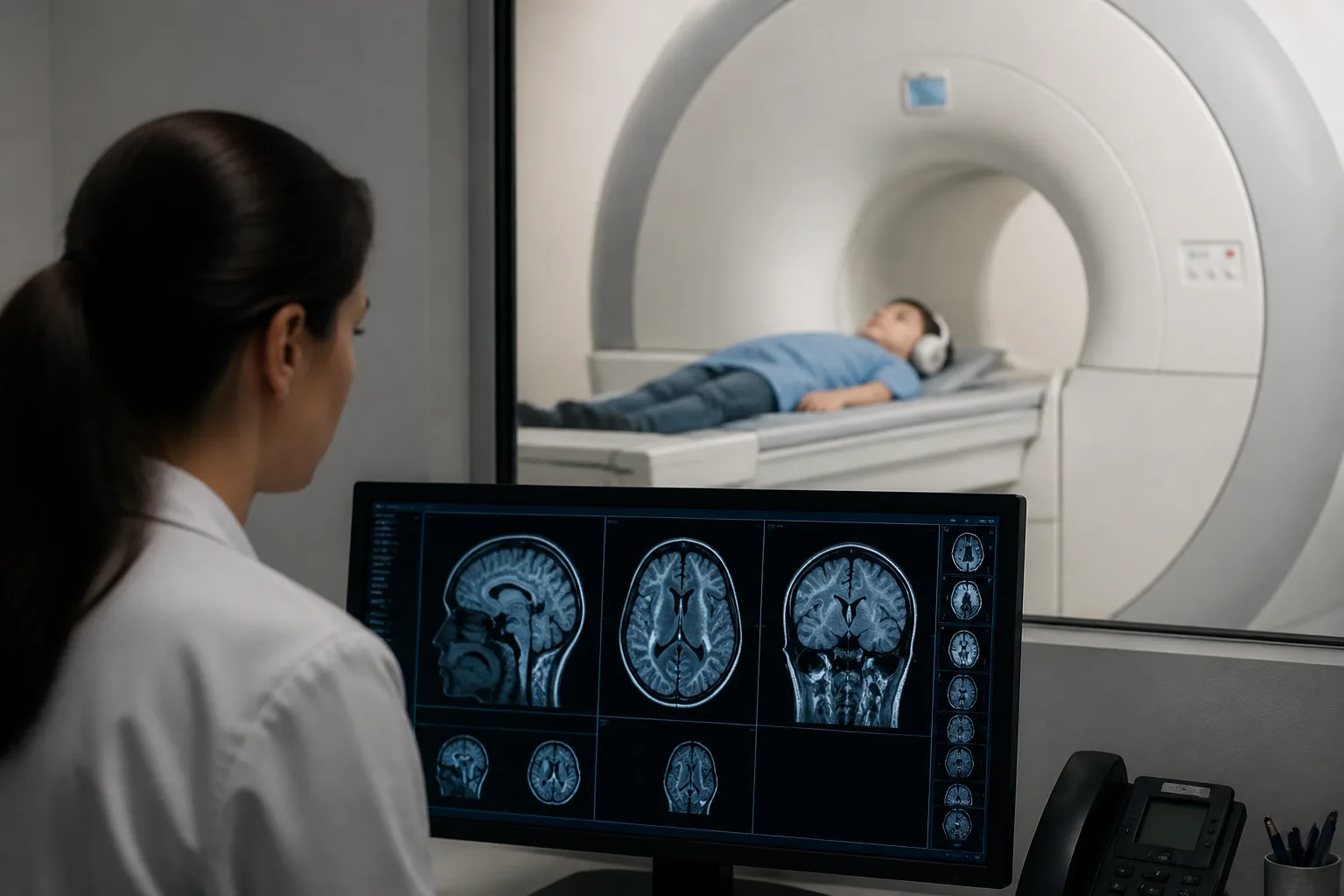
Study Explores Brain MRI Abnormalities in Children with Autism Spectrum Disorder

Overview of MRI Findings in Autism Spectrum Disorder
A recent study involving 1,884 children diagnosed with autism spectrum disorder (ASD) investigated the prevalence and clinical correlates of abnormal brain magnetic resonance imaging (MRI) results. The research aimed to clarify which children with ASD are more likely to have abnormal MRI findings and to evaluate factors associated with MRI use in this population.
Key Findings on MRI Utilization and Abnormalities
Among the cohort, 704 patients (approximately 37%) underwent brain MRI scans. Of these, nearly 46% were reported to have abnormal MRI results. However, the study emphasized that the broad category of “abnormal” MRI findings does not necessarily indicate clinically actionable conditions.
Importantly, the decision to perform MRI was not based on an ASD diagnosis alone but was influenced by additional neurological or developmental concerns.
Clinical Factors Linked to MRI Use
Analysis revealed that children with a history of seizures were significantly more likely to have undergone MRI (adjusted odds ratio [aOR] 2.47). Similarly, abnormal electroencephalogram (EEG) results were associated with increased MRI utilization (aOR 2.83) in a subset of patients with complete data.
Challenges in Predicting MRI Abnormalities
The study found that commonly recorded clinical variables such as age, sex, seizure history, EEG status, and genetic testing results were insufficient to reliably distinguish between normal and abnormal MRI findings. Statistical models showed low discrimination ability, indicating that these factors alone cannot predict MRI abnormalities in children with ASD.
Implications for Clinical Practice
These findings support a tailored approach to ordering brain MRIs in children with ASD, emphasizing the importance of individualized clinical evaluation rather than routine imaging based solely on ASD diagnosis. The study suggests that MRI should be reserved for cases where additional neurological or developmental concerns justify structural brain assessment.
Future research with more detailed neurological and developmental data may help refine criteria for MRI use and improve identification of children who might benefit most from imaging.
Limitations and Considerations
The study’s retrospective design and reliance on broad MRI abnormality coding limit the ability to determine the clinical significance of the findings. Additionally, the lack of detailed phenotypic information restricts the capacity to identify specific predictors of abnormal MRI results.
For more detailed information, see the original study published in Neurological International: Which Children with Autism Spectrum Disorder Have Abnormal Brain MRI Findings? Clinical Correlates in a 1884-Patient Cohort.
Download the images in this article