
What This Skill Teaches
Following two-step directions helps children understand and carry out instructions that have more than one part. This skill builds their listening and comprehension abilities, which are important for everyday tasks, learning in school, and social interactions.
Why This Skill Matters
Being able to follow two-step directions shows that a child can process information, remember steps, and act on them in order. This is important for independence, safety, and success in many settings. For example, following directions like “wash your hands and then come to the table” helps children participate in routines smoothly.
What Parents May Notice
- Child may follow one-step directions but struggle with two-step instructions.
- Child might do only the first step or get confused about the order.
- Child may respond better with visual cues or demonstrations.
The Learning Set
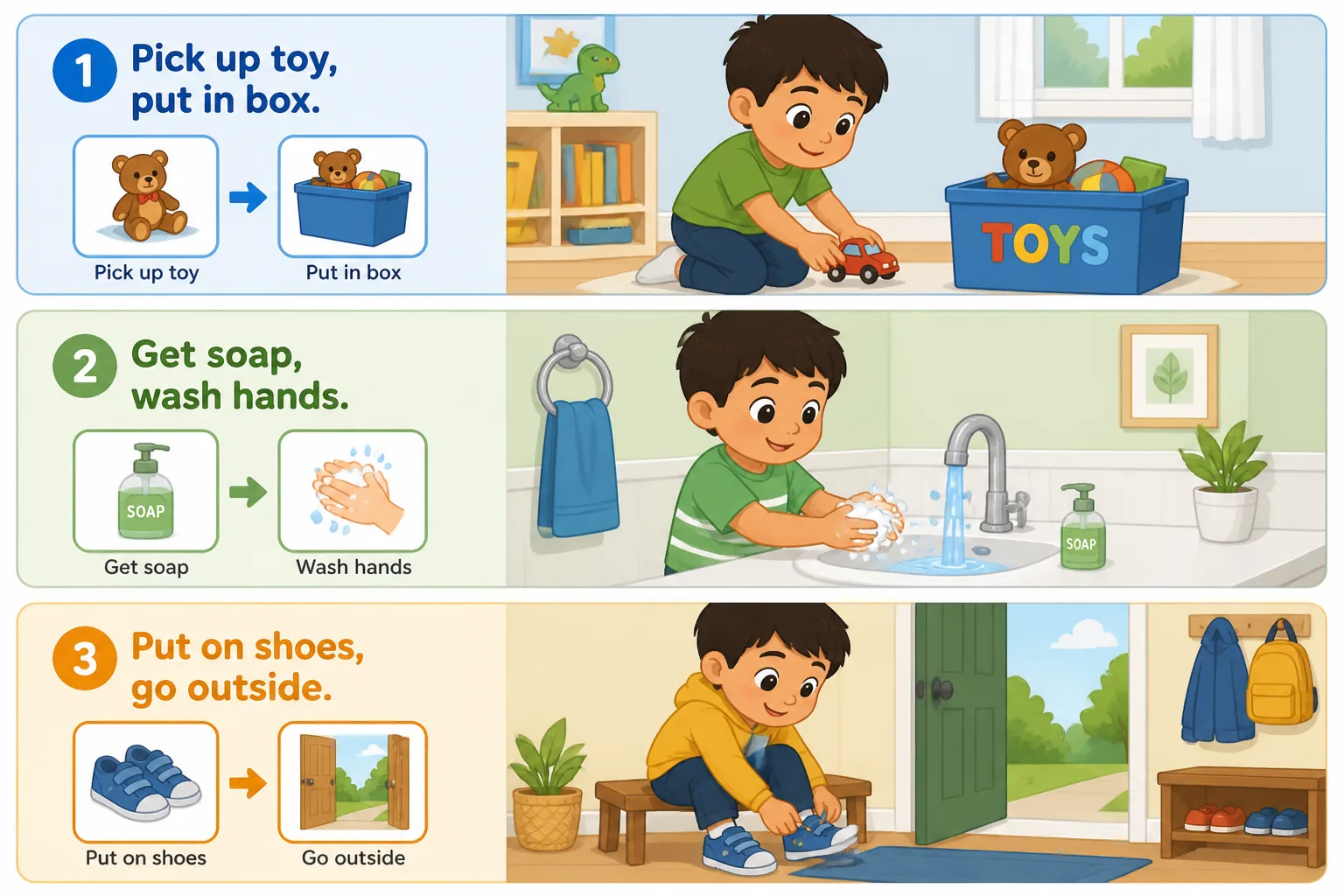
This article focuses on these three two-step directions:
- Pick up the toy, put it in the box.
- Wash your hands with soap and water.
- Put on your shoes, then go outside.
How to Model the Language
- Say the direction slowly and clearly, breaking it into two parts.
- Use simple words and repeat the direction naturally during the activity.
- Show the steps by doing them yourself first, then invite your child to try.
- Use gestures or point to objects as you speak.
Easy Ways to Practice at Home
- During playtime, ask your child to pick up toys and put them away using the two-step phrase.
- At mealtime or after outdoor play, model washing hands with soap and water, narrating the steps.
- Before going outside, encourage your child to put on shoes by giving the two-step direction.
Helpful Examples to Say
- “Pick up the ball, put it in the box.”
- “Wash your hands, then dry them.”
- “Put on your shoes, then open the door.”
Supporting AAC, Gestures, and Other Communication
Children who use AAC devices, signs, or gestures can follow two-step directions by selecting or showing each step. Parents can support this by pairing spoken directions with visual supports or AAC symbols. For example, show a picture of a toy and a box, or the steps for washing hands. Allow extra time for the child to process and respond.
What to Avoid
- Don’t rush the child or demand immediate response.
- Avoid giving complicated or long instructions beyond two steps at first.
- Don’t require spoken repetition; accept any form of communication.
Real-Life Example
During cleanup time, a parent says, “Pick up the blocks, put them in the basket.” The child watches the parent do it once, then follows the steps. The parent praises the effort and repeats the direction during the activity to reinforce learning.
When Extra Support May Help
If a child consistently struggles with two-step directions and it affects daily routines or learning, consider consulting a speech-language pathologist. They can provide tailored strategies and supports to build receptive language skills.
Key Takeaway
Following two-step directions is a key language skill that supports independence and communication. Parents can help by modeling clear, simple instructions paired with actions and giving children time to respond in their own way.
What two-step directions do you notice your child following during the day?
Download the images in this article