Dietary Tryptophan Supplementation Shows Promise for Social Behavior in Tuberous Sclerosis Mouse Model

Introduction
New research suggests that increasing dietary tryptophan, an essential amino acid and precursor to serotonin, may improve social behaviors in a mouse model of tuberous sclerosis complex (TSC), a genetic condition often linked with autism spectrum disorder (ASD). This study explored whether tryptophan supplementation could positively affect brain chemistry and behavior related to ASD symptoms.
Key Findings from the Study
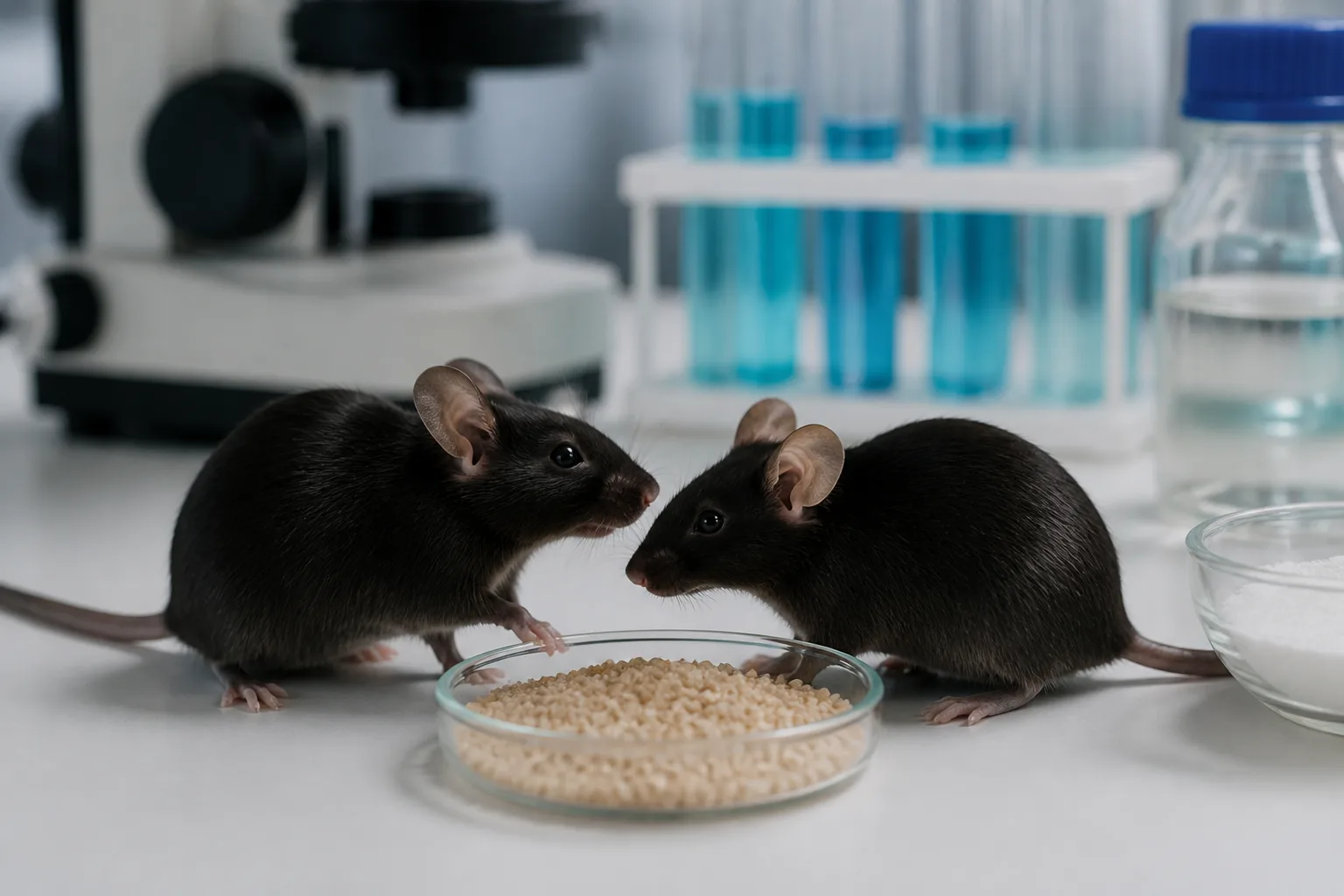
Researchers used Tsc2+/- mice, which carry a mutation modeling TSC and exhibit ASD-like behaviors. After providing a tryptophan-enriched diet, they observed several behavioral improvements:
- Enhanced sociability in female mice.
- Restoration of social novelty preference in male mice.
- Reduced anxiety-like behavior and increased exploratory activity across both sexes.
These behavioral changes corresponded with increased cortical tryptophan levels, measured by high-performance liquid chromatography (HPLC). However, in vivo proton magnetic resonance spectroscopy (1H-MRS) did not reveal significant changes in the brain’s excitation/inhibition balance.
Context and Implications
Serotonin (5-HT) plays a critical role in mood, cognition, and sensory processing. Since serotonin synthesis depends on tryptophan availability, adjusting dietary intake offers a potential non-invasive method to influence brain function. Disrupted tryptophan metabolism and serotonergic signaling have been implicated in ASD, especially in neurogenetic disorders like TSC.
This study’s findings highlight that nutritional modulation of tryptophan can increase its brain availability and improve social and anxiety-related behaviors in a relevant animal model. Such results support further exploration of precision nutrition strategies targeting serotonergic pathways for neurodevelopmental conditions.
Considerations and Limitations
While the study shows promising behavioral effects, it is important to note that these findings are preliminary and based on an animal model. The lack of observed changes in excitation/inhibition balance suggests that tryptophan’s effects may not involve all neural mechanisms traditionally associated with ASD. Further research is necessary to understand the underlying biological processes and to evaluate potential applicability to humans.
Conclusion
Dietary tryptophan supplementation may offer a beneficial approach to improving social behaviors and reducing anxiety-like symptoms in TSC-related ASD, according to this mouse model study. These results encourage continued investigation into nutritional interventions as part of comprehensive strategies for neurodevelopmental disorders.
For more detailed information, see the original study published in Nutritional Neuroscience: Tryptophan-enriched diet improves social behavior in a mouse model of tuberous sclerosis complex.
Download the images in this article