
Preparing for an Individualized Education Program (IEP) meeting is a vital step for parents to effectively advocate for their child’s educational needs. An IEP meeting brings together parents, teachers, and specialists to discuss goals, supports, and progress. Being well-prepared helps parents participate confidently and collaboratively, ensuring the meeting focuses on the child’s strengths and specific support needs.
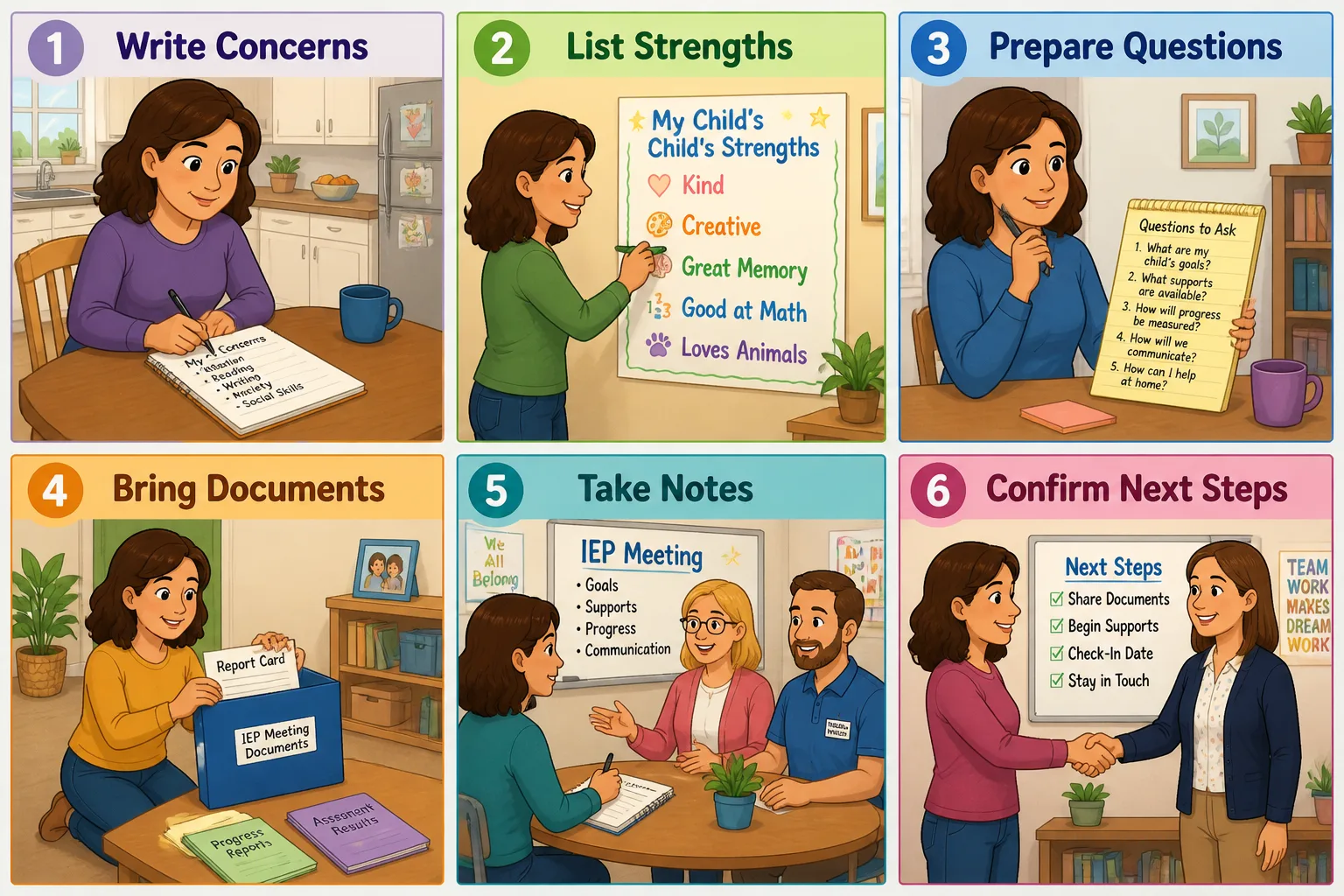
1. Write Down Your Concerns
Before the meeting, take time to note any concerns you have about your child’s learning, behavior, communication, or sensory needs. Writing these down helps you remember key points and communicate clearly during the meeting.
2. List Your Child’s Strengths
Highlighting your child’s strengths is essential to create a balanced view and guide goal setting. Consider social skills, interests, talents, or progress areas that can support learning.
3. Prepare Important Questions
Think of 3–5 questions to ask the team. These might include: “How will progress be measured?”, “What supports help during transitions?”, or “How can we reinforce goals at home?” Preparing questions ensures you get the information you need.
4. Bring Relevant Documents
Gather recent reports, evaluations, therapy notes, or communication logs to share. Having these on hand supports informed discussions and helps clarify your child’s needs.
5. Take Notes During the Meeting
Document key points, decisions, and action steps during the meeting. Notes help you remember agreements and follow up effectively.
6. Confirm Next Steps
Before the meeting ends, ask for clarification on what happens next, timelines, and who to contact with questions. Confirming next steps supports ongoing collaboration.
By following these steps, parents can approach IEP meetings with confidence and a clear plan to support their child’s education. For more tips on preparing for meetings and supporting your child, see our parent steps for success and communication phrases for young children.
What is one question you want to ask at your child’s next IEP meeting?
Download the images in this article