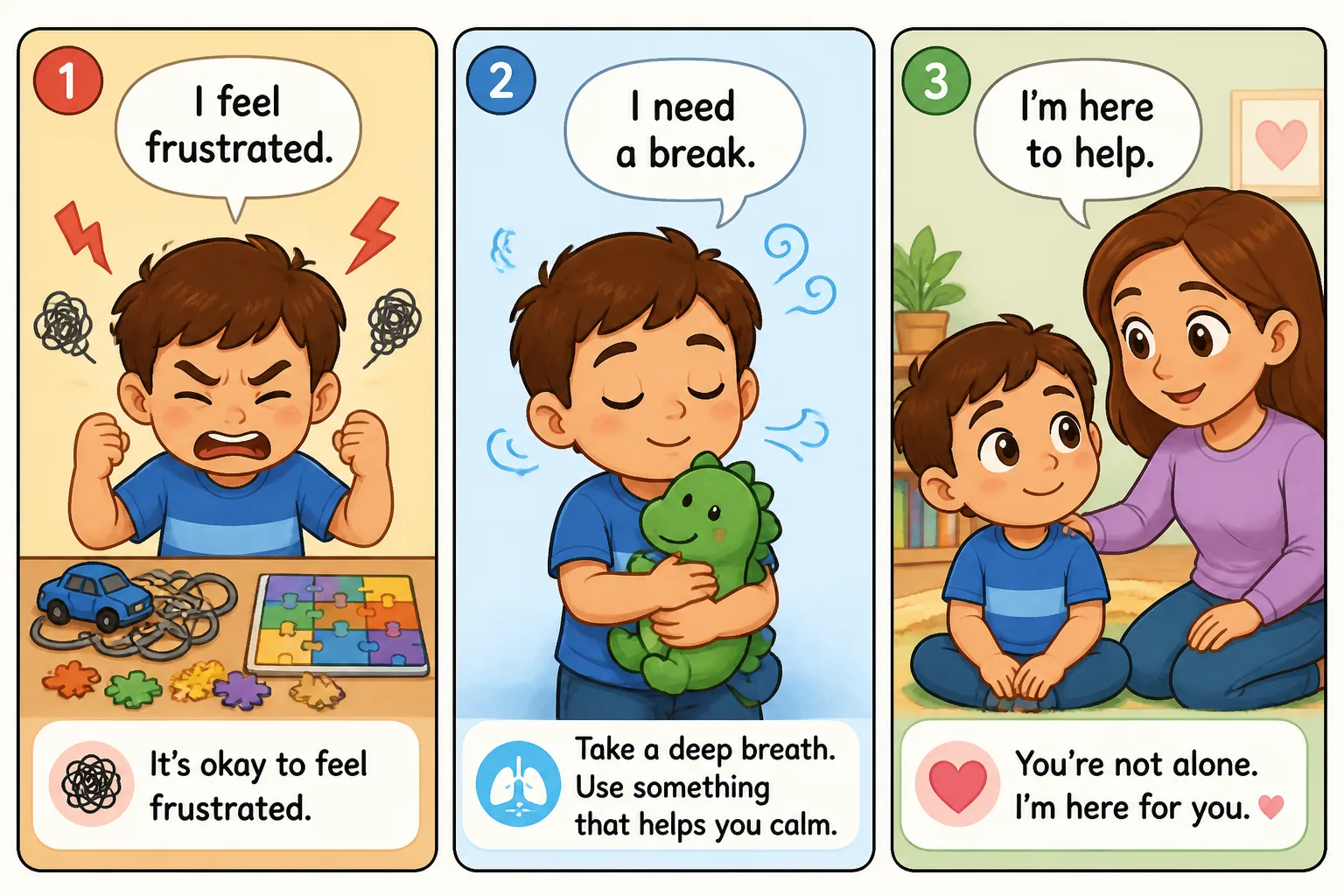

Frustration is a common and natural feeling young children experience when things don’t go as they want or expect. For autistic children and those who need extra emotional support, frustration can feel especially intense and hard to manage. Understanding what frustration feels like, recognizing the signs, and learning ways to cope can help children feel safer and more in control of their emotions.
What Is Frustration and How Might a Child Experience It?
Frustration happens when a child faces a challenge, a delay, or something that feels unfair or confusing. They might want to do something but find it too hard or get upset when things don’t work out. This feeling can build quickly and sometimes lead to tears, yelling, or shutting down.
Children might feel their body getting tense, their heart beating faster, or their hands clenching. They might say, “I can’t do it,” or show signs like stomping feet or avoiding the task.
Common Signs and Triggers of Frustration
- Signs: Frowning, crying, yelling, pushing away toys, refusing to try, or withdrawing.
- Triggers: Difficult tasks, unexpected changes, waiting too long, being told “no,” or sensory overload.
Practical Strategies to Support a Child Feeling Frustrated
Helping children manage frustration involves teaching them to recognize their feelings and use safe ways to cope. Here are some practical strategies:
- Recognize and Name the Feeling: Help your child say, “I feel frustrated” or use a picture or gesture if words are hard.
- Pause and Breathe: Encourage slow, deep breaths to help calm the body. You can say, “Let’s take a big breath together.”
- Take a Break: Offer a quiet space or a favorite calming activity like squeezing a soft toy or listening to gentle music.
- Offer Choices: Give simple options to help your child feel more in control, such as “Do you want to try again now or later?”
- Stay Close and Calm: Your calm presence helps your child feel safe. Avoid pushing for eye contact or talking if the child isn’t ready.
What Adults Can Say and Do
Use supportive language that validates feelings without judgment or pressure. Examples include:
- “I see this is really hard for you.”
- “It’s okay to feel upset. I’m here with you.”
- “Would you like some space or help?”
- “We can try again when you’re ready.”
Avoid phrases like “Stop crying,” “Be good,” or “You’re fine,” which can make children feel misunderstood or pressured to hide their feelings.
Practicing Skills During Calm Moments
When your child is calm, talk about frustration and practice coping skills together. Use stories, role-play, or visual aids to help your child recognize frustration and remember what helps. This preparation makes it easier to use these skills when feelings get big.
Individual Differences and What to Avoid Forcing
Every child experiences and expresses frustration differently. Some may need more time or prefer quiet activities, while others might need movement or sensory input to feel better. Avoid forcing eye contact, speech, or quick calming, as this can increase stress.
Key Takeaway
Frustration is a meaningful feeling that tells us something is hard. Supporting children with understanding, patience, and practical coping strategies helps them feel safe and learn to manage their emotions over time.
For more ideas on recognizing emotions and asking for breaks, see My Body Gives Me Clues and When I Need a Break.
Parent question: What signs of frustration do you notice in your child, and which strategies have helped them calm down?
Download the images in this article