Skip to content
-
Subscribe to our newsletter & never miss our best posts. Subscribe Now!
Love Beyond Words - autismwords.com Love Beyond Words - autismwords.com Love Beyond Words - autismwords.com

Supporting children with autism through education and care

Love Beyond Words - autismwords.com Love Beyond Words - autismwords.com Love Beyond Words - autismwords.com

Supporting children with autism through education and care

  • Learning & Support
    • Communication Skills
    • Daily Living Skills
    • Emotional Regulation
    • Everyday Challenges
    • Learning Through Play
    • Parent Education & Advocacy
    • Positive Behavior Support
    • Routines & Transitions
    • Social Skills
    • Speech & Language
  • Learning & Support
    • Communication Skills
    • Daily Living Skills
    • Emotional Regulation
    • Everyday Challenges
    • Learning Through Play
    • Parent Education & Advocacy
    • Positive Behavior Support
    • Routines & Transitions
    • Social Skills
    • Speech & Language
Close

Search

  • https://www.facebook.com/
  • https://twitter.com/
  • https://t.me/
  • https://www.instagram.com/
  • https://youtube.com/
Subscribe
Love Beyond Words - autismwords.com Love Beyond Words - autismwords.com Love Beyond Words - autismwords.com

Supporting children with autism through education and care

Love Beyond Words - autismwords.com Love Beyond Words - autismwords.com Love Beyond Words - autismwords.com

Supporting children with autism through education and care

  • Learning & Support
    • Communication Skills
    • Daily Living Skills
    • Emotional Regulation
    • Everyday Challenges
    • Learning Through Play
    • Parent Education & Advocacy
    • Positive Behavior Support
    • Routines & Transitions
    • Social Skills
    • Speech & Language
  • Learning & Support
    • Communication Skills
    • Daily Living Skills
    • Emotional Regulation
    • Everyday Challenges
    • Learning Through Play
    • Parent Education & Advocacy
    • Positive Behavior Support
    • Routines & Transitions
    • Social Skills
    • Speech & Language
Close

Search

  • https://www.facebook.com/
  • https://twitter.com/
  • https://t.me/
  • https://www.instagram.com/
  • https://youtube.com/
Subscribe
Home/Learning & Support/Communication Skills/Expressing Discomfort and Asking for Help: 6 Essential Communication Phrases for Young Children
Expressing Discomfort and Asking for Help: 6 Essential Communication Phrases for Young
Communication Skills

Expressing Discomfort and Asking for Help: 6 Essential Communication Phrases for Young Children

By Andyle
August 21, 2026 2 Min Read
0

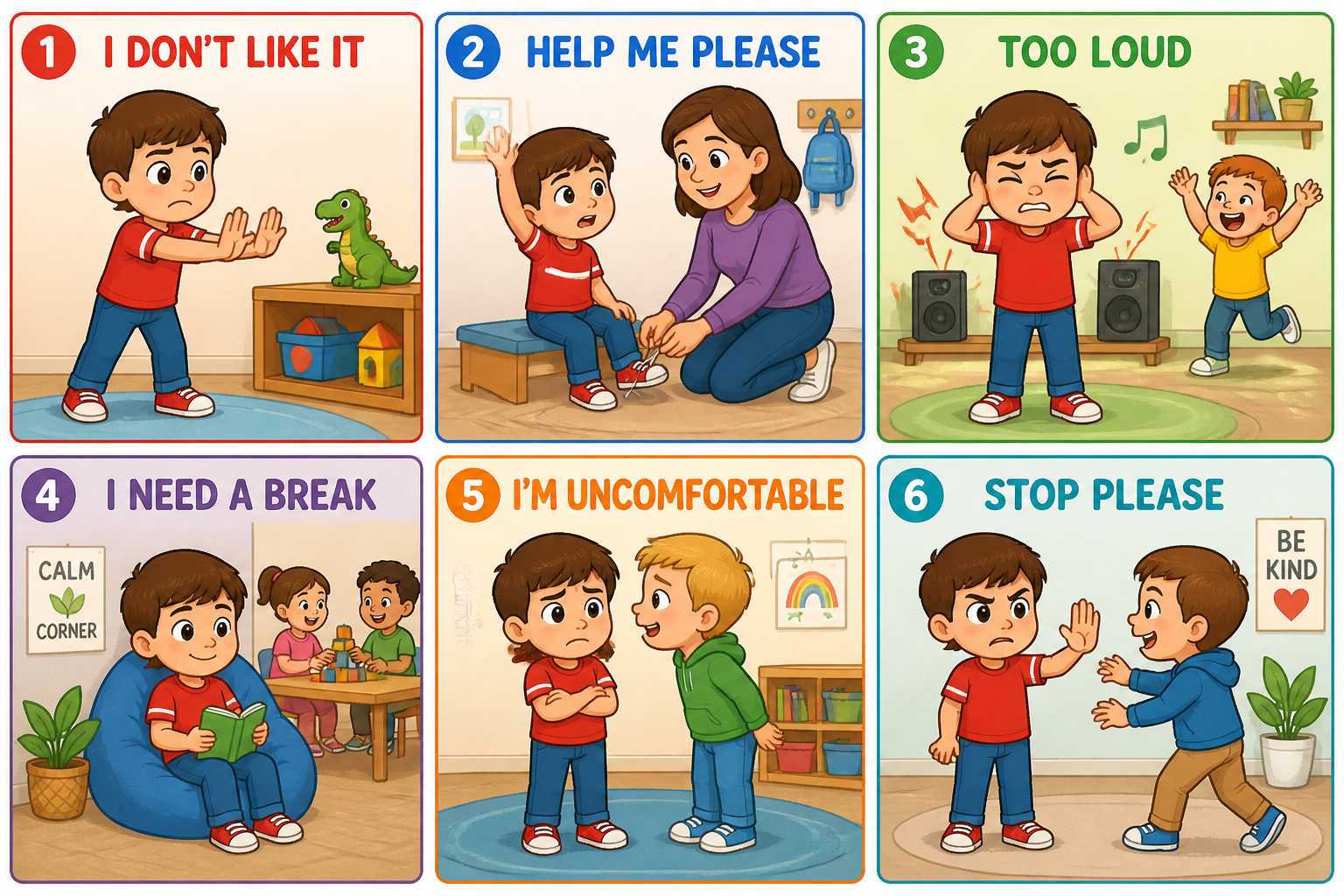
Teaching young children how to express discomfort and ask for help is vital for their emotional development and self-advocacy. This visual communication set introduces 6 practical phrases children can use in everyday situations to communicate their feelings and needs effectively. These phrases help children say when they don’t like something, need assistance, or want to set boundaries, supporting their independence and social interactions.

1. I DON’T LIKE IT

This phrase helps children express dislike or discomfort with a situation or object. For example, a child might push away a toy they find unpleasant. Parents can model this by naming their own dislikes and encouraging the child to use the phrase with gestures or AAC.

2. HELP ME PLEASE

Encouraging children to ask for help supports problem-solving and reduces frustration. Children can raise a hand or use a picture card to request assistance, such as tying shoes or opening a container.

3. TOO LOUD

Children often struggle with noisy environments. Teaching them to say “Too loud” and cover their ears or move away helps them communicate sensory discomfort and seek a calmer space.

4. I NEED A BREAK

This phrase allows children to request time away from overwhelming activities. Parents should provide a quiet, safe space and respect the child’s need for a break without pressure.

5. I’M UNCOMFORTABLE

Children can use this phrase to express feelings of unease, for example, if someone stands too close. Teaching this helps them set social boundaries respectfully.

6. STOP PLEASE

This important phrase empowers children to ask others to stop unwanted actions. Paired with a clear stop hand gesture, it teaches assertiveness and personal safety.

How Parents Can Practice These Phrases

  • Model each phrase naturally during daily routines without forcing repetition.
  • Pair words with gestures, visuals, or AAC to support understanding.
  • Provide real opportunities for the child to use these phrases in context.
  • Offer simple choices and pause to allow processing time.
  • Celebrate all communication attempts, whether spoken, gestured, or pointed.

Remember, communication is about connection and respect, not perfection. Supporting your child with these phrases helps them express their needs and feelings confidently.

What situations have you noticed where your child might want to say “I need a break” or “Help me please”?

Download the images in this article

  • Expressing Discomfort and Asking for Help: 6 Essential Communication Phrases for Young
Author

Andyle

Follow Me
Other Articles
Snack Time Routine Visual Learning Set: 6 Steps to Help Your Child
Previous

Snack Time Routine Visual Learning Set: 6 Steps to Help Your Child Build Independence

Teaching Prepositions: IN, ON, UNDER, NEXT TO
Next

Teaching Prepositions: IN, ON, UNDER, NEXT TO

No Comment! Be the first one.

Leave a Reply Cancel reply

Your email address will not be published. Required fields are marked *

  • Preparing for Loud Events: 6 Sensory Support Steps for Children
    Preparing for Loud Events: 6 Sensory Support Steps for Children
    Learn 6 practical sensory support steps to help children prepare for loud events. Teach recognition, communication, breaks, and choices for comfort and confidence.
  • Color Sorting Treasure Hunt: A Fun Learning Through Play Activity
    Color Sorting Treasure Hunt: A Fun Learning Through Play Activity
    Engage your child with a playful color sorting treasure hunt that builds color recognition, matching, and motor skills in six fun, easy steps.
  • Teaching Prepositions: IN, ON, UNDER, NEXT TO
    Teaching Prepositions: IN, ON, UNDER, NEXT TO
    Teach children the prepositions IN, ON, UNDER, and NEXT TO with a fun, clear cartoon poster. Help your child describe where things are with simple language and play.
  • Expressing Discomfort and Asking for Help: 6 Essential Communication Phrases for Young
    Expressing Discomfort and Asking for Help: 6 Essential Communication Phrases for Young Children
    Help your child express discomfort and ask for help with 6 practical communication phrases. Teach "I don't like it," "Help me please," "Too loud," and more for everyday situations.
  • Snack Time Routine Visual Learning Set: 6 Steps to Help Your Child
    Snack Time Routine Visual Learning Set: 6 Steps to Help Your Child Build Independence
    Teach your child the snack time routine with 6 simple steps: wash hands, get snack, open snack, eat, throw trash away, and wipe mouth. Build independence with this visual guide.
Teaching Personal Boundaries: 6 Essential Communication Phrases for Young Children Teaching Personal Boundaries: 6 Essential Communication Phrases for Young Children
August 20, 2026
Grocery Shopping Routine Visual Learning Set: 6 Steps to Help Your Child Grocery Shopping Routine Visual Learning Set: 6 Steps to Help Your Child Participate Independently
6 views
Teaching Personal Boundaries: 6 Essential Communication Phrases for Young Children Teaching Personal Boundaries: 6 Essential Communication Phrases for Young Children
6 views
Personal Hygiene Visual Learning Set: 6 Steps to Help Your Child Develop Personal Hygiene Visual Learning Set: 6 Steps to Help Your Child Develop Independence
5 views
Cleaning Up After Playtime: 6 Steps to Teach Your Child Responsibility and Cleaning Up After Playtime: 6 Steps to Teach Your Child Responsibility and Independence
3 views
Getting Dressed Visual Learning Set: 6 Steps to Help Your Child Build Getting Dressed Visual Learning Set: 6 Steps to Help Your Child Build Independence
3 views

Content on this website is created with the assistance of artificial intelligence (AI), while some portions are still reviewed and overseen by humans. All content and resources are provided completely free of charge.

Some information may be referenced or cited from reputable sources. Whenever possible, we will clearly identify the sources used within each article.

If you have any questions, feedback, or would like to contact us, please email: info@autismwords.com

Copyright 2026 — Love Beyond Words - autismwords.com. All rights reserved. Blogsy WordPress Theme