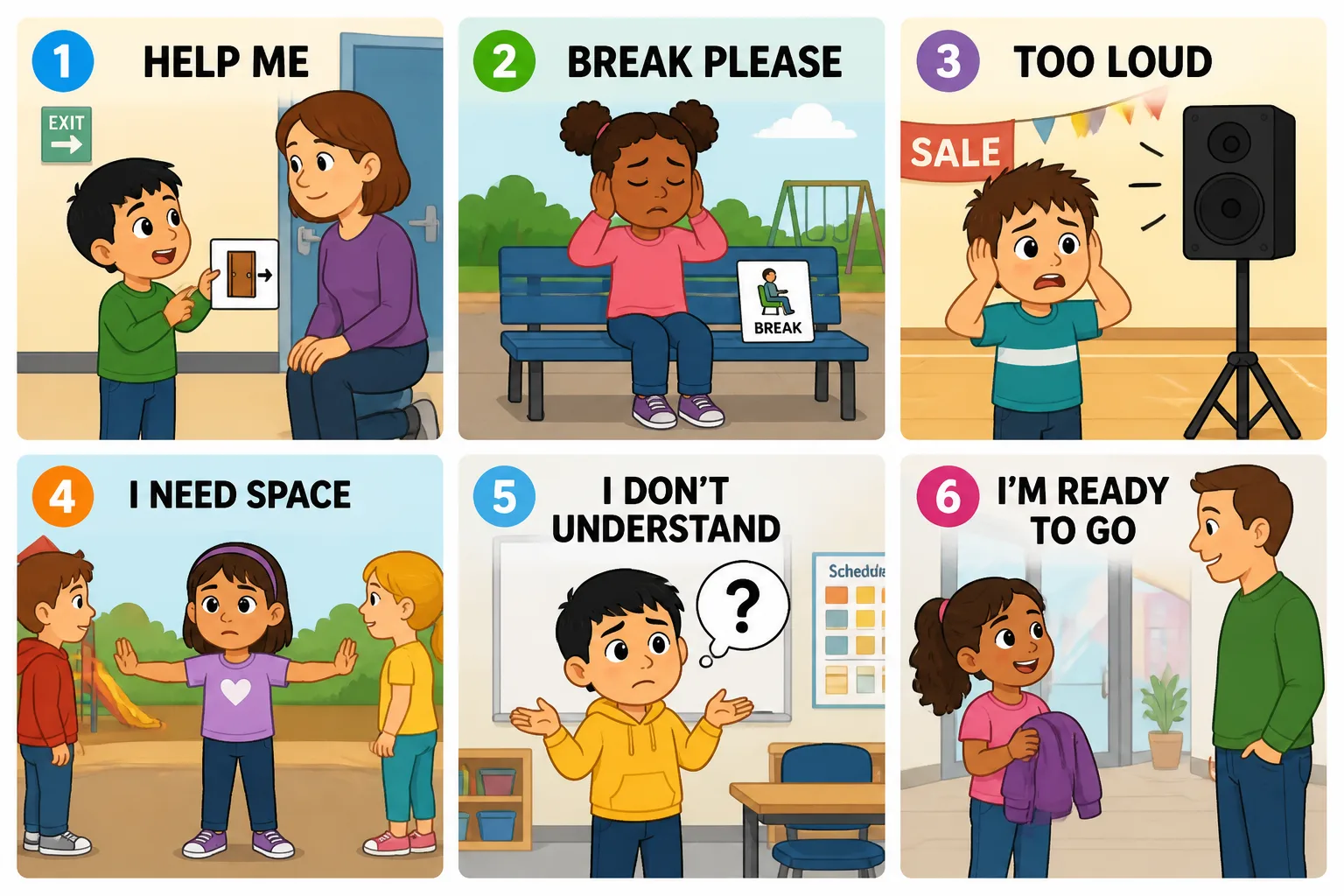

Learning to communicate effectively in busy places is an important skill for young children, especially those who may feel overwhelmed by noise, crowds, and new experiences. This post focuses on six practical phrases that children can use to express their needs and feelings in sensory-rich environments like playgrounds, stores, or classrooms.
Why Communication Matters in Busy Places
Busy places can be exciting but also challenging. Children might feel anxious, confused, or overstimulated. Having simple, clear phrases helps them express what they need, ask for help, or set boundaries. This supports their independence and comfort.
6 Useful Phrases for Busy Places
1. HELP ME
Use this phrase when the child needs assistance, like opening a door or finding a person. It can be spoken, signed, or shown with a picture card.
2. BREAK PLEASE
When the environment feels overwhelming, this phrase lets the child ask for a quiet moment or a sensory break.
3. TOO LOUD
Children can use this phrase to express discomfort with noise levels, helping adults understand and respond.
4. I NEED SPACE
This phrase helps a child set personal boundaries by asking for physical distance from others.
5. I DON’T UNDERSTAND
When instructions or situations are confusing, this phrase invites adults to clarify or explain more simply.
6. I’M READY TO GO
Use this phrase to signal when the child wants to leave the busy place, helping adults respect their needs.
How Parents Can Support Learning
Model these phrases naturally during outings by using speech, gestures, or picture cards. Offer choices and allow processing time without pressuring the child to respond. Celebrate attempts to communicate and respect their boundaries.
For more ideas on supporting your child’s communication, see Mealtime Communication: 6 Essential Phrases for Young Children and My Playground Words: 6 Phrases for Fun and Fair Play.
Key Takeaways
- Simple phrases empower children to express needs in busy places.
- Use multiple communication methods: speech, gestures, AAC.
- Practice phrases naturally during real-life outings.
- Respect the child’s pace and boundaries.
Download the images in this article