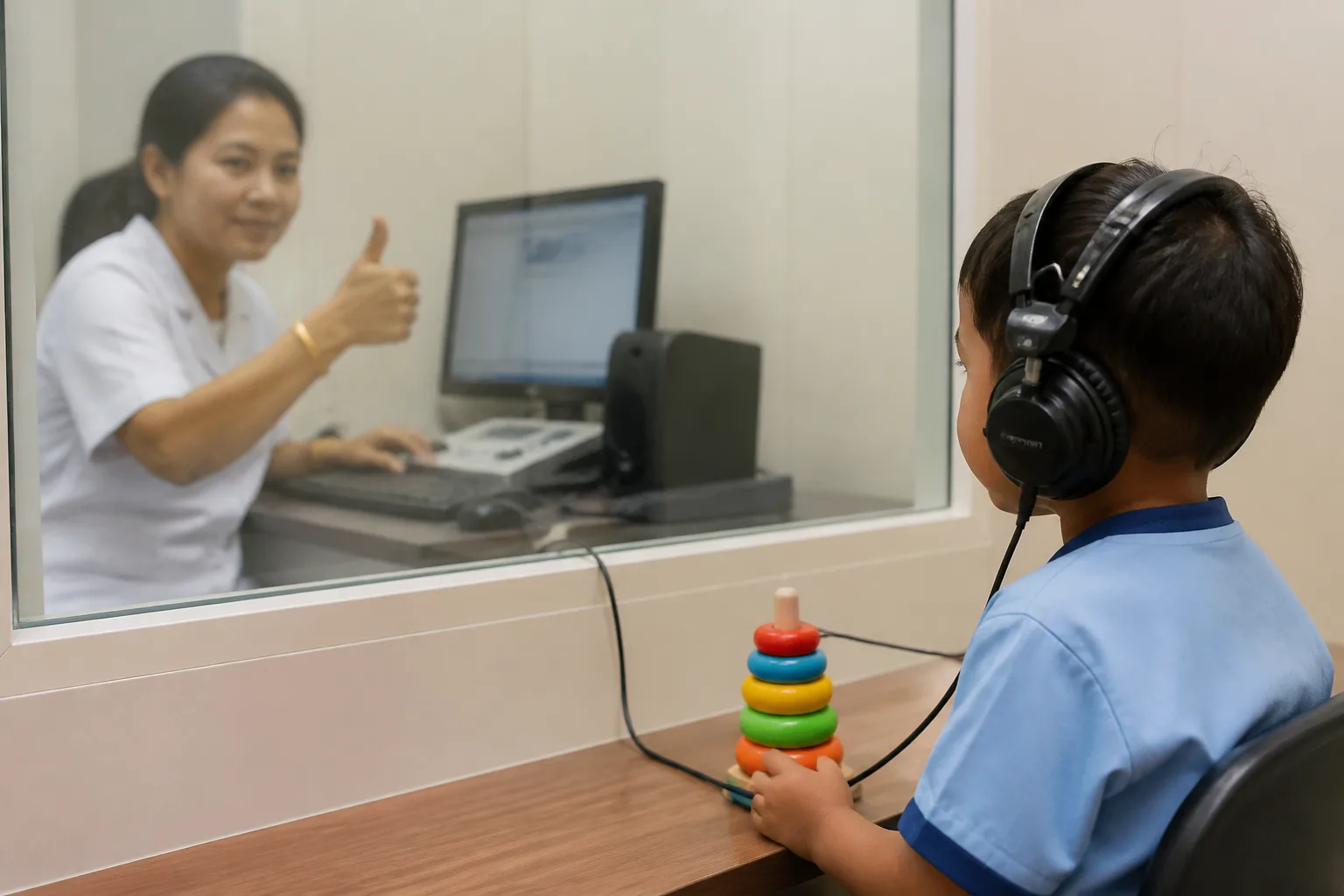
Routine Hearing Tests Crucial for Children with Speech Delays, Myanmar Case Series Shows

Hearing Loss Often Overlooked in Children with Speech and Developmental Delays
A recent case series from Myanmar underscores the importance of routine audiological evaluations in children presenting with speech and language delays. Researchers reported on four children aged between 5 and 7 years who were initially referred for developmental concerns such as speech delay, suspected autism spectrum disorder (ASD), attention difficulties, or behavioral issues. Comprehensive assessments revealed that all had varying degrees of sensorineural hearing loss, which had either been missed or coexisted with other neurodevelopmental disorders.
Key Findings from the Case Series
Each child underwent detailed developmental and audiological evaluations at the Developmental Paediatrics Service of CLL HEALTH Community Paediatric Clinics in Yangon. The findings included:
- One child with language disorder had bilateral moderate sensorineural hearing loss.
- Another child diagnosed with developmental coordination disorder and executive dysfunction showed bilateral sensorineural hearing loss.
- A child initially suspected of having attention-deficit/hyperactivity disorder (ADHD) was found to have bilateral severe-to-profound hearing loss.
- The fourth child, diagnosed with ASD, had unilateral mild-to-moderate hearing loss.
None of these children had undergone newborn hearing screening, a practice not yet routinely implemented in Myanmar.
Implications for Diagnosis and Care
The overlap in clinical presentation between hearing impairment and neurodevelopmental disorders such as ASD and ADHD can complicate diagnosis. Hearing loss may mimic symptoms of these conditions or coexist alongside them, thereby contributing to communication, behavioral, and educational challenges.
The authors emphasize that without early identification through newborn screening or routine audiological assessment, hearing impairment may remain undetected, delaying appropriate intervention.
Recommendations for Clinical Practice
This case series highlights the need to integrate hearing evaluations into the standard assessment protocol for children with speech and language delays or broader developmental concerns. Early detection of hearing loss can lead to timely multidisciplinary interventions, potentially improving developmental outcomes and quality of life.
Limitations and Context
While this report focuses on a small number of cases from Myanmar, the findings resonate in settings where newborn hearing screening is not universal. Further research with larger cohorts is needed to better understand the prevalence and impact of undiagnosed hearing impairment in children with developmental delays.
For more detailed information, see the original case series published in Case Reports in Pediatrics: source article.
Download the images in this article