
Getting dressed can be a challenging everyday task for many young children, especially those who are autistic or have sensory, communication, or developmental needs. When getting dressed feels hard, it is often more than just a simple preference or refusal. Understanding why this routine can be difficult and how to support your child can make a big difference in reducing stress and building independence.
Why This May Be Difficult
Getting dressed involves multiple sensory, motor, and cognitive demands. Children may find the texture of clothing uncomfortable, buttons and zippers tricky to manage, or the routine overwhelming due to uncertainty about what comes next. Sensory sensitivities to tags, seams, or tightness can cause distress. Additionally, communication challenges can make it hard for a child to express discomfort or preferences, leading to frustration.
What Parents May Notice
- Resistance or refusal to put on certain clothes
- Meltdowns or withdrawal during dressing
- Slow or hesitant movements
- Requests for help or repeated questions about what to do next
- Physical signs of discomfort such as scratching or pulling at clothing
What the Child May Be Communicating
Difficulty with dressing can be a way for the child to communicate sensory discomfort, anxiety, or a need for control. They might be saying, “This feels too scratchy,” “I’m not ready,” or “I want to choose my clothes.” Recognizing these messages helps adults respond with empathy and practical support rather than frustration.
How to Prepare Beforehand
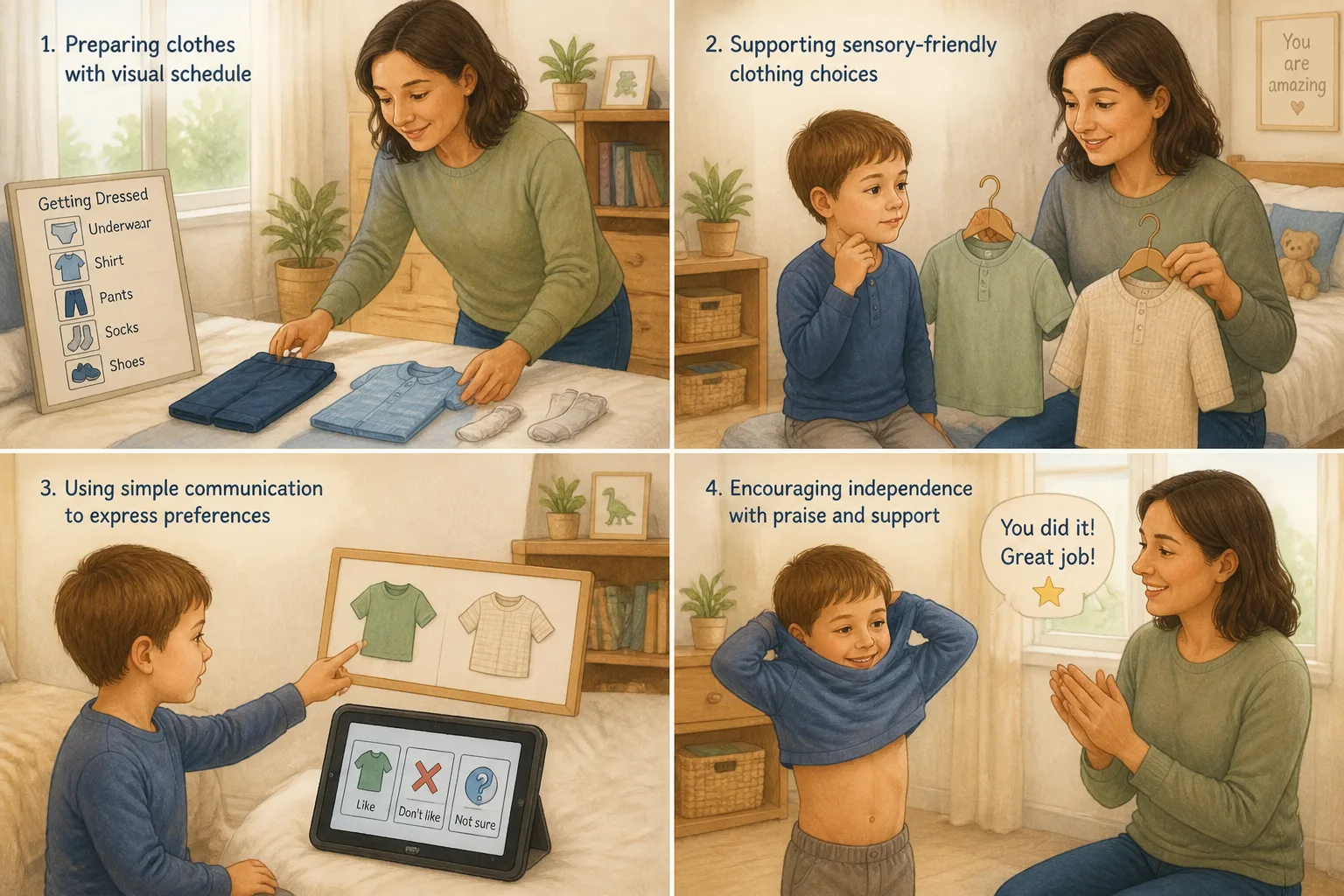
- Use a visual schedule showing the steps of getting dressed to provide predictability and reduce anxiety.
- Choose sensory-friendly clothing such as soft fabrics, seamless socks, and tagless shirts.
- Offer simple choices like picking between two shirts to give the child a sense of control.
- Practice dressing skills during calm times to build confidence and motor skills.
What Can Help During the Situation
- Allow extra time for the child to process and complete each step.
- Use calm, reassuring language and model each step clearly.
- Respect communication attempts whether verbal, AAC, gestures, or pointing.
- Provide sensory breaks if the child becomes overwhelmed.
- Break tasks into smaller steps to avoid overload.
Helpful Words or Communication Supports
- “I need help”
- “More time, please”
- “I don’t like this”
- “Which one do you want?” (offering choices)
- “Let’s try this step”
Building Independence Gradually
Encourage your child to do parts of dressing they feel comfortable with, such as pulling up pants or putting on socks. Celebrate small successes and gradually increase responsibilities. Using visual supports and consistent routines can empower your child to gain confidence and autonomy over time.
What Adults Should Avoid
- Forcing clothing or rushing the process
- Yelling or showing frustration
- Ignoring the child’s communication or sensory needs
- Expecting immediate compliance without preparation
- Labeling the child as “difficult” or “stubborn”
Real-Life Example
Emma, a 4-year-old autistic girl, often refused to wear her school uniform because the fabric felt itchy. Her parents introduced a visual schedule for dressing and allowed Emma to choose between two soft cotton shirts. They practiced dressing skills during playtime and used simple phrases like “Your turn” and “All done”. Over weeks, Emma became more comfortable and started dressing herself with less resistance.
When Extra Support May Help
If challenges persist or significantly impact daily life, consulting an occupational therapist or speech-language pathologist can provide tailored strategies. They can assess sensory needs and communication supports to further assist your child.
Key Takeaway
Getting dressed can be hard for many children due to sensory sensitivities, communication challenges, and the complexity of the task. Preparing with visual supports, offering choices, respecting communication, and building skills gradually can make dressing a more positive experience for both child and parent.
Have you noticed particular times or clothes that make dressing harder for your child? What strategies have you found helpful?
For more on preparing children for daily routines, see Preparing for a Haircut and Waiting at the Doctor’s Office: Supporting Your Child Through the Challenge.
Download the images in this article