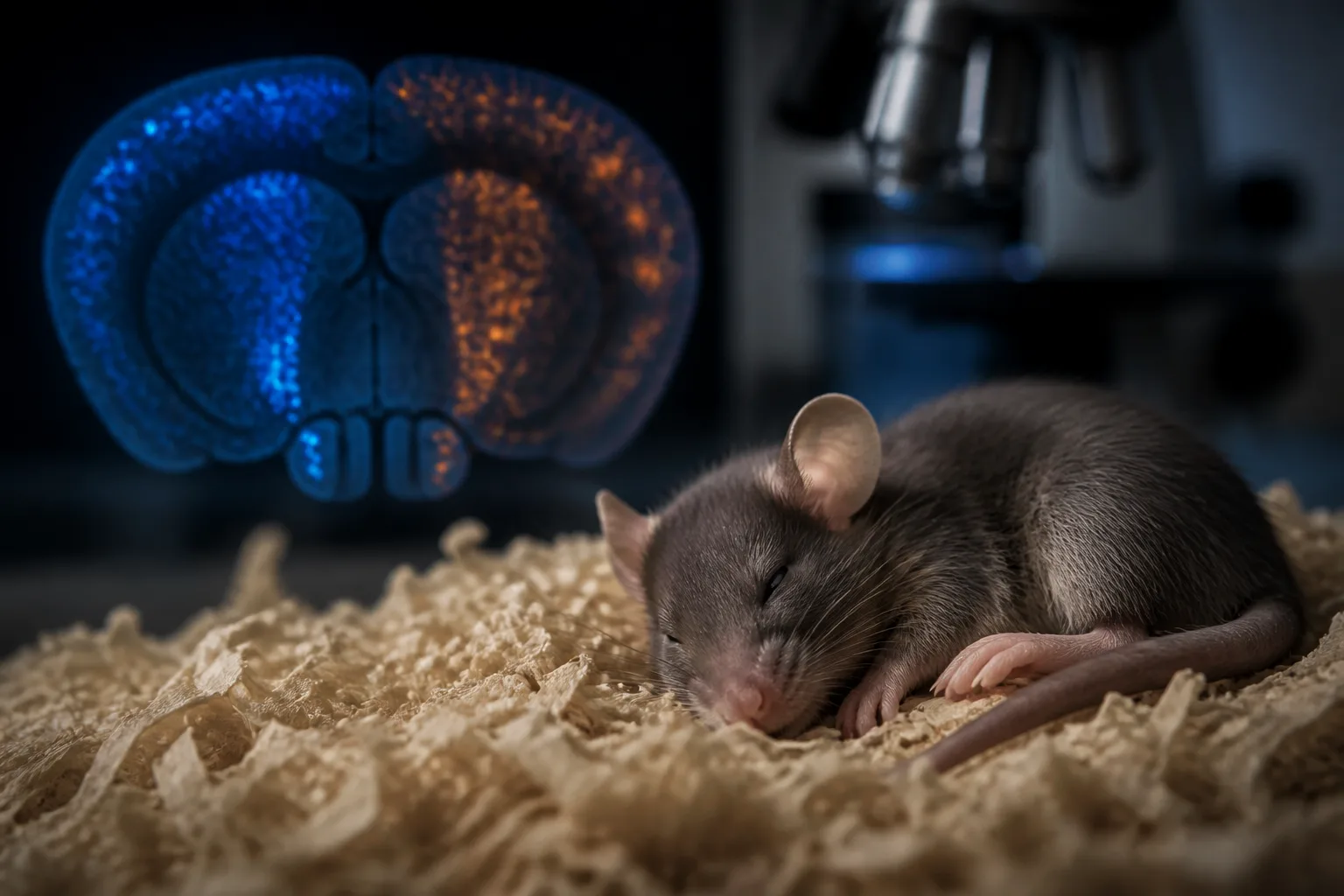
Shank3 Gene Mutation Alters Sleepiness-Related Brain Activity Across Development in Mice

Study Explores Sleep Difficulties Linked to Autism-Associated Gene Mutation
Sleep disturbances are frequently reported in individuals with autism, often beginning early in life and significantly impacting quality of life. However, the biological mechanisms connecting autism and disrupted sleep remain poorly understood. Recent research using a mouse model with a mutation in the autism-associated gene Shank3 sheds light on how this genetic change may alter the brain’s response to sleepiness.
Key Findings from Mouse Model Research
Researchers studied male mice carrying a specific mutation called Shank3 ΔC, known to be linked to autism. These mutant mice previously demonstrated difficulty falling asleep and impaired responses to sleep deprivation, mirroring insomnia symptoms often seen in autistic individuals.
Using RNA sequencing and brain activity monitoring, the study compared gene expression in the cortex of mutant and typical (wild-type) mice after periods of sleep deprivation and recovery. The investigation focused on developmental stages at postnatal days 24, 30, and adulthood.
Developmental Differences in Sleepiness Response
In typical mice, the brain’s molecular response to sleep deprivation evolved with age. Juvenile mice (P24 and P30) showed increased activity in genes related to neuronal growth and development. In adults, the response shifted toward activating DNA repair mechanisms and genes linked to neuronal activity.
In contrast, the Shank3 ΔC mutation disrupted these normal developmental changes. At P24 and in adulthood, mutant mice failed to activate these key pathways effectively. Interestingly, at P30, mutants showed an exaggerated gene response, suggesting an abnormal regulation of sleepiness-related processes during this stage.
Oxidative Stress and Protein Synthesis Alterations
Across all ages examined, mutant mice consistently exhibited increased activation of oxidative stress pathways, which are associated with neurodegeneration. Additionally, protein synthesis pathways were upregulated in mutants but downregulated in wild-type mice following sleep deprivation. These findings imply that the mutation may provoke harmful cellular stress responses when sleep is disrupted.
Implications for Understanding Autism and Sleep
This study highlights that the Shank3 mutation may impair the brain’s molecular adaptation to sleepiness by both blocking normal developmental gene responses and elevating stress-related pathways. Such alterations could underlie the persistent sleep difficulties observed in autism.
Understanding these molecular disruptions provides a foundation for future research aimed at developing targeted interventions to improve sleep quality in autistic individuals.
Study Limitations and Future Directions
It is important to note that this research was conducted exclusively in male mice and focused on a single genetic model of autism. The analysis averaged gene expression across mixed cortical cell types, which may mask cell-specific effects. Future studies should include female subjects, additional autism models, and employ single-cell sequencing techniques to better characterize the cellular and regional brain changes related to sleep disturbances in autism.
For more detailed information, see the original research summary at PubMed.
Download the images in this article