
Learning to say no is an important communication skill for young children, including autistic children and those who need extra support. Saying no helps children express their feelings, set boundaries, and stay safe in everyday situations. This article introduces 6 useful phrases children can use to say no politely or clearly, using speech, gestures, picture cards, signs, or AAC. Each phrase is paired with a real-life situation to help parents and caregivers understand when and how to model these messages naturally.
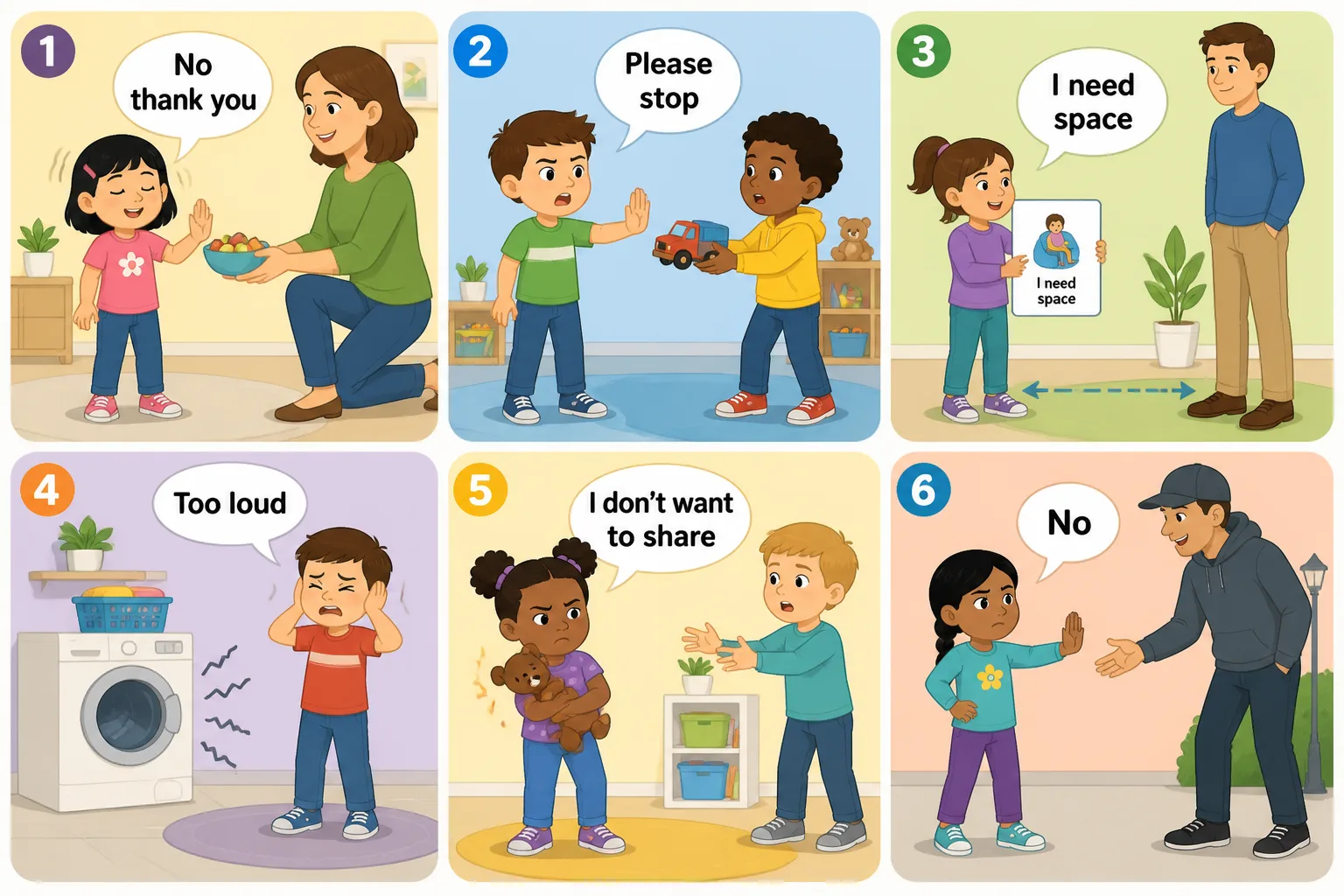
1. No Thank You
This polite refusal phrase helps children say no to food, toys, or activities they do not want. For example, a child might say “No thank you” when offered a snack they don’t like. Parents can model this phrase by offering choices and respecting the child’s response without pressure.
2. Please Stop
Children can use “Please stop” to ask someone to stop an action that makes them uncomfortable, such as another child grabbing a toy. Modeling calm and respectful use of this phrase teaches children how to set limits with peers.
3. I Need Space
This phrase helps children communicate when they want physical or emotional distance. It can be used when a child feels overwhelmed or crowded. Parents can support this by recognizing and honoring the child’s need for space.
4. Too Loud
Children can say “Too loud” to express discomfort with noisy environments. This helps adults understand sensory needs and adjust the environment. Visual supports like covering ears or picture cards can reinforce this message.
5. I Don’t Want to Share
Expressing when they do not want to share a toy or item is important for children’s autonomy. Using this phrase helps prevent conflicts and teaches respect for personal belongings.
6. No
A simple but powerful word, “No” can be communicated verbally, by sign, or AAC to refuse unwanted attention or contact, especially from strangers. Teaching this phrase supports safety and self-advocacy.
How Parents Can Model and Practice These Phrases
Model these phrases naturally during daily routines and play without forcing repetition. Use gestures, signs, picture cards, or AAC devices as needed. Offer simple choices and respect the child’s responses. Give the child time to process and respond, and always honor their boundaries. Celebrate all communication attempts to build confidence.
For more helpful phrases to support your child’s communication, see our posts on My Choices, My Voice and When I Need a Break.
Key Takeaways
- Saying no is a vital skill for children to express preferences and boundaries.
- Use simple, polite phrases paired with gestures or AAC to communicate refusal.
- Parents should model respectful communication and honor the child’s no without pressure.
- Practice these phrases naturally in everyday situations to build confidence and safety.
Descarga las imágenes de este artículo