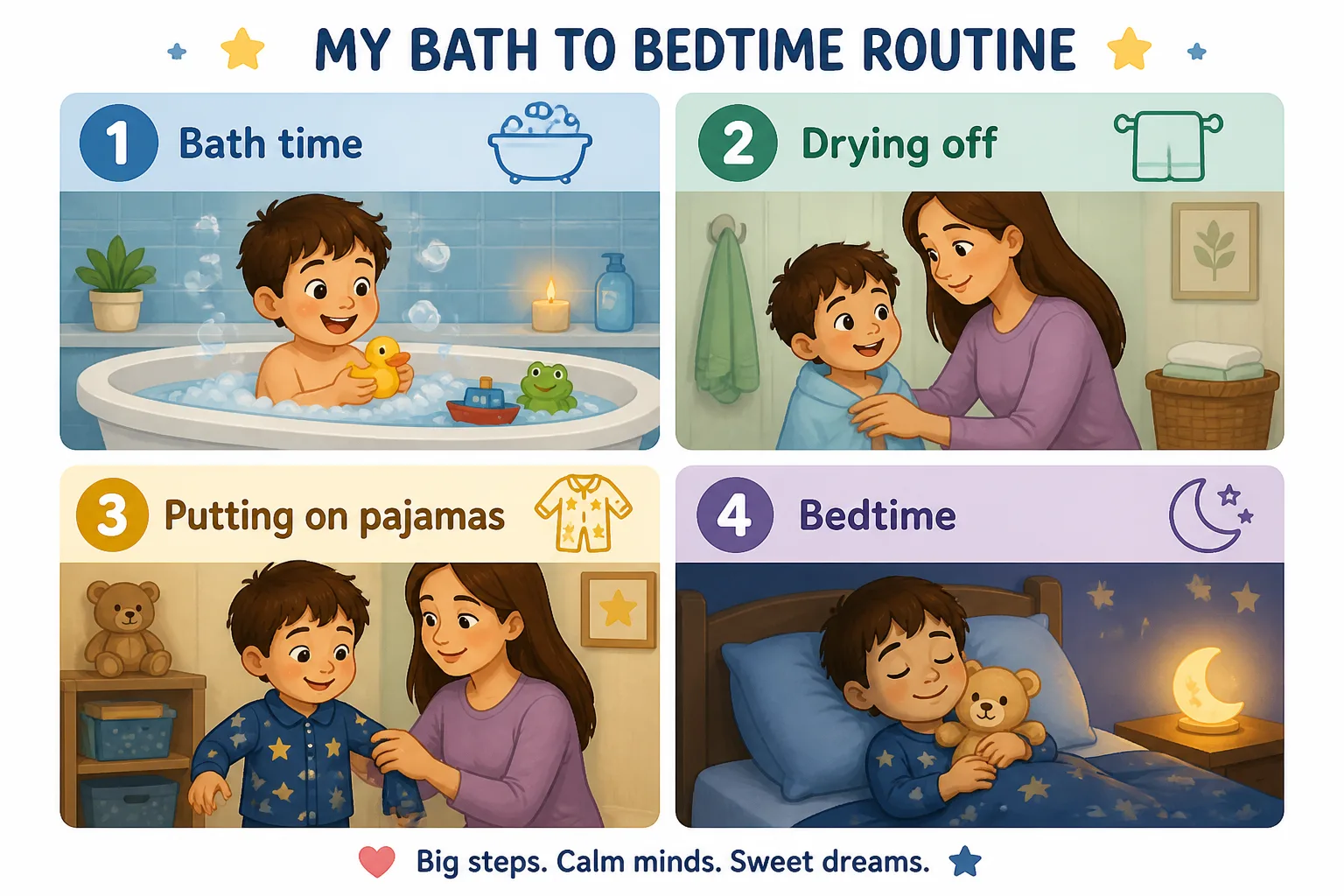

Transitioning from bath to bedtime can be a challenging routine for many young children, including those who are autistic or have additional sensory, communication, or emotional needs. This specific transition involves moving from an active, warm, and sensory-rich environment to a calm and quiet setting, which may cause uncertainty, resistance, or anxiety. Understanding why this transition is difficult and using clear, predictable steps with visual and communication supports can help children feel more secure and participate more independently.
Why the Bath to Bedtime Transition Can Be Difficult
Bath time is often a preferred, playful, and sensory-rich activity. It involves warm water, tactile sensations, and sometimes toys or bubbles. Moving from this stimulating environment to the quieter, less active bedtime routine can feel abrupt and confusing. Children may have difficulty processing the change, especially if they have sensory sensitivities or struggle with transitions in general.
Signs parents might notice include resistance to leaving the bath, fussiness when drying off, reluctance to put on pajamas, or difficulty settling into bed. The child may be experiencing sensory discomfort from the change in temperature, texture of pajamas, or the dim lighting in the bedroom. Anxiety about the upcoming sleep period or uncertainty about what happens next can also contribute.
Preparing for the Transition
Preparation is key to making this routine smoother. Giving the child advance notice about what will happen next helps reduce uncertainty. For example, using simple phrases like “5 more minutes of bath, then pajamas” or showing a visual schedule can prepare the child’s expectations.
Visual supports such as a step-by-step picture schedule or a First → Then board can be very helpful. These tools show the child what comes next and provide a clear sequence to follow. Communication supports should respect the child’s preferred mode, whether speech, AAC devices, gestures, or signs.
Step-by-Step Strategies for the Bath to Bedtime Routine
- Bath Time: Allow the child to enjoy bath time with familiar toys and warm water. Use a timer or countdown to give advance notice when bath time is ending, e.g., “Two more minutes.”
- Drying Off: Gently dry the child with a soft towel. Use calm, reassuring language such as “Now we dry off, nice and warm.” Offer choices if possible, like which towel to use or where to dry first.
- Putting on Pajamas: Help the child put on comfortable pajamas. Encourage independence by letting the child try steps they can manage, such as pulling pajamas over their head or putting arms in sleeves. Use simple prompts like “Pajamas on now” or visual cards showing each step.
- Bedtime: Guide the child to their bed with a favorite stuffed toy or comfort object if allowed. Use a consistent phrase such as “Time for bed now” and turn on a nightlight if it helps reduce anxiety. Offer a quiet activity like reading a short story or gentle music if part of the bedtime routine.
What Adults Can Say and Do
Use simple, clear language and give the child time to process. Phrases like “What’s next?” or “I need more time” can be taught to empower the child to communicate their needs. Offer choices when possible to increase cooperation and reduce frustration.
If the child resists or becomes upset, remain calm and patient. Avoid rushing or forcing compliance. Instead, try to identify the cause of distress—sensory discomfort, anxiety, or need for more time—and address it with supports like extra time, a calming sensory item, or a brief break.
Practicing and Building Independence
Practice this routine during calm times to build familiarity and confidence. Use role-play or social stories to explain the steps. Gradually encourage the child to take more responsibility, such as drying themselves or choosing pajamas.
Adjust the environment to reduce sensory stress—use soft lighting, maintain a comfortable room temperature, and minimize noise. Allow transition objects like a favorite towel or stuffed animal to provide comfort.
What to Avoid and When to Seek Help
Avoid sudden transitions without warning, repeated threats, or punishment for needing extra processing time. Never force eye contact or speech. Recognize that each child is unique; some may need longer or different supports.
If transitions remain very difficult despite consistent supports, consider consulting a pediatric occupational therapist or behavioral specialist for tailored strategies.
Key Takeaway
Making the transition from bath to bedtime predictable, supported by clear steps and respectful communication, helps children feel safe and gradually more independent. Patience, preparation, and understanding individual needs are essential.
What small change could you try tonight to make your child’s bath-to-bedtime routine easier?
For more visual routine ideas, see our Transition from Playground to Home and Getting Into the Car routines.
Download the images in this article