Emerging Role of Gut Virome in Microbiota-Gut-Brain Axis and Neuroimmune Balance

Understanding the Gut Virome’s Influence on Brain and Immune Health
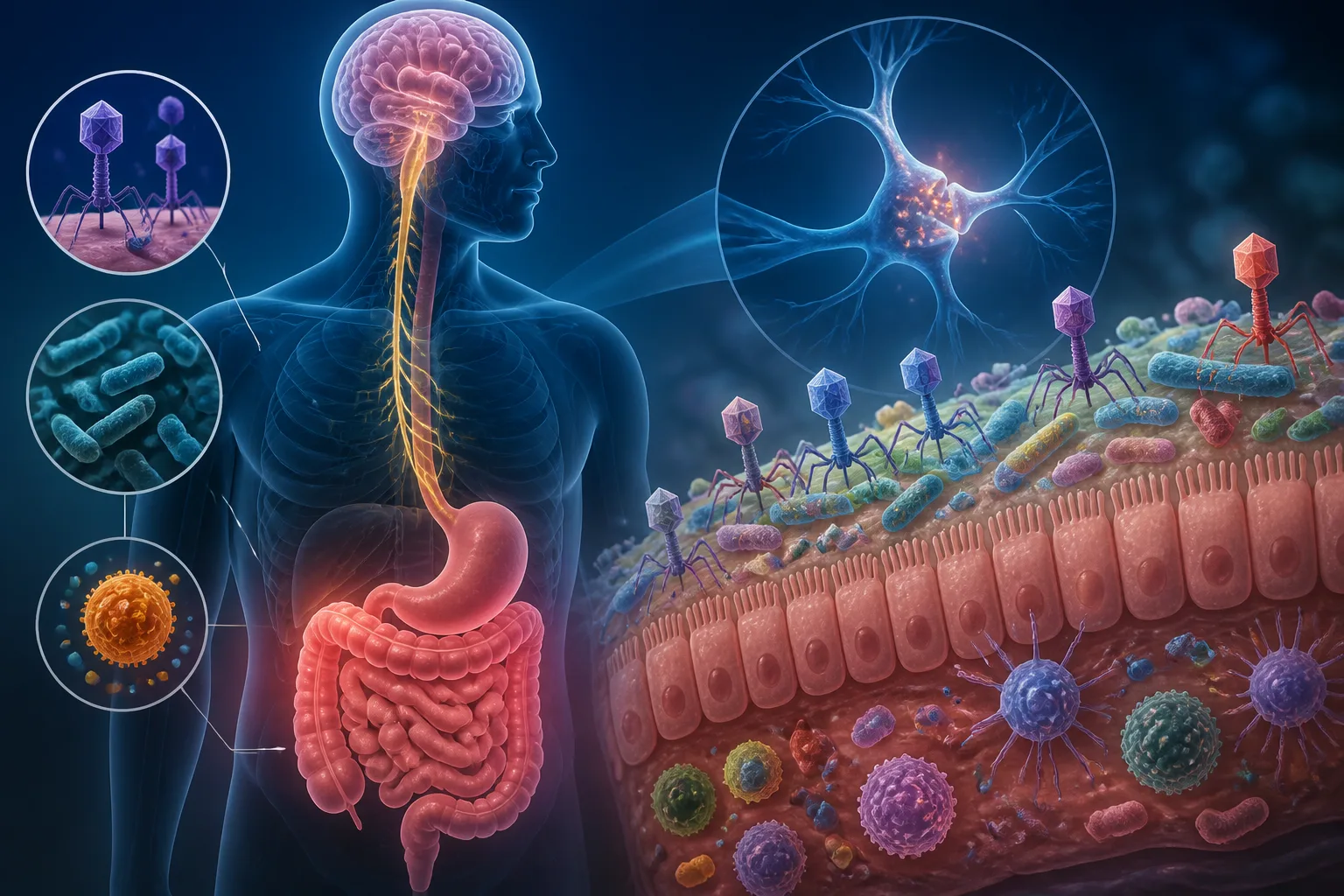
The human gut-brain axis (GBA) is a complex communication network that connects the gut microbiota with neural, endocrine, and immune systems, influencing neurological health. While much research has focused on gut bacteria, recent studies highlight the gut virome—the community of viruses in the gut—as a significant player in maintaining physiological balance and potentially affecting brain function.
Viral Contributions to Microbial and Immune Homeostasis
Viruses in the gut include bacteriophages, which infect bacteria, and eukaryotic viruses that can infect human cells. Bacteriophages regulate bacterial populations through mechanisms like lytic and lysogenic cycles and horizontal gene transfer. These interactions can alter the production of neuroactive substances such as short-chain fatty acids and tryptophan metabolites, which are important for maintaining the blood-brain barrier and modulating microglial cells, the brain’s immune cells.
Links Between Eukaryotic Viruses and Neuroimmune Disorders
Observational studies and experimental models have associated certain eukaryotic viruses, including Epstein-Barr virus and cytomegalovirus, with systemic inflammation and immune dysregulation. These viral infections may exacerbate neuroimmune pathways involved in conditions such as Alzheimer’s disease, multiple sclerosis, autism spectrum disorder, and major depressive disorder.
Interplay Between Viruses and Bacteria Shapes Neuroinflammation
The interactions between viruses and bacteria create a transkingdom signaling network that influences neuroinflammatory states and could affect susceptibility to neurological diseases. This highlights the importance of considering the virome alongside the bacterial microbiome in understanding brain health.
Innovative Approaches to Modulate the Gut Virome
New experimental strategies are being explored to manipulate the gut virome and its interactions with bacteria. These include precision phage therapy to target specific bacteria, engineered probiotics with antiviral capabilities using CRISPR technology, and fecal virome transplantation (FVT) to restore healthy viral communities. Combining these approaches with multiomics analyses and artificial intelligence may clarify how virome dynamics influence neurological function over time.
Implications for Families and Future Research
These findings suggest that the gut virome may play a crucial role in maintaining neuroimmune balance and could offer new avenues for diagnosing and treating neurodegenerative and neuropsychiatric disorders. However, research is still emerging, and more studies are needed to fully understand these complex interactions and their implications for health.
Limitations and Cautions
Current evidence primarily shows associations rather than direct causes. The gut virome is a relatively new area of study, and much remains unknown about how viral populations fluctuate and influence the brain. Families should interpret these findings as preliminary and consult healthcare professionals for individualized advice.
For more detailed information, see the original review published in Cell Communication and Signaling: Virobiome-mediated regulation of microbiota-gut-brain axis signaling and neuroimmune homeostasis.
Download the images in this article