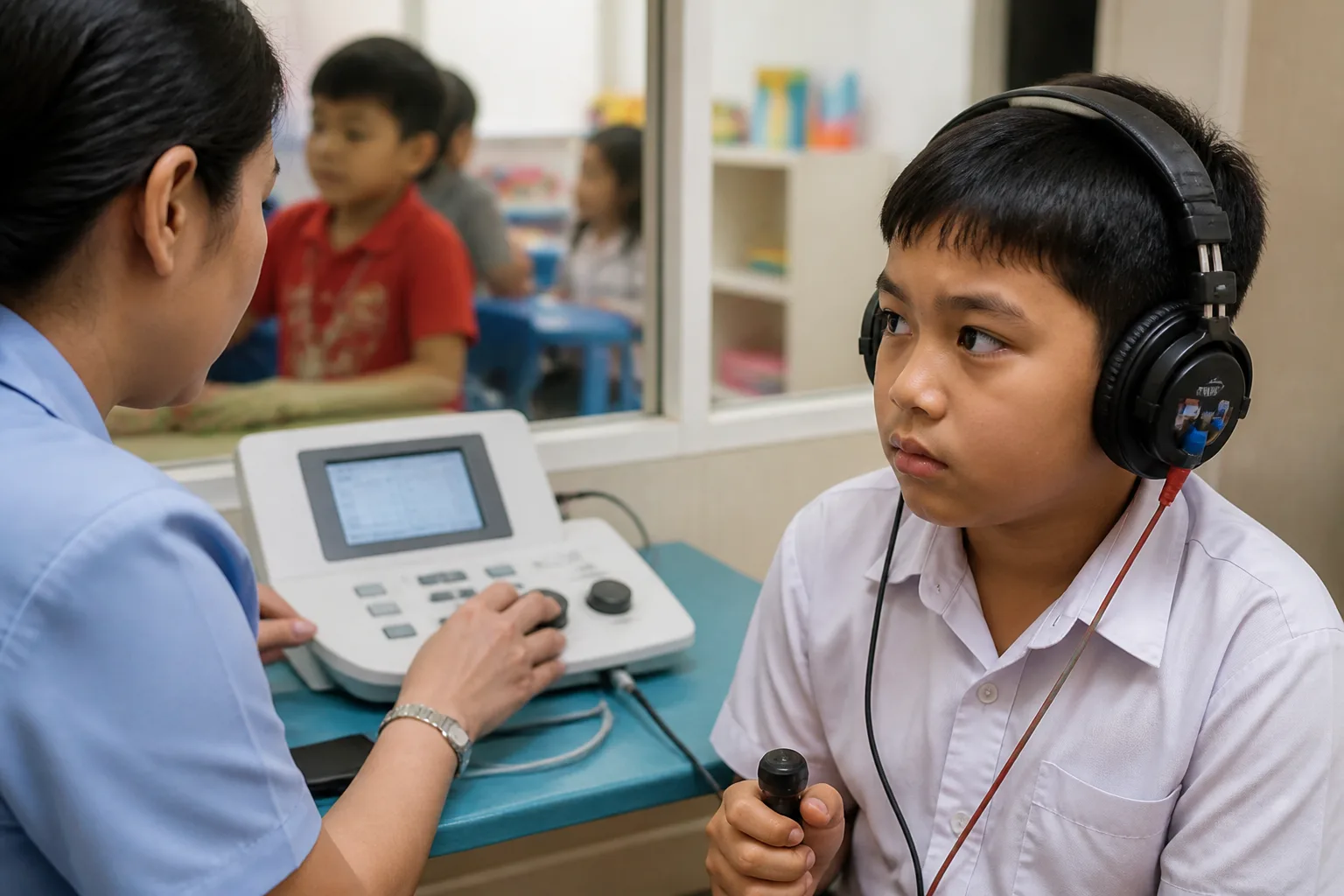
Study Finds High Rates of Hearing Issues Among Special Education Students in Ilocos Norte

Significant Hearing Concerns Identified in Special Education Students
A recent study conducted in Ilocos Norte, Philippines, has revealed a notable prevalence of hearing problems among school-aged children enrolled in special education programs. The research emphasizes the importance of comprehensive hearing screening for children with disabilities, who may be at increased risk for undetected auditory impairments.
Study Overview and Methods
The investigation involved 56 children aged 6 to 18 years attending inclusive classes in selected public special education (SPED) schools during the 2023-2024 academic year. Participants had various disabilities, with or without formal medical diagnoses.
Researchers employed a multi-step hearing screening protocol comprising visual ear inspection, otoscopy, tympanometry, screening pure tone audiometry (PTA), and transient evoked otoacoustic emissions (TEOAE). Children unable to complete certain tests were categorized as “unable to test” (UTT) and included in the overall analysis.
Key Findings
- Approximately 27% (15 out of 56) of the children exhibited otologic problems, with impacted earwax (cerumen) being the most frequent issue, affecting nearly 20%.
- Sensorineural hearing loss was predominant, accounting for 93% of hearing loss cases, while conductive hearing loss represented about 7%.
- The severity of hearing loss varied, with 33% experiencing mild impairment, 7% moderate, and a majority of 60% facing profound hearing loss.
- Children diagnosed with autism spectrum disorder (ASD) demonstrated the highest rates of being unable to complete the hearing tests.
- Compliance with testing procedures was higher for TEOAE screening (73%) compared to PTA (53%), resulting in an overall average compliance rate of 78% across all screening methods.
Implications for Families and Educators
These findings underscore the critical need for early and routine hearing assessments in children with special educational needs. Undiagnosed hearing loss can affect communication, learning, and social development, making timely identification and intervention essential.
The study suggests prioritizing otoscopy, tympanometry with ipsilateral acoustic reflex testing, and TEOAE screenings to enhance detection rates and improve test compliance among this population.
Limitations and Considerations
While the study provides valuable insights, it is limited by its sample size and the challenges some children faced in completing all screening procedures. Further research with larger cohorts may help validate these findings and refine screening protocols.
For more detailed information, the original study is available at PubMed.
Download the images in this article