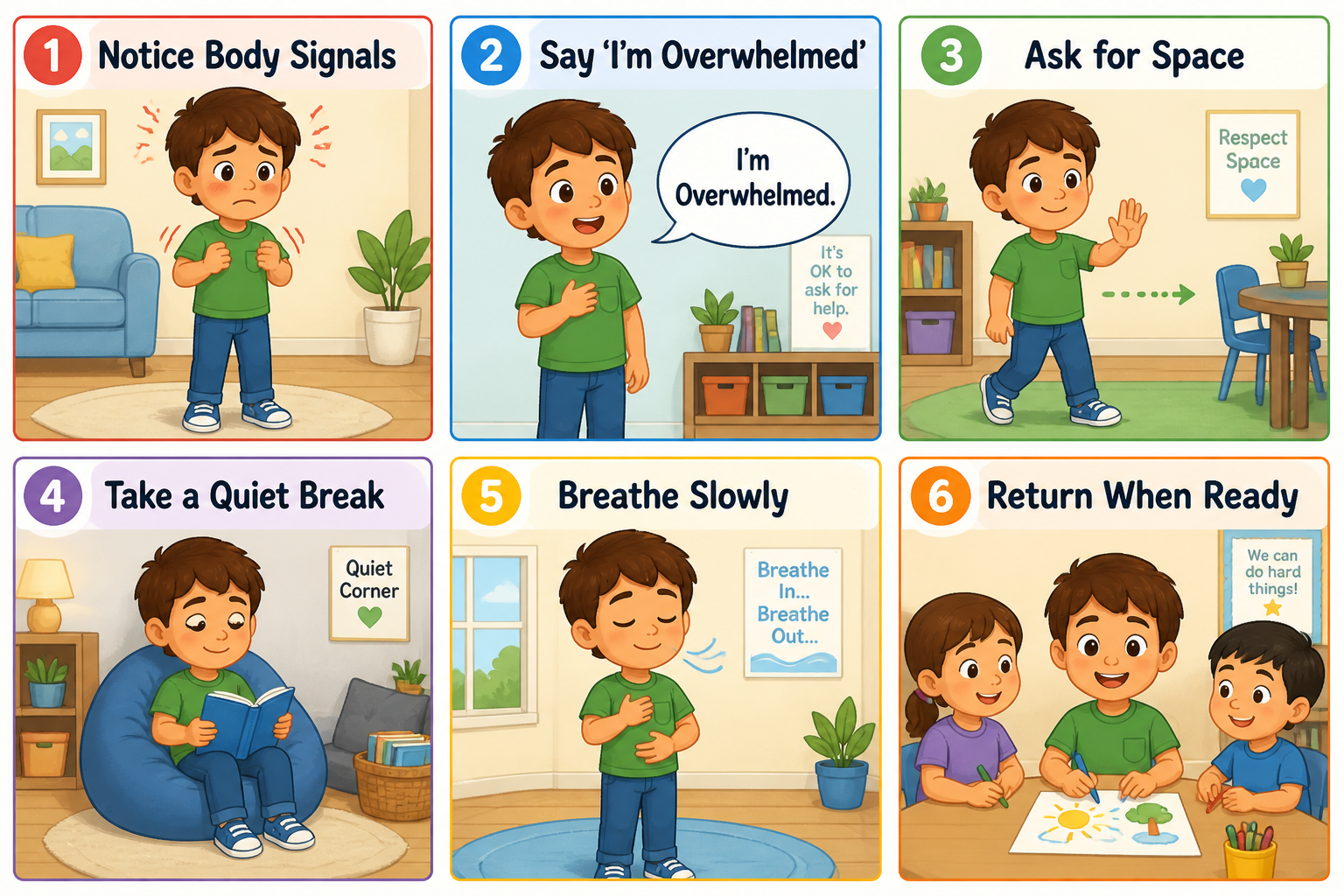

Feeling overwhelmed is a common experience for young children, especially those who are sensitive to noise, busy environments, or big feelings. Teaching children how to recognize when they feel overwhelmed and what to do can help them manage emotions safely and comfortably. This visual guide shows 6 practical steps to help children notice their feelings, communicate their needs, and choose safe ways to calm down and recover.
1. Notice Body Signals
Children learn to recognize physical signs that their body is feeling overwhelmed, such as flushed cheeks, clenched hands, or a racing heart. These signals are important clues that they need support.
2. Say “I’m Overwhelmed”
Encourage children to use words, gestures, or pictures to express how they feel. Naming the feeling helps them communicate their needs clearly to adults or peers.
3. Ask for Space
Teaching children to ask for space or a break when they feel overwhelmed promotes safe emotional expression. This can be a gentle hand signal, a verbal request, or pointing to a visual cue.
4. Take a Quiet Break
A calm, quiet space allows children to step away from overwhelming stimuli. This break helps them regain control of their emotions without pressure to immediately “calm down.”
5. Breathe Slowly
Slow, deep breathing is a simple coping strategy that can help reduce physical tension. Practicing this when calm makes it easier to use during moments of overwhelm.
6. Return When Ready
Children should be encouraged to return to activities only when they feel ready. This respects their emotional pace and supports gradual re-engagement.
How Parents Can Support
Parents can model noticing body signals by naming their own feelings aloud, such as “I feel overwhelmed when it’s noisy.” Offer two simple coping choices like taking a quiet break or deep breaths. Respect the child’s request for space without pressure. Use visuals like this poster before challenging situations to prepare the child. Practice these steps together during calm times to build confidence.
Remember, the goal is safe emotional expression and support, not forcing children to hide or suppress feelings.
What signs does your child show when they feel overwhelmed, and how do you support them?
Download the images in this article