
Why This Skill Matters
Starting a conversation is an important social skill that helps children connect with others, make friends, and participate in group activities. For young children, including those who are autistic or have additional communication or sensory needs, initiating a conversation can feel challenging or overwhelming. Learning how to start a conversation respectfully and comfortably supports meaningful interactions and builds confidence.
What May Make This Hard
- Uncertainty about what to say or how to begin.
- Sensory sensitivities that make social settings overwhelming.
- Difficulties with verbal speech or preference for alternative communication methods.
- Fear of rejection or not knowing how the other person will respond.
What Parents May Notice
- The child avoids approaching others or stays quiet in group settings.
- The child uses nonverbal cues like pointing or gestures instead of words.
- The child may become anxious or upset when expected to talk first.
- The child tries to communicate but struggles to find the right words or method.
What the Child Can Learn
Here are four key social skills to help a child start a conversation:
- Use simple greetings or questions
Encourage the child to say or sign easy phrases like “Hi,” “Can I play?”, or “What’s your name?” These openers invite a response and show interest. - Choose a comfortable communication method
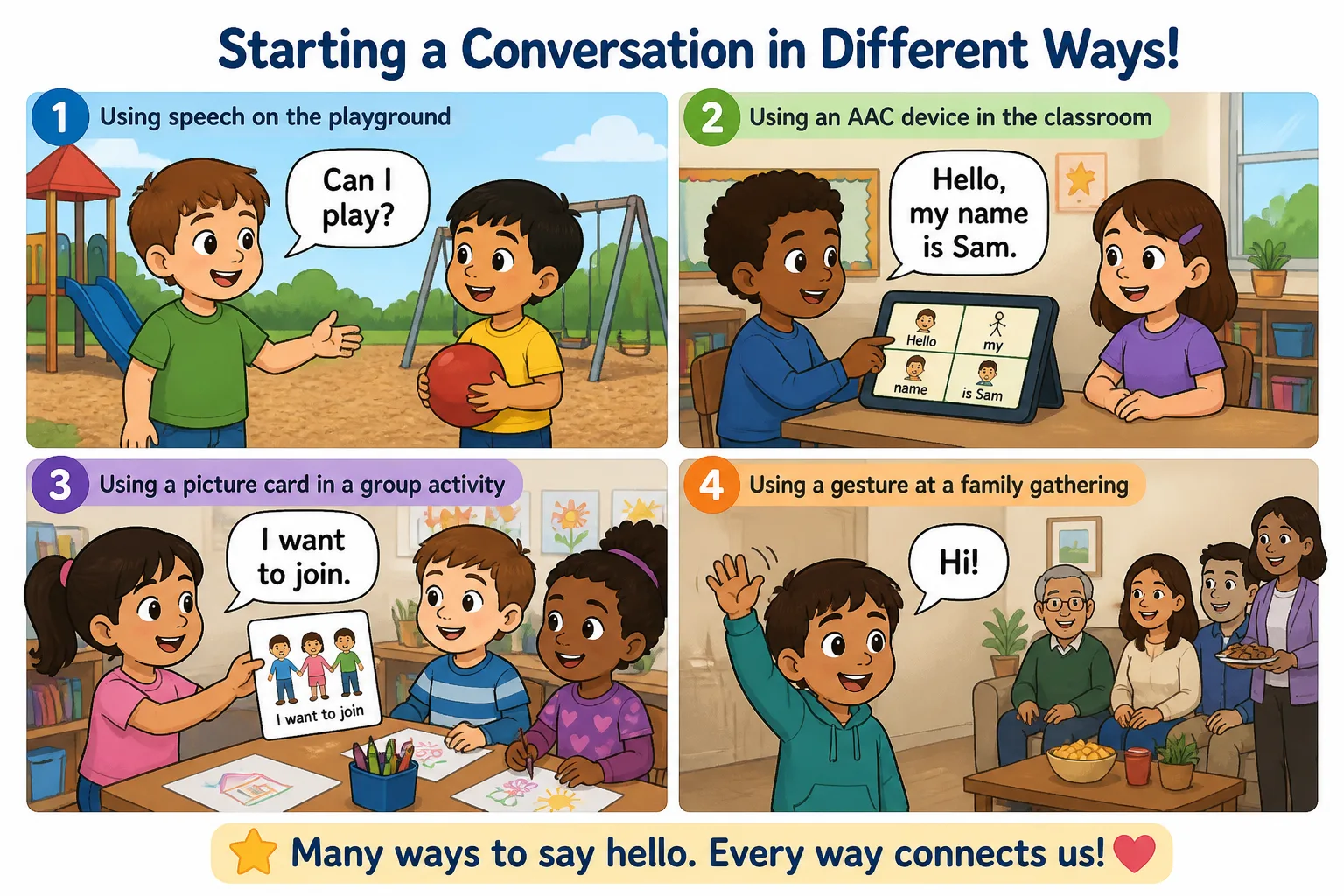
Support the child to use speech, AAC devices, gestures, signs, or pictures—whatever feels natural and effective for them. - Make eye contact or use other attention-getting signals
Eye contact is not required, but the child can wave, tap gently, or use a picture card to get someone’s attention respectfully. - Be ready to respond or wait patiently
Teach the child to listen or watch for a reply and to wait calmly. If the other person doesn’t respond, it’s okay to try again later or with someone else.
Helpful Words or Phrases
- “Hi!”
- “Can I play?”
- “My name is…”
- “What’s your name?”
- “Hello!” (wave or sign)
- “Can you say that again?”
How Parents Can Practice
- Role-play starting conversations at home using toys or family members.
- Use picture cards or AAC devices to practice greetings and questions.
- Model attention-getting gestures like waving or tapping on the shoulder.
- Arrange small, familiar group activities where the child can try starting a conversation with support.
What Adults Can Say
- “Do you want to say hello?”
- “You can use your words or your device to ask to play.”
- “It’s okay to wait if they don’t answer right away.”
- “You can wave or point if you want to get their attention.”
What to Avoid
- Pressuring the child to speak if they are not ready.
- Forcing eye contact or physical touch like hugs.
- Correcting or criticizing attempts to communicate.
- Expecting scripted or rehearsed phrases without understanding.
Real-Life Example
At the playground, Sam wants to join a game but feels shy. Sam uses an AAC device to say “Can I play?” to a child nearby. The other child smiles and says “Yes!” Sam smiles back and joins the game, feeling proud for starting the conversation in a way that works for him.
Key Takeaway
Starting a conversation can be easier when children have simple, respectful ways to communicate and know it’s okay to use their preferred method. Supporting children to express interest, get attention, and wait patiently helps build social connections without pressure or stress.
How does your child like to start conversations, and what helps them feel comfortable doing so?
Download the images in this article