
Waiting rooms can be overwhelming sensory environments for young children, especially those with sensory sensitivities or autism. Bright lights, unpredictable noises, and the need to stay still can cause discomfort and anxiety. This visual sensory support post teaches waiting room sensory support strategies that help children recognize discomfort, communicate their needs, and find ways to stay calm and comfortable.
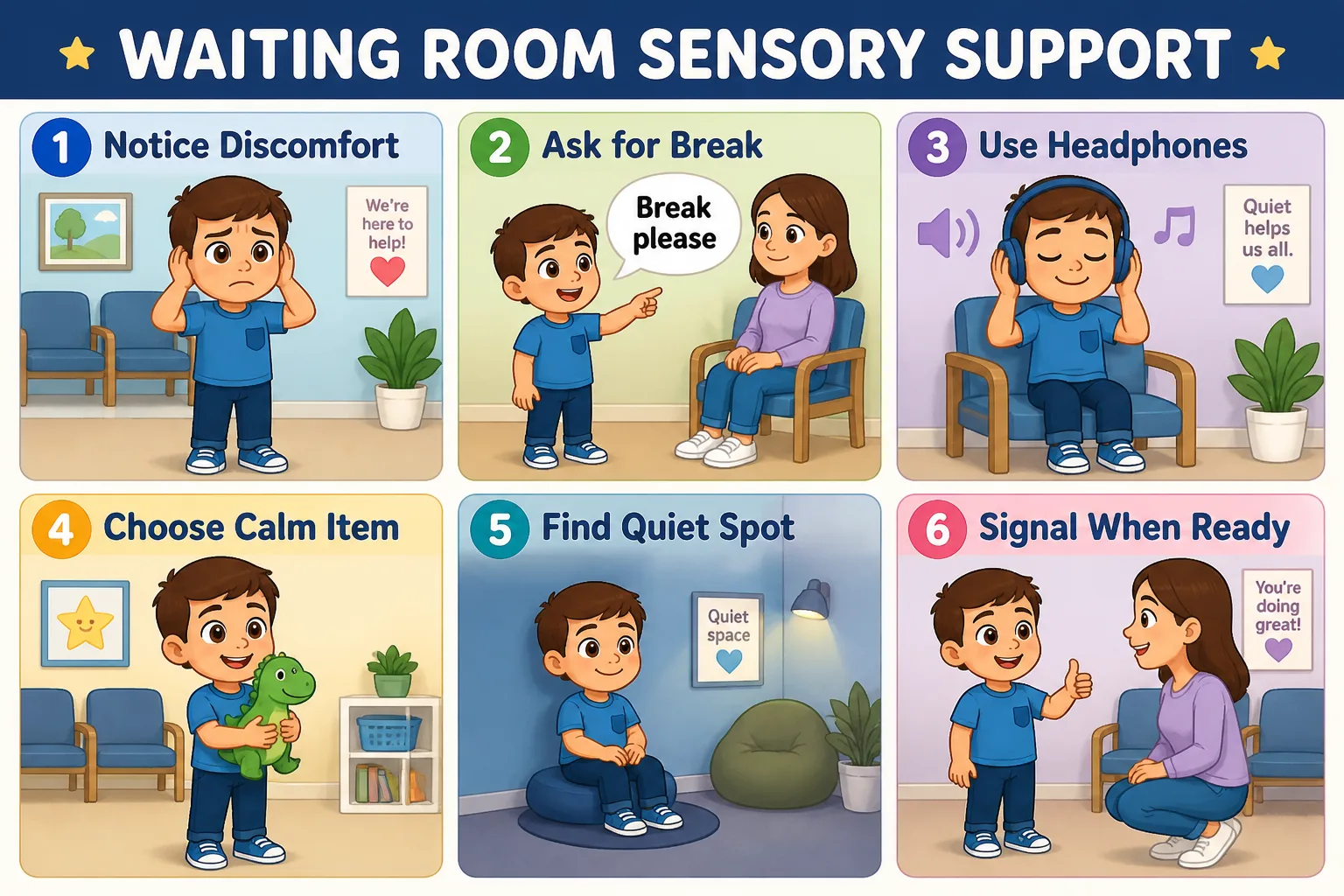
1. Notice Discomfort
Encourage your child to recognize signs of sensory discomfort such as covering ears, fidgeting, or looking distressed. This awareness is the first step toward managing sensory overload.
2. Ask for a Break
Teach your child simple ways to communicate their need for a break using speech, gestures, or AAC tools. Phrases like “Break please” or pointing to a quiet spot empower them to express their needs.
3. Use Headphones
Noise-cancelling or soft headphones can help reduce overwhelming background sounds common in waiting rooms, making the environment more manageable.
4. Choose a Calm Item
Allow your child to bring a favorite soft toy, fidget, or comfort item. These familiar objects provide sensory comfort and distraction during wait times.
5. Find a Quiet Spot
If possible, identify a quieter corner or less stimulating area in the waiting room where your child can sit comfortably away from busy areas and bright lights.
6. Signal When Ready
Teach your child to give a clear signal, like a thumbs up or saying “I’m ready,” when they feel comfortable to continue. This helps them feel in control and supported.
Parents can support their children by observing their signals, offering simple choices, modeling sensory-friendly phrases, and respecting their comfort levels. Avoid forcing the child to stay in uncomfortable situations and allow breaks as needed.
For more sensory support strategies in public spaces, see our article on Managing Crowded Spaces: 6 Sensory Support Steps for Children.
How does your child let you know when they need a break in busy places?
Download the images in this article