
Teaching young children to ask for a break is an essential positive behavior support skill that helps prevent overwhelm and promotes self-regulation. When children learn to recognize their feelings and communicate their need for a pause, they can avoid frustration and stay engaged in activities more successfully.
Why Teach Asking for a Break?
Children, especially those with sensory sensitivities or communication challenges, may become overwhelmed by demands or busy environments. Encouraging them to ask for a break gives them control and a safe way to manage their emotions. This skill supports independence and reduces challenging behavior by providing a clear, positive alternative.
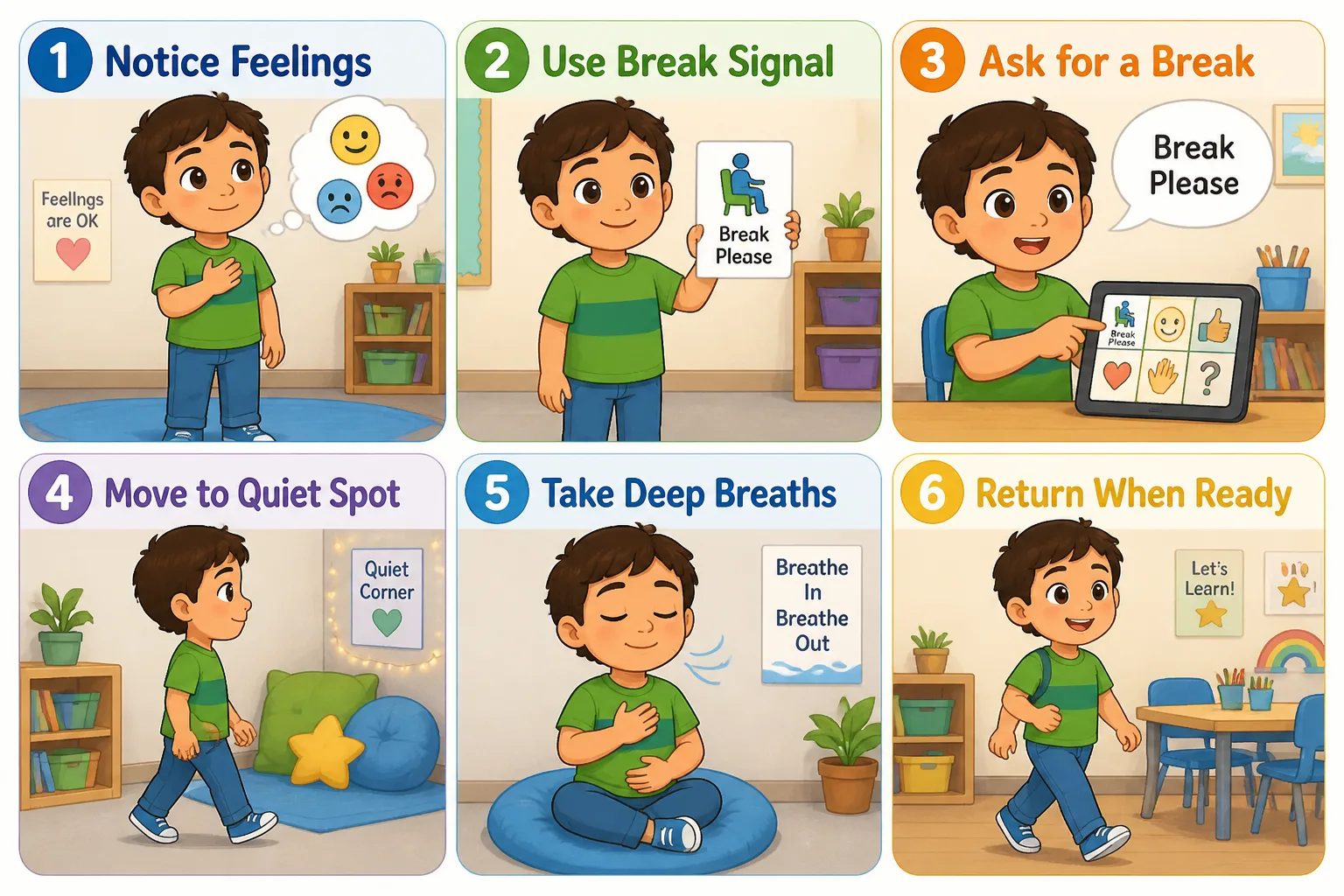
6 Positive Steps to Teach Asking for a Break
1. Notice Feelings
Help your child recognize signs of feeling overwhelmed or upset. Use simple language like “I feel tired” or “I need a break.” Visuals or feelings charts can support this awareness.
2. Use a Break Signal
Introduce a consistent way to communicate the need for a break. This can be a word, sign, picture card, or AAC device. Teach your child to use this signal calmly and clearly.
3. Ask for a Break
Encourage your child to ask for a break using their chosen communication method. Model the phrase “Break please” and reinforce attempts with praise.
4. Move to a Quiet Spot
Designate a calm, comfortable area where your child can take their break. Teach them to move there independently or with support.
5. Take Deep Breaths or Relax
During the break, guide your child to use calming strategies like deep breathing, squeezing a stress ball, or listening to soft music.
6. Return When Ready
Support your child in returning to the activity when they feel ready. Praise their effort and participation to reinforce positive behavior.
Supporting Your Child at Home
Show your child the expectations before situations where they might need a break. Keep instructions simple and use visual supports like schedules or break cards. Model the break routine yourself and give your child time to process. Notice and praise specific positive actions like asking for a break or using calm breathing.
Remember, teaching asking for a break is about empowering your child with communication and self-regulation tools, not forcing compliance.
For more strategies on supporting young children’s communication and emotional skills, see our posts on Using a Calm Voice: 5 Positive Steps for Young Children and Handling Frustration: 6 Positive Steps for Young Children.
Try This at Home
Practice the break routine regularly when your child is calm. Use role play or social stories to reinforce the steps. Keep the break spot inviting and accessible.
Parent question: What signs does your child show when they need a break, and how do you help them communicate it?
Download the images in this article