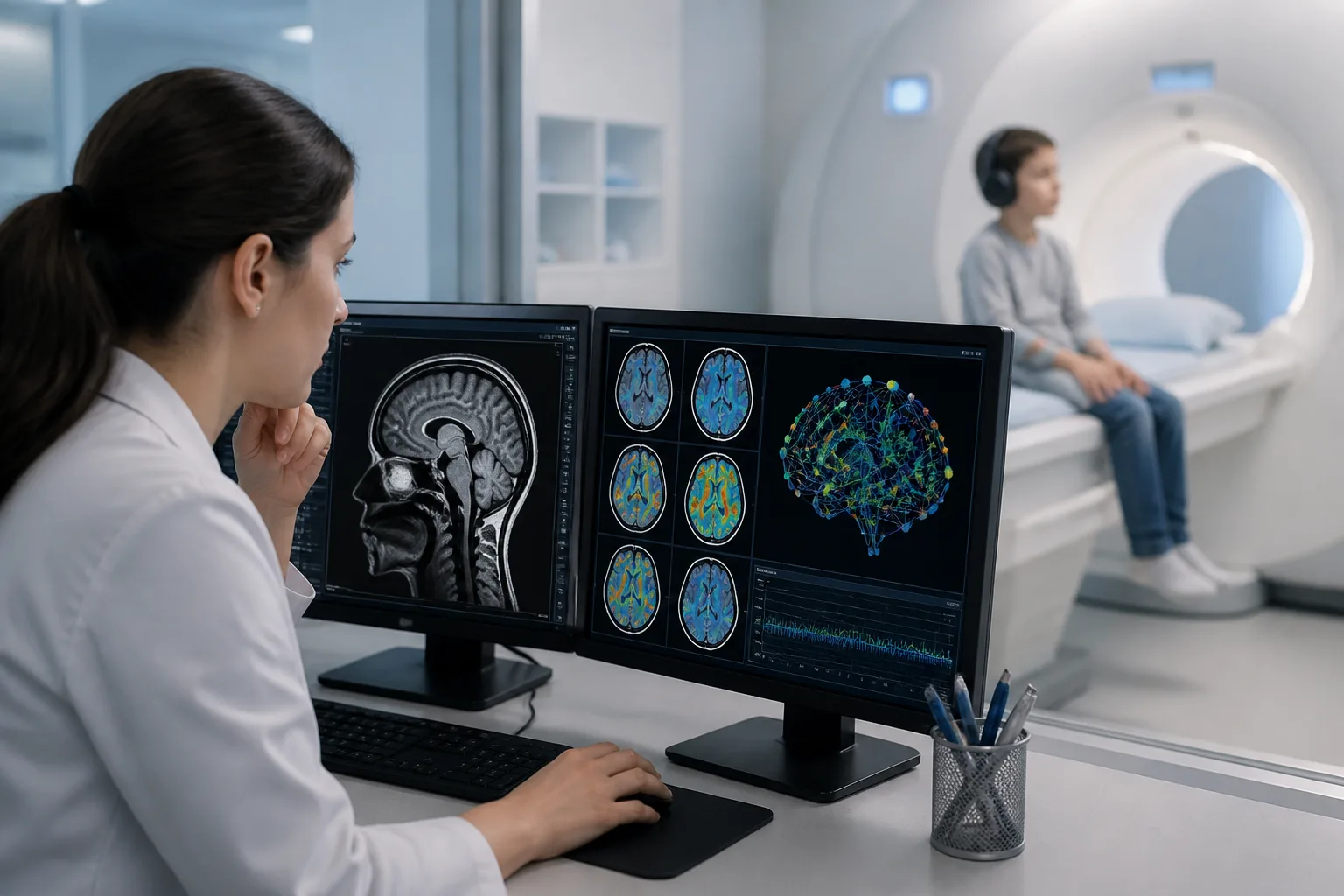
New Deep Learning Framework Enhances Autism Spectrum Disorder Detection Using Brain MRI

Innovative Approach to Autism Detection
A recent study has introduced a sophisticated deep learning framework aimed at improving the detection of Autism Spectrum Disorder (ASD) through analysis of brain magnetic resonance imaging (MRI). ASD, a neurodevelopmental condition with diverse symptoms, often requires prolonged clinical evaluation. Early diagnosis and intervention are crucial for better outcomes, but identifying ASD-related features in MRI scans has posed significant challenges due to subtle neuroimaging patterns.
Advanced Feature Extraction with Self-Calibrated Vision Transformer
The new model employs a novel feature extraction technique called the Self-Calibrated Dense Convolution Vision Transformer (SC-DCVT). This method combines dense neural connections with self-calibration mechanisms to capture detailed and contextual information from MRI images. By enhancing the representation of complex brain patterns, SC-DCVT aims to reveal subtle indicators associated with ASD that traditional methods might miss.
Adaptive Serial Hybrid Network for Detection
Following feature extraction, the framework utilizes an Adaptive Serial Hybrid Autism Spectrum Disorder Detection Network (ASHASDDetN). This network integrates two key components: a Residual-Temporal Convolutional Network (Res-TCN) and a Dense Conditional Random Field (DCRF). Together, these elements work to identify relevant features linked to ASD and maintain consistency in detection results.
Optimization for Enhanced Reliability
To improve the model’s accuracy, the parameters of Res-TCN and DCRF are fine-tuned using an Improved Position Updating Actor Optimization Algorithm (IPU-AOA). This optimization step helps the system adapt effectively to the complex nature of ASD-related brain patterns, increasing the robustness of detection.
Implications for Clinical Practice
This framework represents a promising advancement in automated ASD detection, potentially reducing the need for lengthy specialist evaluations. While the research demonstrates superior performance compared to existing techniques, it is important to note that such tools are intended to support, not replace, clinical judgment. Further validation and integration into clinical workflows are necessary before widespread adoption.
Source
For more detailed information, the original research can be accessed at the National Library of Medicine: An Effective Autism Spectrum Disorder Detection Framework Using Adaptive Serial Hybrid Network With Self-Calibrated Feature Extraction on Brain MRI Images.
Download the images in this article