Skip to content
-
Subscribe to our newsletter & never miss our best posts. Subscribe Now!
Love Beyond Words - autismwords.com Love Beyond Words - autismwords.com Love Beyond Words - autismwords.com

Supporting children with autism through education and care

Love Beyond Words - autismwords.com Love Beyond Words - autismwords.com Love Beyond Words - autismwords.com

Supporting children with autism through education and care

  • Learning & Support
    • Communication Skills
    • Daily Living Skills
    • Emotional Regulation
    • Everyday Challenges
    • Learning Through Play
    • Parent Education & Advocacy
    • Positive Behavior Support
    • Routines & Transitions
    • Social Skills
    • Speech & Language
  • Learning & Support
    • Communication Skills
    • Daily Living Skills
    • Emotional Regulation
    • Everyday Challenges
    • Learning Through Play
    • Parent Education & Advocacy
    • Positive Behavior Support
    • Routines & Transitions
    • Social Skills
    • Speech & Language
Close

Search

  • https://www.facebook.com/
  • https://twitter.com/
  • https://t.me/
  • https://www.instagram.com/
  • https://youtube.com/
Subscribe
Love Beyond Words - autismwords.com Love Beyond Words - autismwords.com Love Beyond Words - autismwords.com

Supporting children with autism through education and care

Love Beyond Words - autismwords.com Love Beyond Words - autismwords.com Love Beyond Words - autismwords.com

Supporting children with autism through education and care

  • Learning & Support
    • Communication Skills
    • Daily Living Skills
    • Emotional Regulation
    • Everyday Challenges
    • Learning Through Play
    • Parent Education & Advocacy
    • Positive Behavior Support
    • Routines & Transitions
    • Social Skills
    • Speech & Language
  • Learning & Support
    • Communication Skills
    • Daily Living Skills
    • Emotional Regulation
    • Everyday Challenges
    • Learning Through Play
    • Parent Education & Advocacy
    • Positive Behavior Support
    • Routines & Transitions
    • Social Skills
    • Speech & Language
Close

Search

  • https://www.facebook.com/
  • https://twitter.com/
  • https://t.me/
  • https://www.instagram.com/
  • https://youtube.com/
Subscribe
Home/Learning & Support/Emotional Regulation/Feeling Worried: 6 Steps to Help Young Children Recognize and Manage Worry
Feeling Worried: 6 Steps to Help Young Children Recognize and Manage Worry
Emotional Regulation

Feeling Worried: 6 Steps to Help Young Children Recognize and Manage Worry

By Andyle
August 21, 2026 2 Min Read
0

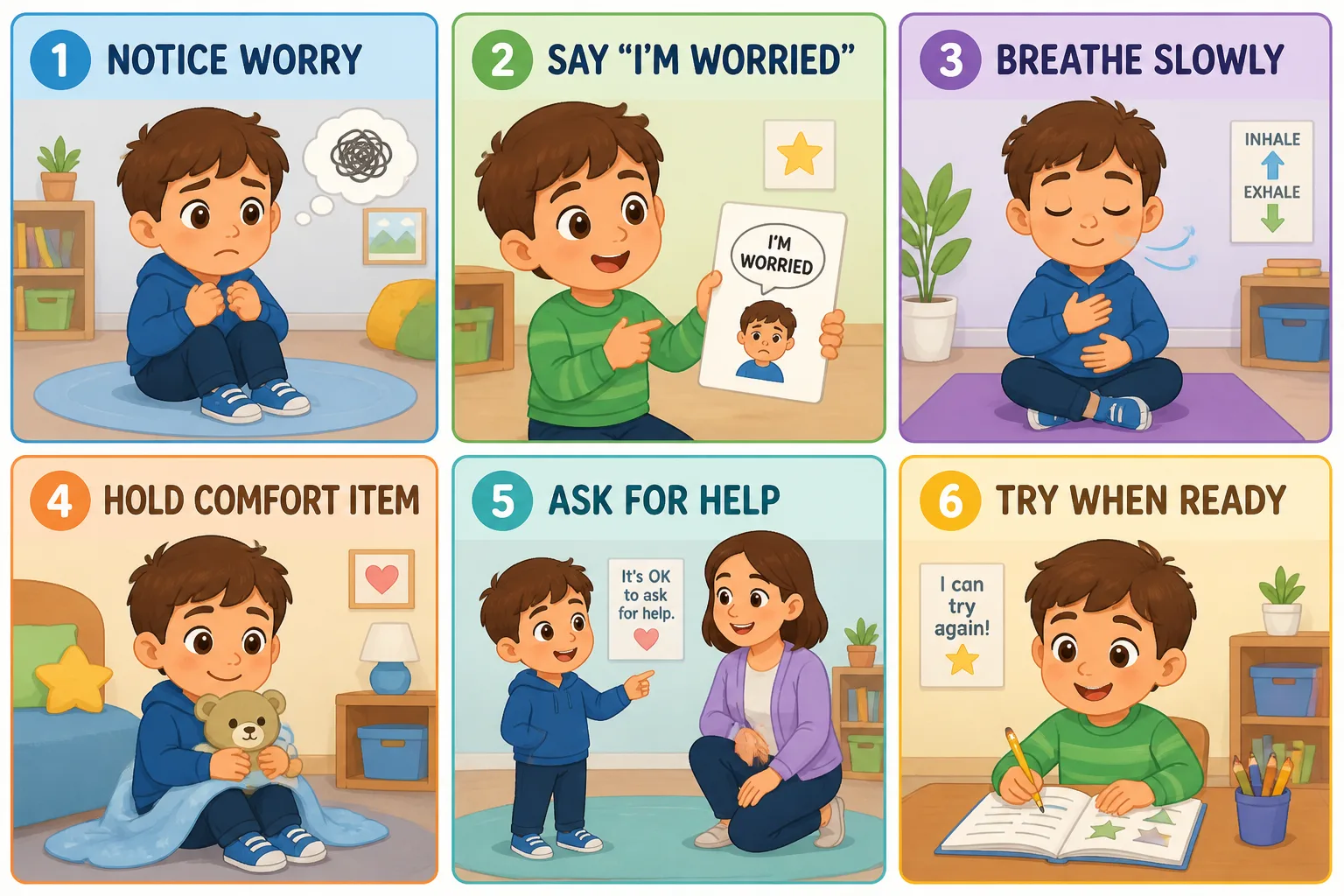
Helping young children recognize and manage worry is an important emotional regulation skill that supports their well-being and confidence. This visual post teaches 6 practical steps children can use when they feel worried, guiding them from noticing their feelings to safely coping and asking for help. Parents can use this as a tool to model naming emotions, noticing body signals, and offering simple coping choices without judgment or pressure.

1. Notice Worry

Children first learn to recognize the feeling of worry by paying attention to their emotions and body signals, such as a tight stomach or a nervous face. Naming this feeling helps them understand what they are experiencing.

2. Say “I’m Worried”

Encourage children to communicate their worry using words, gestures, pointing to pictures, or AAC devices. Expressing worry helps them feel heard and supported.

3. Breathe Slowly

Teaching children to take slow, deep breaths can help reduce physical tension and create a moment of calm. This is a safe coping strategy they can use anytime.

4. Hold a Comfort Item

Holding a soft toy, blanket, or other comfort item can provide reassurance and help children feel grounded when they are worried.

5. Ask for Help

Children should be encouraged to seek support from trusted adults or peers when they feel worried. Asking for help is a strong and positive step toward managing emotions.

6. Try When Ready

After using coping strategies and receiving support, children can return to their activity or challenge when they feel ready, fostering resilience and confidence.

How Parents Can Support

Parents can model naming feelings by sharing their own worries calmly, notice and label their child’s body signals, and offer two simple coping choices like breathing or holding a comfort item. It is important to give children time and space to process without rushing or forcing them to “calm down.” Using visuals like this post before potentially worrying situations can prepare children and reduce anxiety.

Remember, emotional regulation is a skill developed over time with patience and support. Encouraging safe expression and providing consistent reassurance helps children feel secure and understood.

What are some ways you help your child express and manage worry? Share your experiences below!

Download the images in this article

  • Feeling Worried: 6 Steps to Help Young Children Recognize and Manage Worry

Tags:

ask for helpcomfort itemcoping strategiesemotional regulationfeeling worriedslow breathingyoung children
Author

Andyle

Follow Me
Other Articles
Preparing for Your Child’s IEP Meeting: A Practical Tip for Parents
Previous

Preparing for Your Child’s IEP Meeting: A Practical Tip for Parents

Being Told to Wait: 6 Helpful Steps for Kids to Cope
Next

Being Told to Wait: 6 Helpful Steps for Kids to Cope

No Comment! Be the first one.

Leave a Reply Cancel reply

Your email address will not be published. Required fields are marked *

AAC asking for a break asking for help autism parenting autism sensory support autism support calming strategies child development child independence communication phrases communication skills coping skills for kids coping strategies daily living skills early childhood development emotional regulation everyday challenges expressive language fine motor skills handwashing routine hygiene routine IEP accommodations IEP advocacy independence learning through play parent advocacy parenting tips patience for children positive behavior support problem solving replacement skills school support self-advocacy sensory sensitivities shape recognition Shape Stacking Tower snack time routine special education step-by-step routine transition from playtime to snack time using a calm voice visual learning visual routine waiting strategies young children

  • Being Told to Wait: 6 Helpful Steps for Kids to Cope
    Being Told to Wait: 6 Helpful Steps for Kids to Cope
    Learn 6 helpful steps children can use when being told to wait. Practical coping strategies support patience, communication, and calmness in everyday situations.
  • Feeling Worried: 6 Steps to Help Young Children Recognize and Manage Worry
    Feeling Worried: 6 Steps to Help Young Children Recognize and Manage Worry
    Teach young children 6 practical steps to recognize and manage worry with this friendly visual post. Help children notice feelings, communicate needs, choose coping strategies, and ask for help.
  • Preparing for Your Child’s IEP Meeting: A Practical Tip for Parents
    Preparing for Your Child’s IEP Meeting: A Practical Tip for Parents
    Preparing a clear list of specific accommodations before your child's IEP meeting helps you advocate effectively and supports your child's learning.
  • Recognizing and Managing Clothing Discomfort: 6 Sensory Support Steps for Children
    Recognizing and Managing Clothing Discomfort: 6 Sensory Support Steps for Children
    Learn 6 practical sensory support steps to help children recognize and manage clothing discomfort, communicate needs, and choose comfortable clothes with confidence.
  • Shape Stacking Tower: A Fun Learning Through Play Activity
    Shape Stacking Tower: A Fun Learning Through Play Activity
    Explore fine motor skills and shape recognition with the Shape Stacking Tower activity. Learn 6 playful steps to build, balance, and knock down towers with colorful shapes.
When I'm Frustrated: 6 Steps to Recognize and Manage Frustration in Young When I’m Frustrated: 6 Steps to Recognize and Manage Frustration in Young Children
August 20, 2026
Feeling Overwhelmed: 6 Steps to Help Young Children Regulate Emotions Feeling Overwhelmed: 6 Steps to Help Young Children Regulate Emotions
August 20, 2026
Expressing Discomfort and Asking for Help: 6 Essential Communication Phrases for Young Expressing Discomfort and Asking for Help: 6 Essential Communication Phrases for Young Children
32 views
Preparing for Loud Events: 6 Sensory Support Steps for Children Preparing for Loud Events: 6 Sensory Support Steps for Children
29 views
Using a Calm Voice: 5 Positive Steps for Young Children Using a Calm Voice: 5 Positive Steps for Young Children
21 views
Teaching Action Words: 6 Everyday Verbs for Young Children Teaching Action Words: 6 Everyday Verbs for Young Children
18 views
Transition from Playtime to Snack Time: 6-Step Visual Routine for Young Children Transition from Playtime to Snack Time: 6-Step Visual Routine for Young Children
15 views

Content on this website is created with the assistance of artificial intelligence (AI), while some portions are still reviewed and overseen by humans. All content and resources are provided completely free of charge.

Some information may be referenced or cited from reputable sources. Whenever possible, we will clearly identify the sources used within each article.

If you have any questions, feedback, or would like to contact us, please email: info@autismwords.com

Copyright 2026 — Love Beyond Words - autismwords.com. All rights reserved. Blogsy WordPress Theme