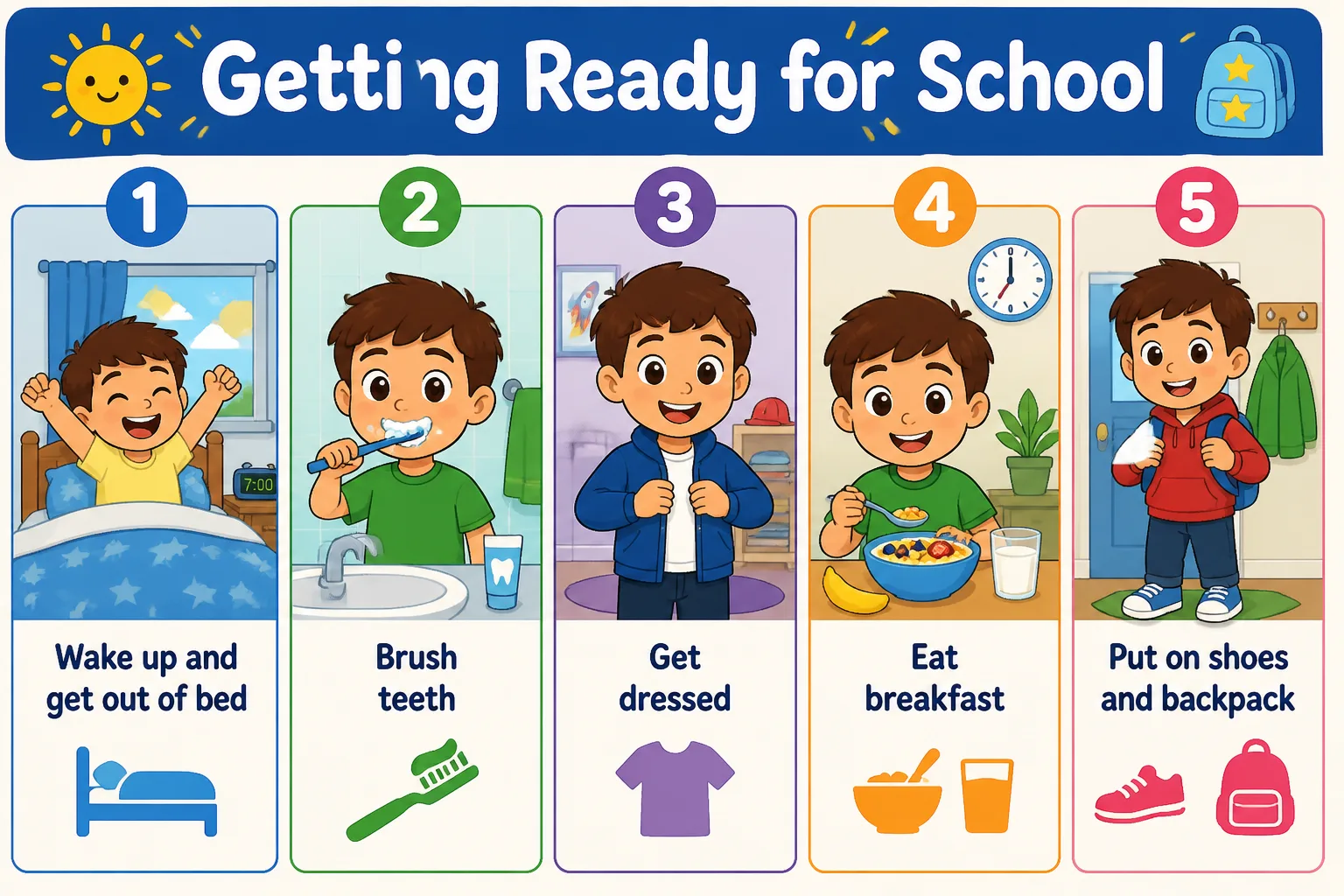

Getting ready for school can be a challenging routine for many young children, especially those who are autistic or need extra communication and sensory support. This routine involves multiple steps that require transitioning between activities, managing sensory experiences, and understanding what comes next. Predictability and preparation can make this routine smoother and less stressful for both children and adults.
Why Getting Ready for School May Be Difficult
Children may find this routine hard because it involves several transitions in a short time, each with different sensory and communication demands. For example, waking up may be difficult due to sleep inertia or sensory sensitivity to light and sound. Brushing teeth can cause discomfort or anxiety. Getting dressed might involve tactile sensitivities or difficulty choosing clothes. Eating breakfast requires sitting still and managing hunger or food preferences. Finally, putting on shoes and a backpack involves fine motor skills and readiness to leave a familiar environment.
Signs parents and caregivers might notice include resistance, meltdowns, withdrawal, or refusal at one or more steps. The child may seem overwhelmed, anxious, or uncertain about what is expected.
Understanding What the Child May Be Experiencing
Many children struggle with uncertainty about what happens next, sensory discomfort, or difficulty processing verbal instructions quickly. They might also be reluctant to stop a preferred activity (like sleeping or playing) or feel rushed. Communication difficulties may make it hard for them to express their needs or ask for help.
Preparing for the Routine Ahead of Time
Preparation is key. Adults can help by:
- Using a visual schedule that clearly shows each step of the routine.
- Giving advance notice before each transition (e.g., “In five minutes, we will brush teeth.”).
- Practicing the routine during calm times to build familiarity.
- Reducing sensory stressors, such as dimming lights or playing soft music.
- Offering limited choices to increase the child’s sense of control (e.g., “Do you want to wear the blue shirt or the red shirt?”).
Visual Supports and Communication Tools
A simple visual schedule with pictures or symbols can help the child understand and anticipate what happens next. For example, a 5-step chart with images for waking up, brushing teeth, getting dressed, eating breakfast, and putting on shoes/backpack.
Communication tools like AAC devices, gesture signs, or simple phrases can support the child in expressing needs such as “I need more time,” “Help me,” or “All done.” Adults should model and encourage these supports consistently.
Step-by-Step Strategies for the Routine
- Wake Up and Get Out of Bed: Use a gentle alarm or soft voice to wake the child. Allow extra time if needed and offer a comforting object or transition toy.
- Brush Teeth: Use a visual or social story to explain the steps. Let the child choose the toothbrush or toothpaste flavor if possible. Use a timer or song to make the duration predictable.
- Get Dressed: Offer two clothing choices to reduce decision fatigue. Lay out clothes in order. Allow the child to dress themselves as much as possible, offering help only when needed.
- Eat Breakfast: Provide familiar and preferred foods. Minimize distractions. Use a visual timer if sitting still is hard. Allow breaks if needed.
- Put on Shoes and Backpack: Prepare the backpack in advance with needed items. Use a First → Then approach: “First put on shoes, then we go outside.” Encourage the child to carry their own backpack to build independence.
What Adults Can Say During the Routine
- “In five minutes, we will brush your teeth.”
- “Can you show me when you are ready?”
- “Would you like the blue or the red shirt today?”
- “First we eat breakfast, then we put on shoes.”
- “I see you need a break, let’s take one for one minute.”
Responding to Difficulties During the Routine
If the child becomes upset or refuses a step, adults should stay calm and offer choices or breaks. Avoid forcing compliance or rushing. Use calming strategies like deep breathing or a quiet space. Reassure the child and remind them what comes next using the visual schedule.
Practicing the Routine During Calm Moments
Practice the routine when the child is relaxed, using play or role-play. This builds familiarity and reduces anxiety. Reinforce successes with praise and small rewards.
Environmental Adjustments
Keep the child’s bedroom and bathroom organized with easy access to clothes and toothbrush. Use clear labels or pictures on drawers. Reduce clutter and sensory distractions during breakfast.
Building Independence Gradually
Encourage the child to do as much as possible by themselves, praising effort. Gradually reduce adult prompts and supports. Celebrate milestones, such as putting on shoes independently or choosing breakfast.
What Adults Should Avoid
- Forcing transitions suddenly without warning.
- Using threats, yelling, or punishment.
- Demanding immediate compliance without processing time.
- Ignoring sensory or communication needs.
- Overwhelming the child with too many choices.
Individual Differences and When to Seek Professional Support
Every child is unique. Some may need more sensory accommodations or communication supports. If difficulties persist or significantly impact daily life, consider consulting occupational therapists, speech therapists, or behavioral specialists for tailored strategies.
Key Takeaway
Making the “Getting Ready for School” routine predictable, supported by visuals and communication tools, and practiced calmly can reduce anxiety and build independence for young children, especially those with additional needs.
What small step could you try today to make your child’s morning routine easier?
For related visual routines, see Separating from a Parent: A Simple 4-Step Visual Routine for Young Children and Transition from Classroom to Recess: A Simple 4-Step Visual Routine for Young Children.
Download the images in this article