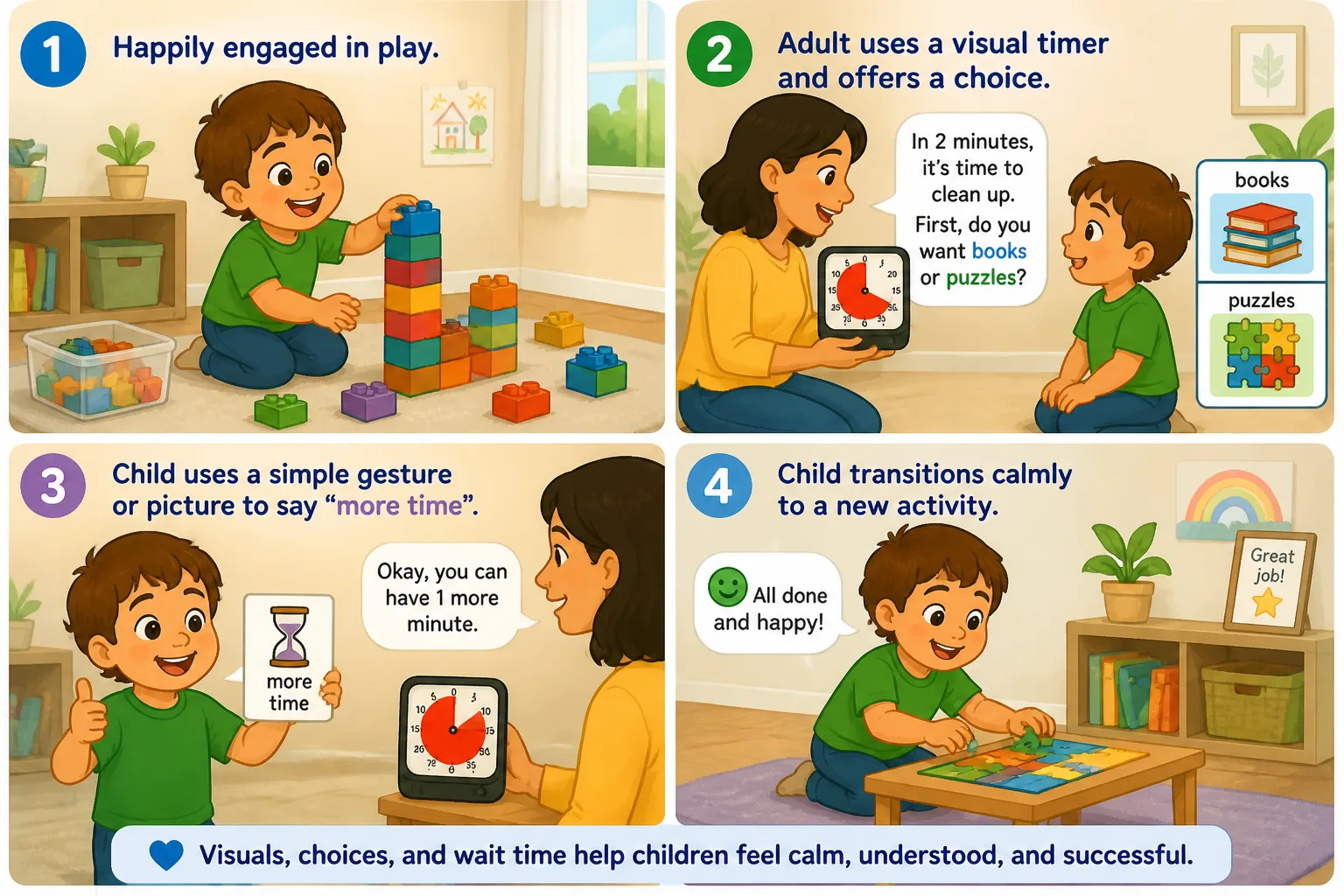
Supporting Young Children Who Have Difficulty Transitioning from Preferred Activities: 6 Positive Steps for Parents

Many young children, including those with autism or additional communication and sensory needs, find it challenging to transition from a preferred activity to a less preferred one. This difficulty can look like resistance, tantrums, crying, or refusal to stop playing with a favorite toy or game. Understanding why these behaviors happen and how to support your child positively can make transitions smoother and less stressful for everyone involved.
What Does Difficulty with Transitions Look Like?
When a child struggles to stop a preferred activity, you might see behaviors such as:
- Refusing to stop playing or engaging in the activity
- Crying, yelling, or tantrums
- Clinging to objects or adults
- Freezing or shutting down
- Running away or hiding
These behaviors are often the child’s way of communicating that they are overwhelmed, confused, or upset about the change.
Why Do Children Have Trouble with Transitions?
Several reasons can contribute to transition difficulties:
- Communication challenges: The child may not understand what is expected or cannot express their feelings or needs.
- Emotional regulation: Transitions can cause anxiety or frustration, especially if the child is deeply engaged in the current activity.
- Sensory needs: The preferred activity might provide sensory input that the child seeks, making it hard to stop.
- Uncertainty: Changes can feel unpredictable or unsafe, especially without clear cues.
- Task demands: The next activity may seem difficult or unappealing.
What Might the Child Be Communicating?
When a child resists stopping a preferred activity, they may be trying to say:
- “I’m not ready to stop.”
- “I need more time.”
- “I don’t understand what’s happening.”
- “I want to keep doing this.”
- “I feel upset or overwhelmed.”
Prevention Strategies: What Adults Can Do Before Transitions
Prevention is key to reducing challenging behaviors during transitions. Try these strategies:
1. Use Visual Supports and Timers
Visual timers or countdowns help children see how much time is left before a transition. For example, a sand timer or a digital timer with a visual countdown can prepare the child for the change.
2. Give Clear, Simple Warnings
Provide a verbal or visual warning a few minutes before the transition. For example, “Five more minutes of play, then cleanup.” Consistency helps build predictability.
3. Offer Choices When Possible
Allow the child to make simple choices, such as which activity to do next or where to put their toys. This increases their sense of control and cooperation.
4. Prepare the Environment
Reduce sensory overload and distractions, and create a calm space for transitions. For example, dim lights or reduce noise if these are triggers.
Replacement Skills to Teach
Teaching your child useful ways to communicate their needs during transitions can reduce frustration:
- Requesting “More Time”: Teach a gesture, sign, or picture the child can use to ask for extra time before stopping.
- Asking for Help: Encourage the child to indicate when they need assistance understanding or completing the next task.
- Using “Break” or “Stop”: If overwhelmed, the child can signal a need for a short break.
- Expressing Emotions: Use emotion cards or simple words to help the child share feelings like “sad” or “frustrated.”
How Adults Can Respond During Difficult Moments
When the child struggles during a transition, adults can:
- Stay calm and patient: Your calm presence helps the child feel safe.
- Acknowledge their feelings: Say, “I see you’re upset about stopping play.”
- Offer a break or choice: “Would you like 2 more minutes or help cleaning up?”
- Use simple language and visuals: Reinforce the transition plan with pictures or gestures.
- Reduce demands if needed: Temporarily pause the transition if the child is overwhelmed, then try again gently.
After the Child is Calm
Once the child has calmed down:
- Revisit the transition plan with simple words and visuals.
- Reinforce positive communication and cooperation with praise or preferred activities.
- Discuss what helped and what could be different next time, if the child can participate.
Practicing During Calm Times
Practice transitions during relaxed moments by:
- Playing games that involve stopping and starting.
- Using timers and visual supports regularly.
- Role-playing transitions with toys or family members.
Environmental Adjustments
Adjust the environment to support smoother transitions:
- Organize play areas with clear boundaries.
- Use visual schedules to outline daily routines.
- Minimize sensory distractions during transitions.
What Adults Should Avoid
Avoid:
- Forcing compliance or using threats.
- Shaming or punishing the child for resistance.
- Ignoring the child’s communication attempts.
- Using vague or inconsistent instructions.
Individual Differences and When to Seek Professional Support
Every child is unique. Some may need more time, visual supports, or sensory accommodations. If transitions consistently cause intense distress, aggression, or self-injury, or if you feel overwhelmed, consider consulting a behavior specialist, speech therapist, or occupational therapist for tailored support.
Key Takeaway
Supporting children through transitions requires understanding their communication and sensory needs, preventing difficulties with clear routines and visuals, teaching replacement skills like requesting “more time,” and responding with calm, respectful support. These steps help children feel safe, understood, and empowered.
What strategies have you found helpful when your child needs to stop a preferred activity?
For more ideas on supporting routines and stopping preferred activities, see our articles on Supporting Young Children Who Have Difficulty with Bedtime Routines and Supporting Young Children Who Have Difficulty Stopping Preferred Activities.
Download the images in this article