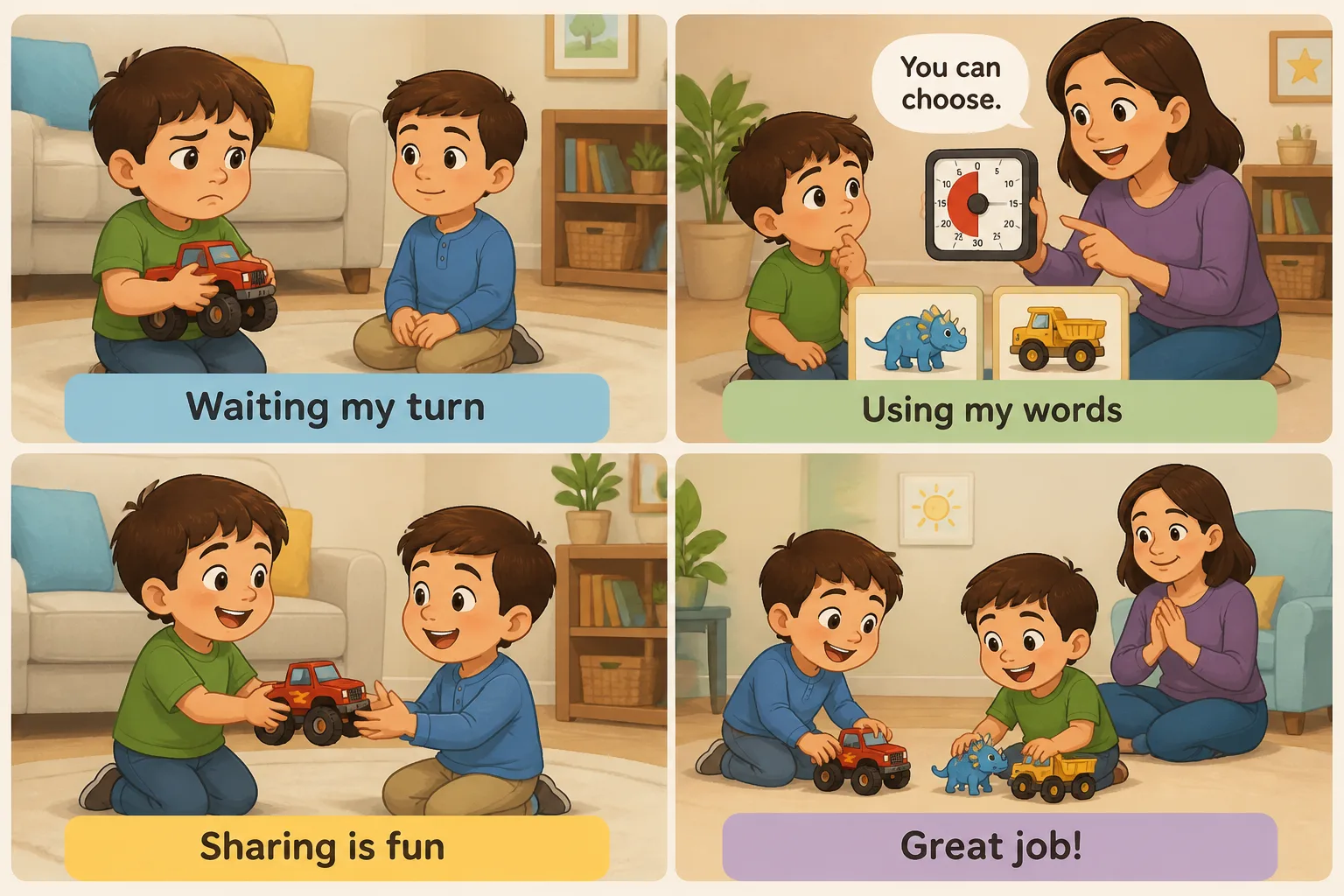
Supporting Young Children Who Have Difficulty Sharing and Taking Turns: 5 Positive Steps for Parents

Many young children, including autistic children and those with developmental or communication differences, find sharing and taking turns challenging. Difficulty sharing toys or waiting for a turn is a common behavior that can cause frustration and upset during playtime or group activities. Understanding why this happens and how to support your child with positive strategies can make these moments easier and more enjoyable for everyone.
What Does Difficulty Sharing and Taking Turns Look Like?
This behavior may include grabbing toys from others, refusing to give up a toy, crying or yelling when asked to wait, or withdrawing from play. Some children may become upset quickly if they feel overwhelmed or uncertain about what is expected. These behaviors are often a way for children to communicate needs or feelings they cannot yet express in words.
Why Might a Child Have Trouble Sharing or Taking Turns?
Before the behavior occurs, several factors might be at play:
- Communication challenges: The child may not have the words or AAC tools to ask for a turn or express feelings.
- Sensory needs: Some children find it difficult to tolerate the sensory input of waiting or the unpredictability of sharing.
- Emotional regulation: Waiting or giving up a preferred item can feel overwhelming or scary.
- Task understanding: The child might not understand the social expectation of sharing or turn-taking.
- Environmental factors: The setting may be noisy, crowded, or overstimulating, making it harder to cope.
Recognizing these reasons helps adults respond with empathy rather than frustration, seeing the behavior as communication rather than defiance.
Prevention Strategies: Setting Up for Success
Adults can make changes before challenging moments to reduce the likelihood of upset:
- Provide clear expectations: Use simple language, visuals, or social stories to explain sharing and turn-taking rules.
- Use visual timers or countdowns: Showing how long a turn lasts helps children anticipate changes.
- Offer choices: Let the child choose between toys or activities to increase their sense of control.
- Create calm environments: Reduce noise and distractions during playtime.
- Prepare for transitions: Give warnings before it’s time to share or switch toys.
Teaching Replacement Skills: Communicating Needs Positively
Helping children learn how to express themselves and understand sharing can reduce frustration:
- Teach simple requests: Words or AAC signs like “my turn”, “your turn”, “help”, or “more time” empower the child to communicate.
- Model sharing behavior: Adults and siblings can demonstrate taking turns and praising positive sharing.
- Use social stories or role-play: Practice sharing scenarios during calm times.
- Reinforce positive behavior: Praise or reward attempts to share or wait patiently.
Responding Calmly During Difficult Moments
If the child becomes upset or refuses to share, adults can:
- Stay calm and patient: Your calm presence helps the child regulate emotions.
- Acknowledge feelings: Say, “I see you want to keep the toy. It’s okay to feel upset.”
- Offer a break or space: If overwhelmed, allow the child to step away briefly.
- Use visuals or gestures: Point to a timer or show a “wait” card to support understanding.
- Avoid punishment or shaming: These can increase anxiety and resistance.
After the Child is Calm: Reinforce and Practice
Once the child has settled, it’s helpful to:
- Discuss what happened: Use simple language or visuals to talk about sharing and feelings.
- Practice sharing in low-pressure situations: Play games or activities that involve turn-taking with positive reinforcement.
- Build routines: Consistent sharing expectations help children feel secure.
Environmental Adjustments and Individual Differences
Every child is unique. Some may need more time, different communication supports, or sensory accommodations like fidget toys or quiet spaces. Observing what works best for your child and adjusting accordingly is key.
What to Avoid
- Do not force sharing or use threats.
- Avoid language that blames or shames.
- Do not expect immediate mastery; skill-building takes time.
When to Seek Professional Support
If sharing difficulties lead to frequent aggression, self-injury, or significant distress, or if communication challenges are severe, consulting a speech therapist, occupational therapist, or behavioral specialist can provide tailored strategies and support.
Key Takeaway
Difficulty sharing and taking turns is often a way children communicate needs or feelings. By understanding the reasons behind the behavior, preventing triggers, teaching communication and sharing skills, and responding calmly, parents can support their child’s social development in a positive, respectful way.
For more support with related behaviors, you might find helpful strategies in our articles on supporting young children who have difficulty waiting for help and supporting young children who interrupt.
Parent question: What small changes have you noticed help your child feel more comfortable sharing or waiting for a turn?
Descarga las imágenes en este artículo