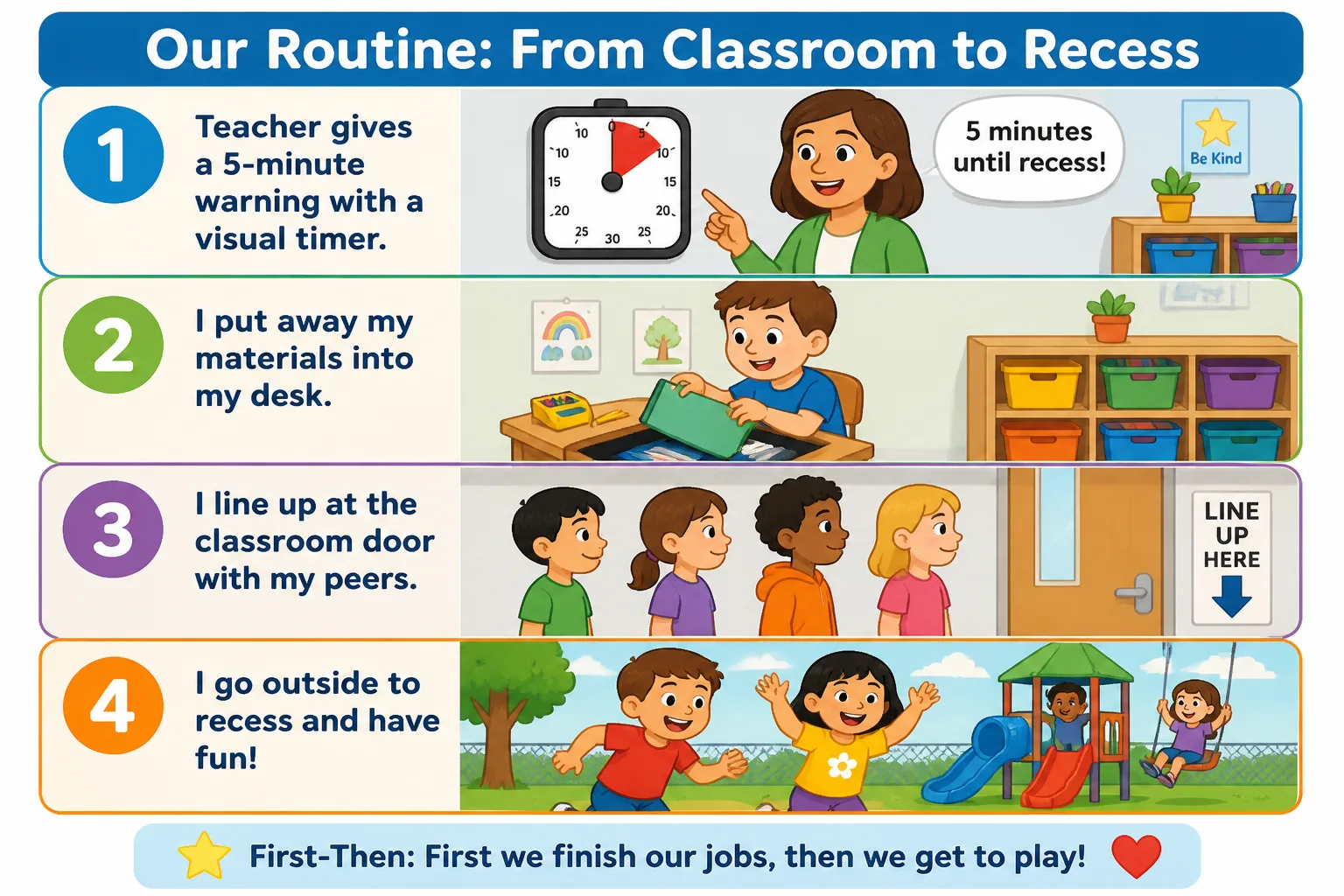
Transition from Classroom to Recess: A Simple 4-Step Visual Routine for Young Children

Transitioning from classroom activities to recess can be a challenging routine for many young children, including autistic children and those who require additional communication or sensory support. This article focuses on a simple, predictable 4-step routine to help children understand and manage the transition smoothly, reducing anxiety and uncertainty.
Why Transitioning from Classroom to Recess May Be Difficult
Leaving a structured classroom environment to move to a less structured, sensory-rich playground can be overwhelming. Children may experience uncertainty about what will happen next, sensory discomfort from noise or crowds, or difficulty stopping a preferred classroom activity. Additionally, communication challenges and the need for processing time can make this transition stressful.
Signs adults might notice include resistance to leaving the desk, increased vocalizations or meltdowns, withdrawal, or physical tension. The child may feel anxious about the change in routine or unsure about playground expectations.
Preparing for the Transition: Visual and Communication Supports
Advance notice is key. Use a visual timer or countdown to give the child time to prepare. Visual schedules showing the day’s events, including recess time, help set clear expectations. Simple communication tools such as “What’s next?”, “I need more time”, or “Show me recess” can empower the child to express their feelings and needs.
Consider using a First → Then board: “First finish work, then recess” to clarify the sequence. Allowing a transition object, like a favorite small toy or a sensory item, can provide comfort during the change.
A Simple 4-Step Routine to Transition from Classroom to Recess
- Advance Warning: Teacher gives a 5-minute warning using a visual timer or verbal cue. Example: “In 5 minutes, we will get ready for recess.”
- Put Away Materials: Child puts away classroom materials into their desk or backpack. Use a visual checklist if helpful.
- Line Up Calmly: Child lines up at the classroom door with peers. Use a visual cue or social story to explain lining up rules.
- Go Outside Happily: Child walks to the playground with the group, carrying any transition objects if allowed.
What Adults Can Say and Do During the Transition
Use simple, clear language and positive reinforcement. Phrases like “You did a great job putting your things away!” or “Let’s line up together for recess” support understanding and motivation. Allow extra processing time after each step. If the child shows signs of distress, acknowledge feelings calmly: “I see you’re upset. It’s okay to feel that way. Let’s take a deep breath together.”
Use gestures, signs, or AAC devices as needed to support communication. Avoid rushing or forcing the child, which can increase anxiety.
Practicing and Building Independence
Practice this routine during calm times, such as before school or during quiet periods, to build familiarity. Gradually encourage the child to initiate steps independently, such as putting away materials or lining up. Celebrate small successes to boost confidence.
Environmental adjustments like reducing noise near the door or providing a quiet waiting spot in line can help children sensitive to sensory input.
When to Seek Professional Support
If transitions consistently cause severe distress or interfere with learning and social participation, consider consulting speech therapists, occupational therapists, or behavioral specialists. They can provide tailored strategies and supports.
Key Takeaway
Making the transition from classroom to recess predictable and supported with clear communication, visual routines, and patience helps children feel safe and confident, reducing anxiety and improving cooperation.
How does your child respond to transitions like going outside for recess? What strategies have you found helpful?
For more strategies on transitions, see our articles on Leaving the House: A Simple 4-Step Visual Routine for Young Children and Transition from Screen Time to Another Activity: A Simple 4-Step Routine.
Download the images in this article