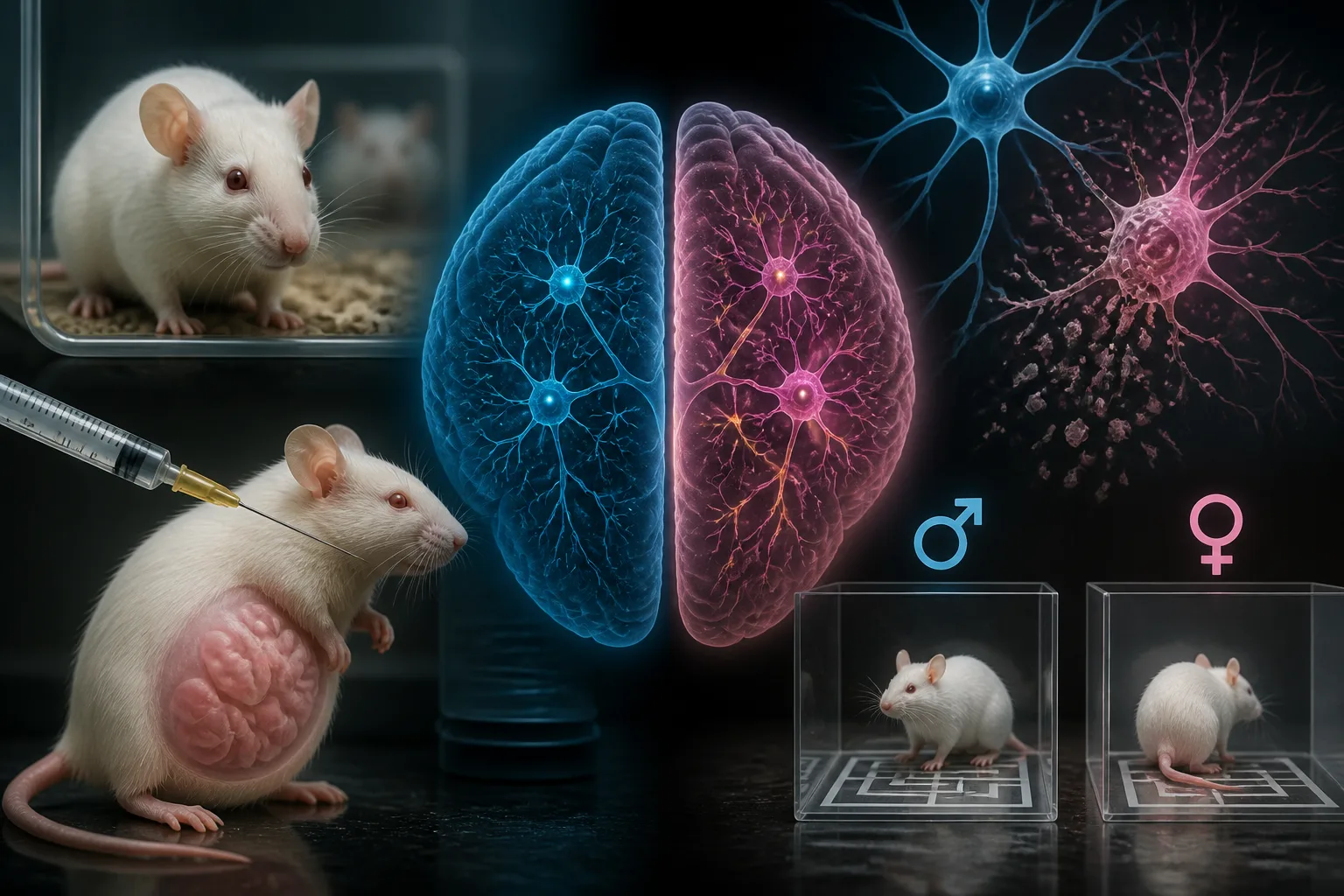
Study Finds Sex Differences in Brain Cell Death Linked to Autism-Like Behaviors After Prenatal Valproic Acid Exposure

Research Highlights Sex-Specific Brain Changes Following Prenatal Valproic Acid Exposure
A recent study has explored how exposure to valproic acid (VPA) during embryonic development may contribute to autism spectrum disorder (ASD)-like behaviors in adolescent mice, revealing notable differences between males and females. This research sheds light on ferroptosis, a type of iron-dependent cell death, as a possible mechanism underlying these behavioral changes, particularly in the medial prefrontal cortex (mPFC), a brain region important for social and cognitive functions.
Key Findings on Behavioral and Brain Changes
Researchers administered VPA to mice at embryonic day 12.5 and observed their behaviors during adolescence. Both male and female mice exhibited social interaction difficulties and increased anxiety-like behaviors. However, males showed more pronounced impairments in social preference and sociability.
Histological examinations revealed neuronal abnormalities predominantly in the mPFC and hippocampus, with the mPFC showing the most significant changes. These structural alterations were present in both sexes.
At the molecular level, markers of ferroptosis were elevated in the mPFC, accompanied by mitochondrial damage and cellular vacuolization. These ferroptosis-related changes were more marked in males, suggesting a sex-specific vulnerability.
Comparing Prenatal and Early Postnatal Exposure in Males
The study also compared behavioral and molecular outcomes in male mice exposed to VPA either prenatally or during early postnatal development. Both exposure periods resulted in similar patterns of social deficits and ferroptosis-associated molecular alterations in the mPFC, indicating that ferroptosis may be a common pathway through which VPA disrupts neurodevelopment.
Implications for Understanding Autism Spectrum Disorder
These findings suggest that ferroptosis-related neuronal damage in the mPFC could contribute to ASD-like behaviors following prenatal VPA exposure, with males showing greater susceptibility. This aligns with the higher prevalence of ASD observed in males and points to ferroptosis as a potential target for future research and interventions.
Limitations and Considerations
While the study provides valuable insights, it is based on an animal model, and the direct applicability to humans requires further investigation. Additionally, the mechanisms of ferroptosis in neurodevelopmental disorders are complex, and more research is needed to clarify causality and explore therapeutic possibilities.
For more detailed information, the original study can be accessed here.
Download the images in this article