
Learning to communicate about waiting and taking turns is an important social skill for young children, especially those who are autistic or need extra communication support. When children can express their needs clearly, such as asking for a turn or saying they are all done, they feel more in control and less frustrated. This post teaches 6 simple, practical phrases children can use in everyday situations to help them navigate waiting and turn-taking.
Why Teach Waiting and Turn-Taking Phrases?
Waiting and taking turns are common in play, school, and daily routines. Children who struggle to communicate these needs may become upset or withdraw. Using clear phrases like “My Turn” or “Wait Please” helps children participate socially and reduces misunderstandings. These phrases also support self-advocacy and emotional regulation.
6 Useful Phrases for Waiting and Taking Turns
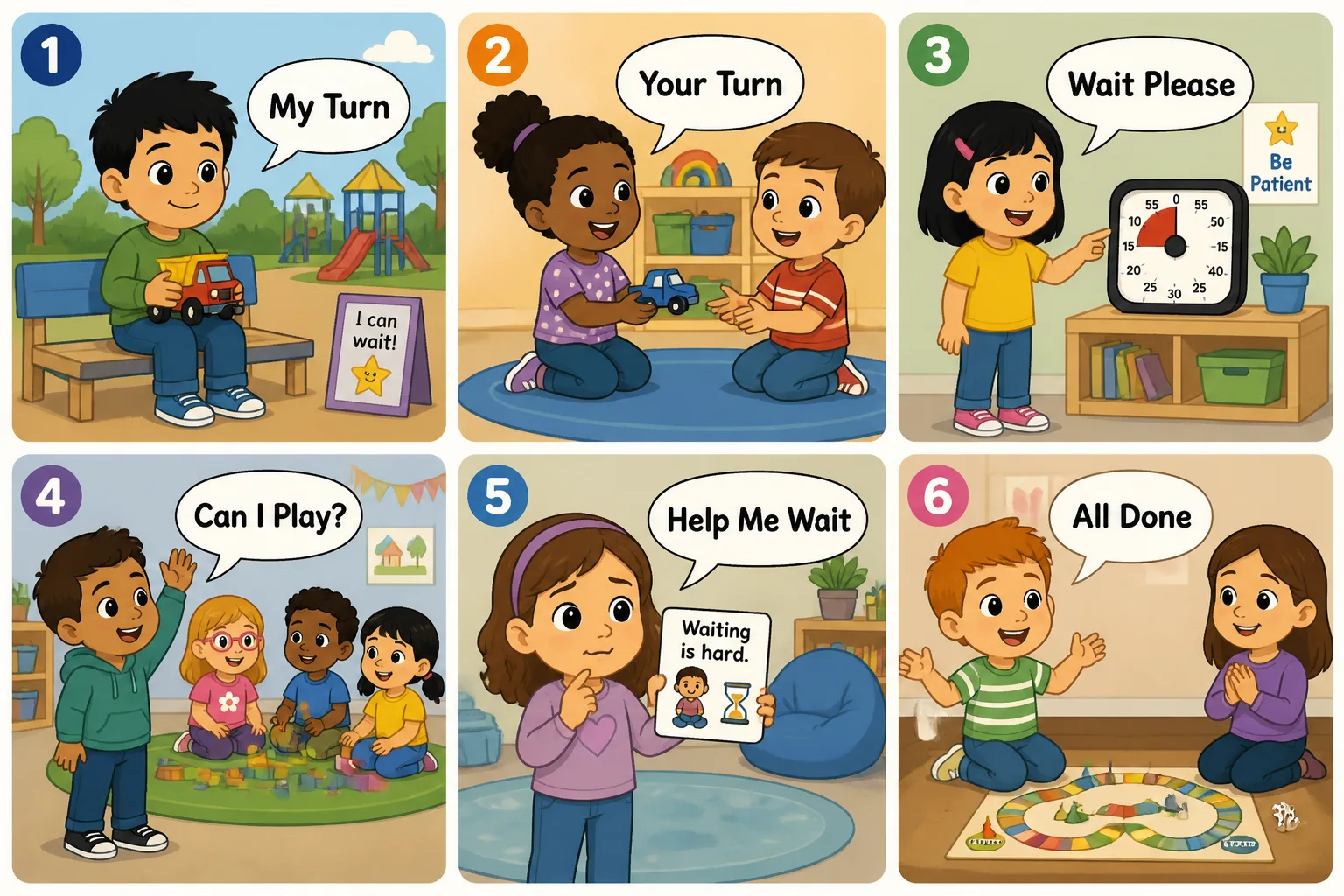
- My Turn: The child indicates they want to have a turn with a toy or activity, using speech or AAC.
- Your Turn: The child shows they are giving the turn to someone else, promoting sharing.
- Wait Please: The child asks for patience when they need to wait, using a visual timer or gesture.
- Can I Play?: The child requests to join a group or activity politely.
- Help Me Wait: The child expresses difficulty waiting and asks for support or a break.
- All Done: The child signals they have finished their turn or activity.
How Parents Can Support Learning
Model these phrases naturally during play and routines without pressuring the child to repeat. Use gestures, picture cards, or AAC as needed. Offer two simple choices to encourage communication and respect the child’s pace. Celebrate attempts to communicate and respect their boundaries. For more on supporting children’s communication preferences, see My Choices, My Voice.
Practice Ideas
- During playtime, take turns with a toy and use “My Turn” and “Your Turn” aloud or with AAC.
- Use a visual timer and say “Wait Please” when the child needs to wait.
- Encourage the child to ask “Can I Play?” when joining others.
- Recognize when the child wants a break by prompting “Help Me Wait”.
- Celebrate when the child says “All Done” to end an activity.
Teaching these phrases helps children communicate their needs clearly and enjoy social interactions more confidently.
Download the images in this article