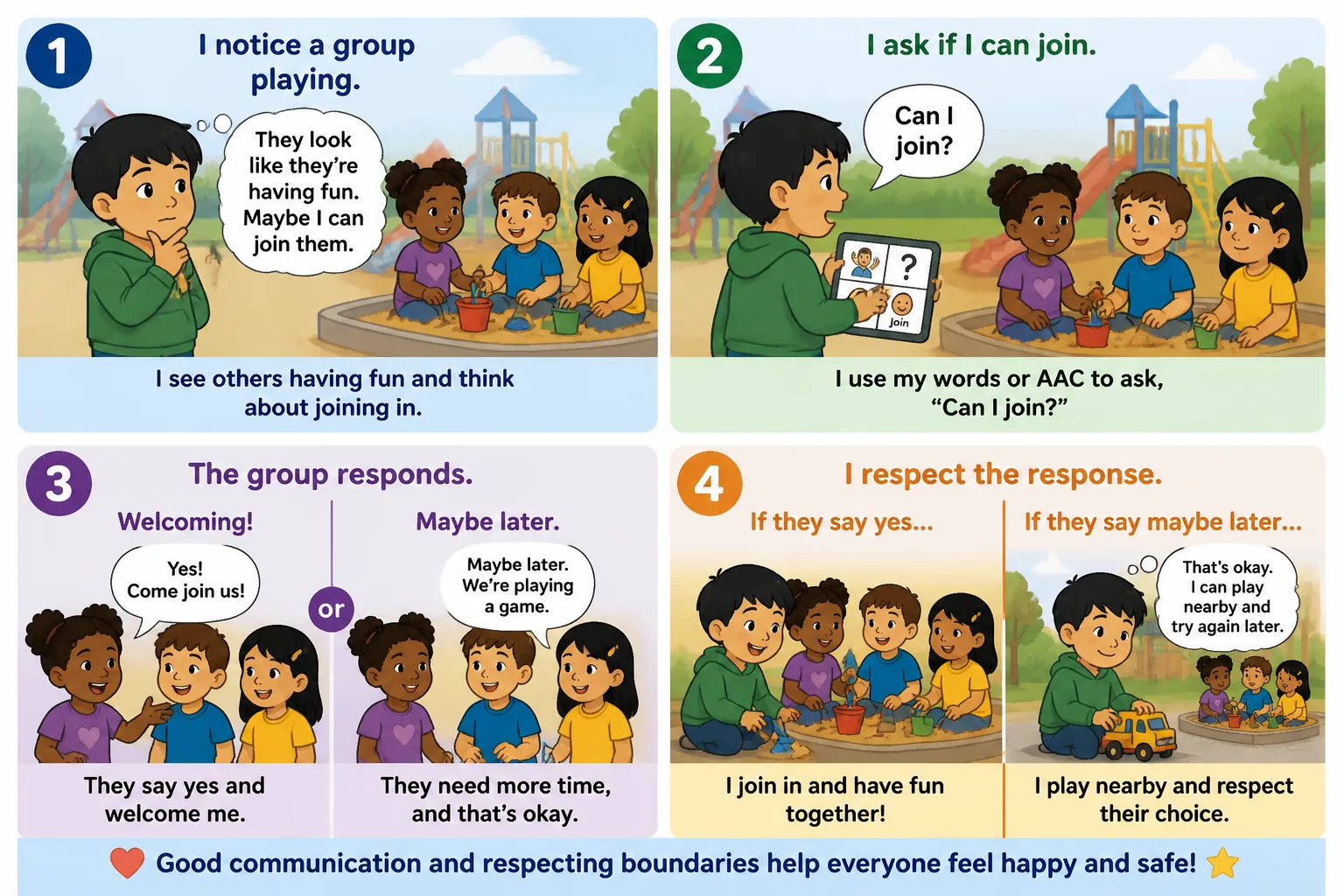

When children want to play or spend time with others, they often need to ask to join a group. Asking to join a group is an important social skill that helps children communicate their interest, respect others’ boundaries, and build friendships in a way that feels safe and comfortable for them.
Why This Skill Matters
Joining a group is a common social situation at school, playgrounds, and community activities. Knowing how to ask to join helps children feel included and respected. It also teaches them to understand social cues and practice consent, which are essential for positive interactions and self-advocacy.
What May Make This Hard
- Uncertainty about how to approach a group or what to say.
- Difficulty interpreting social cues or group dynamics.
- Sensory or emotional overwhelm in busy settings.
- Fear of rejection or not knowing how to respond if the answer is no.
What Parents May Notice
- The child watches others play but does not join.
- The child seems unsure or anxious about approaching peers.
- The child uses nonverbal ways to show interest, like pointing or looking.
- The child may leave if the group says no or does not respond.
What the Child Can Learn
Here are four key social skills for asking to join a group:
- Notice the group and decide to join: The child recognizes a group playing or chatting and feels ready to join.
- Communicate interest clearly: Using words, AAC, signs, or gestures, the child can say something like “Can I join?” or “I want to play too.”
- Respect the group’s response: Whether the group says yes, maybe later, or no, the child understands and accepts their answer without pressure.
- Respond appropriately: If welcomed, the child joins happily. If not, the child finds another activity or plays nearby independently.
Helpful Words or Phrases
- “Can I join?”
- “I want to play too.”
- “Maybe later?”
- “Okay, thank you.”
- “I’ll play here.”
How Parents Can Practice
- Role-play asking to join with family members or peers in a calm setting.
- Use picture cards or AAC devices to practice the phrases.
- Visit playgrounds or group activities and support the child in noticing groups and practicing asking.
- Model respectful responses to both yes and no answers.
What Adults Can Say
- “Do you want to join their game? You can say, ‘Can I join?’”
- “It’s okay if they say no. You can play nearby or try again later.”
- “Let’s show them what you want to say or use your device.”
- “You’re doing a great job asking!”
What to Avoid
- Forcing the child to join if they don’t want to.
- Pressuring the child to make eye contact or speak if they use other communication methods.
- Ignoring the child’s feelings if they feel rejected or overwhelmed.
- Teaching scripted phrases without understanding or respect for the situation.
Real-Life Example
At recess, Mia sees a group playing tag. She points to the group and uses her AAC device to say, “Can I join?” The group smiles and says, “Yes!” Mia joins happily. Another day, when she asks, the group says, “Maybe later.” Mia nods and decides to play with blocks nearby until she feels like asking again.
Key Takeaway
Learning to ask to join a group helps children communicate their interest, respect others’ boundaries, and participate in social activities in a way that feels safe and comfortable. Supporting children with clear, respectful communication options and understanding responses builds confidence and connection.
What are some ways your child likes to show they want to join a group?
Download the images in this article