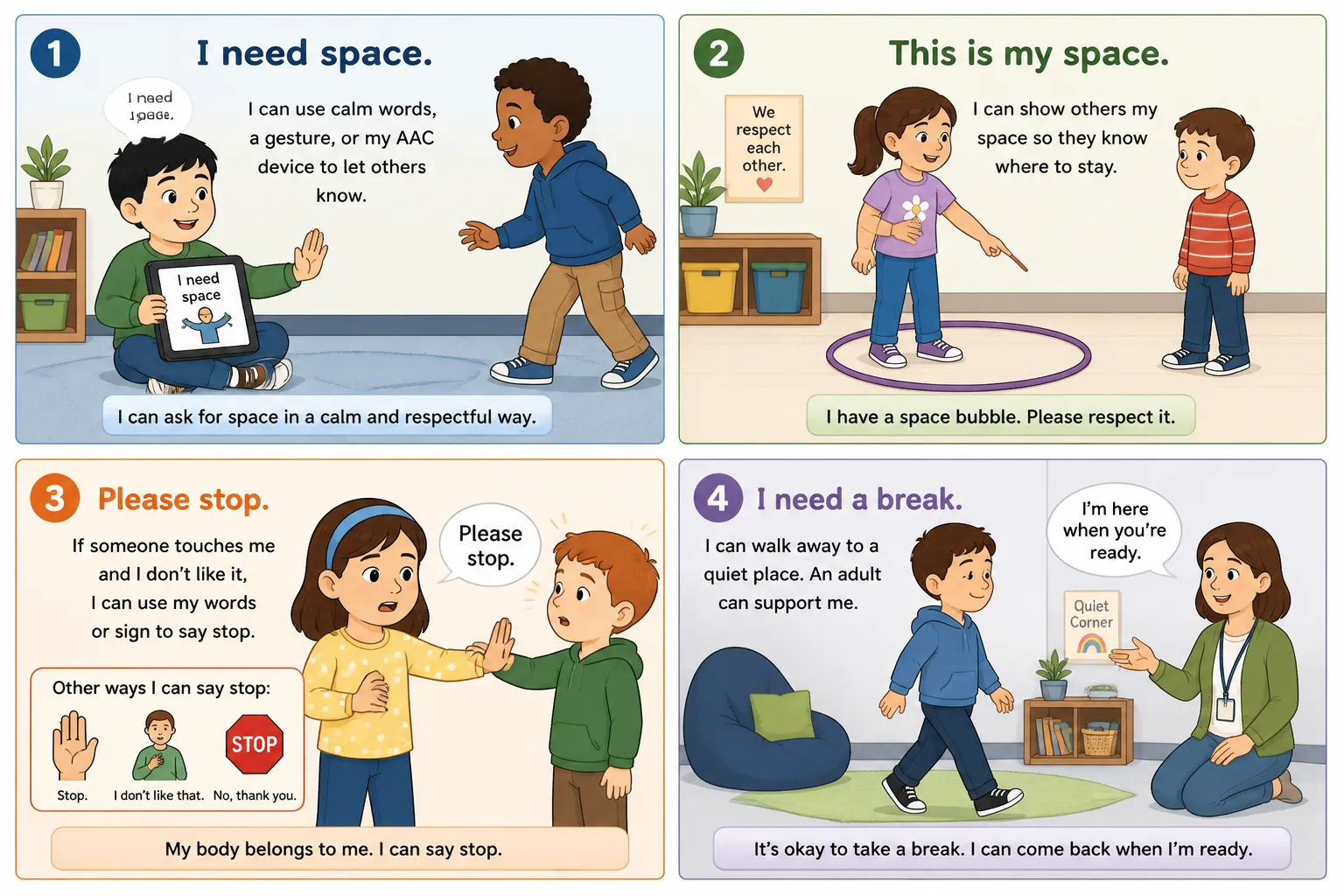

Learning to ask for space is an important social skill for children, especially those who may feel overwhelmed by too much closeness or sensory input. “Asking for Space” helps children communicate their need for physical or emotional distance in a respectful way, supporting their comfort and autonomy.
Why This Skill Matters
Children often find themselves in situations where others come too close, touch unexpectedly, or crowd their personal area. This can feel uncomfortable, confusing, or even scary, especially for children with sensory sensitivities or social communication differences. Knowing how to ask for space helps children protect their boundaries, reduce stress, and participate in social settings more comfortably.
What May Make This Hard
- Difficulty recognizing when they need space due to sensory overload or emotional overwhelm.
- Uncertainty about how to communicate the need clearly and calmly.
- Fear of upsetting others or being misunderstood.
- Social pressure to tolerate unwanted closeness or touch.
What Parents May Notice
- The child backs away or freezes when others get too close.
- The child becomes upset or anxious in crowded or noisy places.
- The child uses nonverbal cues like turning away or covering their face.
- The child may not say anything but shows signs of discomfort.
What the Child Can Learn
Here are four key skills children can develop to ask for space effectively:
- Recognize the Need: Notice feelings of discomfort, sensory overload, or anxiety that signal the need for space.
- Communicate Clearly: Use words, signs, gestures, or AAC to say phrases like “I need space,” “Please stop,” or “Can you give me room?”
- Respect Responses: Understand that others may need a moment to adjust and that it’s okay to repeat or show the message again if needed.
- Maintain Boundaries: Use body language, personal space markers, or calmly move away to keep comfortable distance.
Helpful Words or Phrases
- “I need space.”
- “Please stop.”
- “Can you give me room?”
- “I’m all done.”
- “I want to be alone right now.”
Remember, these can be spoken, signed, gestured, pointed to on a communication device, or written down.
How Parents Can Practice
- Role-play asking for space in safe, calm settings using simple phrases or AAC tools.
- Use visual markers like hula hoops or tape on the floor to show personal space boundaries.
- Model respectful responses when the child asks for space, acknowledging their request without pressure.
- Encourage the child to take breaks in quiet areas when feeling overwhelmed.
What Adults Can Say
- “I see you need some space. That’s okay.”
- “You can tell me if you want to be alone.”
- “Thank you for telling me you need room.”
- “It’s okay to ask for a break whenever you want.”
What to Avoid
- Forcing the child to stay close when they ask for space.
- Pressuring the child to explain or justify their need immediately.
- Ignoring or dismissing the child’s requests for space.
- Teaching children to hide their discomfort or tolerate unwanted touch.
Real-Life Example
At a birthday party, a child feels overwhelmed by the crowd and noise. They say, “I need space,” using their AAC device. A nearby adult helps by guiding the child to a quieter corner with some toys. The child feels safe and calm, and the other children understand to give them room until they are ready to join again.
Key Takeaway
Asking for space is a vital skill that empowers children to communicate their needs, respect their own boundaries, and feel safe in social situations. Supporting this skill with patience and respect helps children build confidence and comfort in everyday interactions.
What are some ways your child shows they need space, and how do you support them in those moments?
Download the images in this article