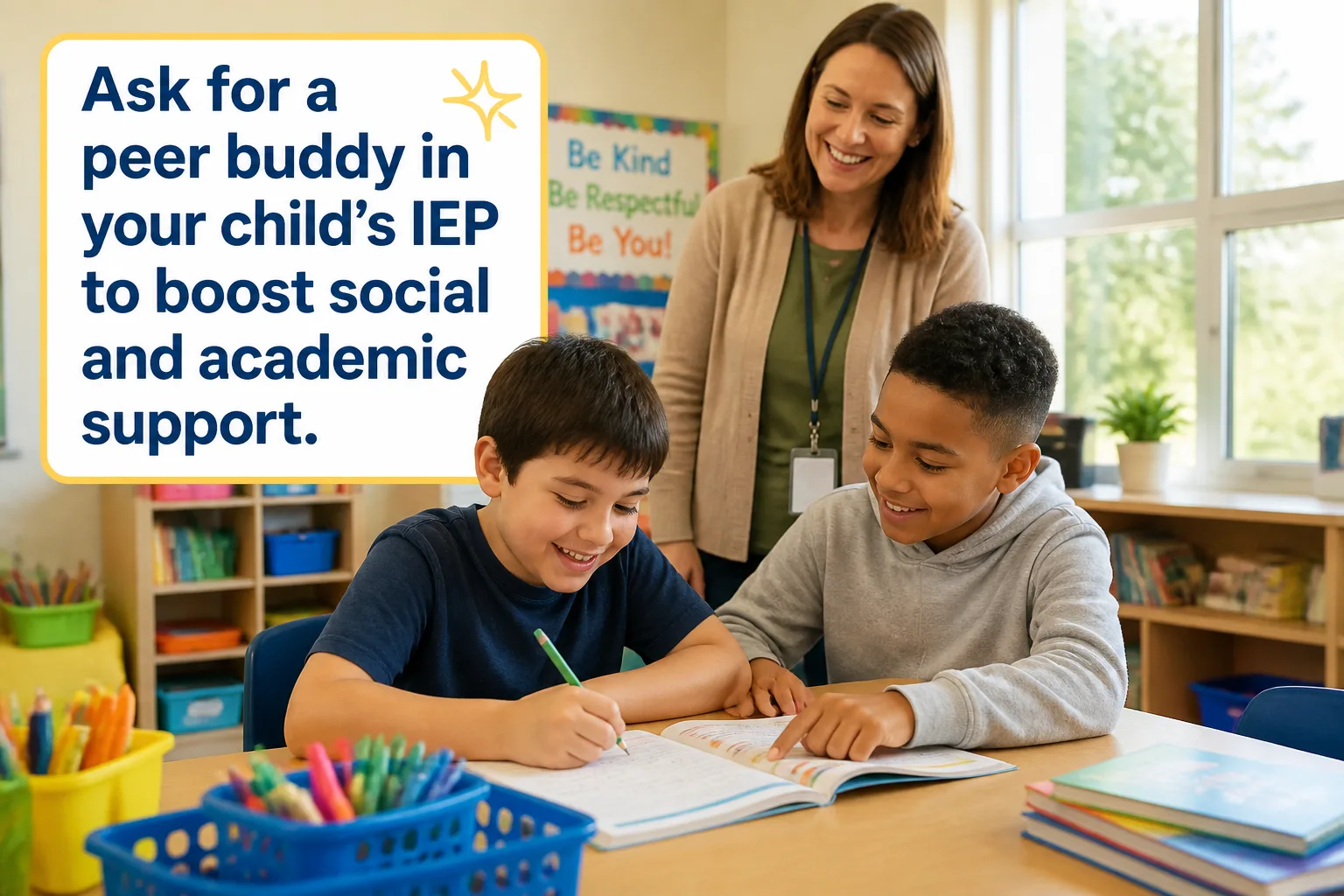

One thing I’ve learned as a mom navigating the IEP process is how powerful peer buddy support can be for autistic kids in school. If your child struggles with social connections or needs extra help during classwork, asking for a peer buddy accommodation in their IEP might be a game changer.
What is a Peer Buddy?
A peer buddy is a classmate who is paired with your child to provide social and academic support. This doesn’t mean the peer does all the work, but they can help your child stay engaged, understand instructions, and feel included during group activities.
How to Request a Peer Buddy in the IEP
- Talk to your child’s teacher: Share your thoughts about how a peer buddy might help your child feel more comfortable and confident in class.
- Bring it up at the IEP meeting: Ask the team to consider adding a peer buddy as a formal accommodation in your child’s IEP.
- Explain the benefits: Emphasize that peer buddies can improve social skills, reduce anxiety, and support learning.
Why It May Help
Having a peer buddy can make school less overwhelming and more enjoyable. It encourages friendships and provides your child with a familiar face to turn to during challenging moments. Plus, it helps teachers by creating a supportive classroom environment.
Every child’s needs are unique, so this might not be the perfect fit for everyone, but it’s definitely worth exploring if social or academic support is a goal for your child.
Have you ever tried a peer buddy system or something similar for your child? How did it go?
Follow Love Beyond Words for more practical tips and heartfelt support on your autism parenting journey.
#AutismParenting #AutismSupport #IEPAdvocacy
Download the images in this article