
What This Skill Teaches
Learning action words helps young children understand and communicate about things people do. Action words like run, eat, sleep, and wash describe common activities children see every day. These words build early vocabulary and support both understanding and speaking or other ways of communicating.
Why This Skill Matters
Action words are some of the first verbs children learn because they describe what people do. Knowing these words helps children follow directions, talk about their day, and express needs or wants. For children with autism or communication delays, learning action words is a key step toward more complex language and social interaction.
What Parents May Notice
- Your child may start to recognize or respond when you say words like “run” or “eat.”
- They might use gestures, signs, or AAC to show these actions before they say the words.
- Children often enjoy acting out these verbs, like pretending to run or sleep.
The Learning Set
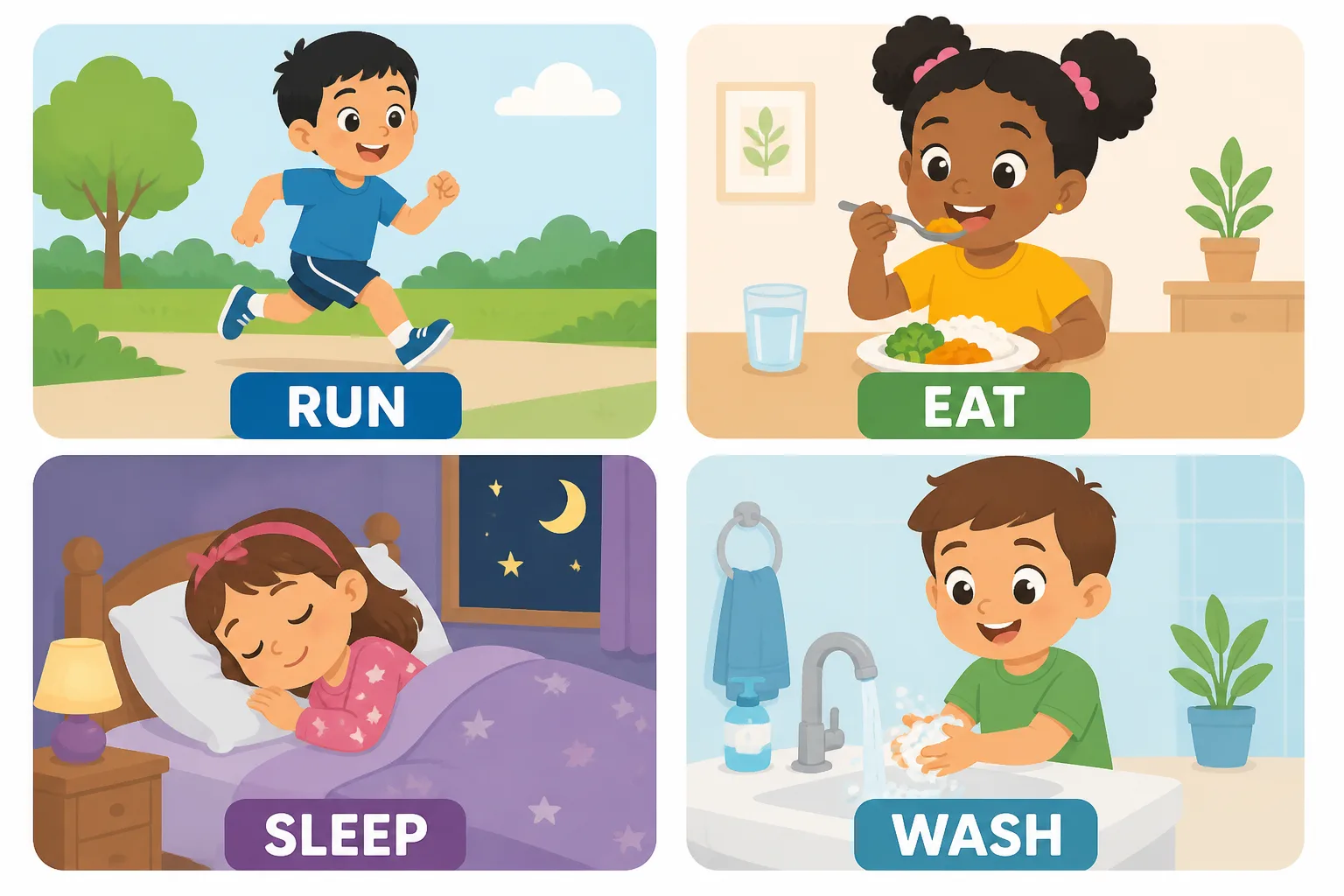
This article focuses on four action words:
- Run – moving quickly on feet
- Eat – putting food in the mouth
- Sleep – resting with eyes closed
- Wash – cleaning hands or face
How to Model the Language
- Use clear, simple sentences like “I am running,” “You eat lunch,” or “Time to wash hands.”
- Point to or show the action as you say the word.
- Repeat the words naturally during daily routines without pressuring your child to respond.
- Use gestures or signs along with the words to support understanding.
Easy Ways to Practice at Home
- Play games like “Run to the door!” or “Let’s wash our hands.”
- Talk about what your child is doing during meals: “You eat apple.”
- Use storybooks or videos that show these actions and name them aloud.
- Encourage pretend play with dolls or toys acting out running, eating, sleeping, or washing.
Helpful Examples to Say
- “Run fast!”
- “I eat my sandwich.”
- “The baby sleeps now.”
- “Wash your hands before snack.”
Supporting AAC, Gestures, and Other Communication
Respect all ways your child communicates these actions. If your child uses AAC, make sure these words are available on their device. Encourage pointing, signing, or using pictures to show the actions. Respond positively to any attempt to communicate.
What to Avoid
- Don’t pressure your child to say the words aloud.
- Avoid quizzing like “What is this? Say run.”
- Don’t expect immediate responses; give plenty of time to process.
- Don’t only focus on one communication method; support all that your child uses.
Real-Life Example
During a walk, you might say, “Look, you run to the tree!” and gesture running. Later, at snack time, say, “Time to eat your apple.” When your child looks sleepy, say, “You sleep now.” Before going outside, say, “Let’s wash hands.” These natural moments help your child connect words to actions.
When Extra Support May Help
If your child has difficulty understanding or using action words, consider consulting a speech-language pathologist. They can provide tailored strategies and support for your child’s communication needs.
Key Takeaway
Teaching action words like run, eat, sleep, and wash builds essential language skills. Use everyday moments to model these words naturally, support your child’s communication style, and keep the learning fun and low-pressure.
What action word does your child use most often? How do you support them in using it?
Download the images in this article