
Difficulty starting tasks is a common challenge for many young children, including those who are autistic or have additional communication or sensory needs. This behavior might look like the child avoiding beginning an activity, hesitating, or becoming upset when asked to start something new or unfamiliar. Understanding why a child struggles to start tasks can help caregivers provide the right support to make these moments easier and more positive.
Why Do Children Have Difficulty Starting Tasks?
Before a child begins a task, several factors may influence their ability to start. They might feel overwhelmed by the size or complexity of the task, unsure what to do first, or anxious about making mistakes. Sensory sensitivities can make the environment uncomfortable, or unclear instructions can cause confusion. Sometimes, the child might be communicating a need for more time, help, or a break without words.
Common Triggers
- Unclear or complex instructions
- Large or unfamiliar tasks
- Sensory overload or discomfort
- Lack of motivation or interest
- Anxiety or fear of failure
What Might the Child Be Communicating?
When a child avoids starting a task, they may be trying to say:
- “I don’t understand what to do.”
- “I need more time to get ready.”
- “This feels too hard or overwhelming.”
- “I need help.”
- “I need a break or space.”
Recognizing these messages helps adults respond with empathy and effective support.
Prevention Strategies: What Adults Can Change Beforehand
Preventing difficulty starting tasks often involves preparing the environment and expectations to reduce uncertainty and overwhelm.
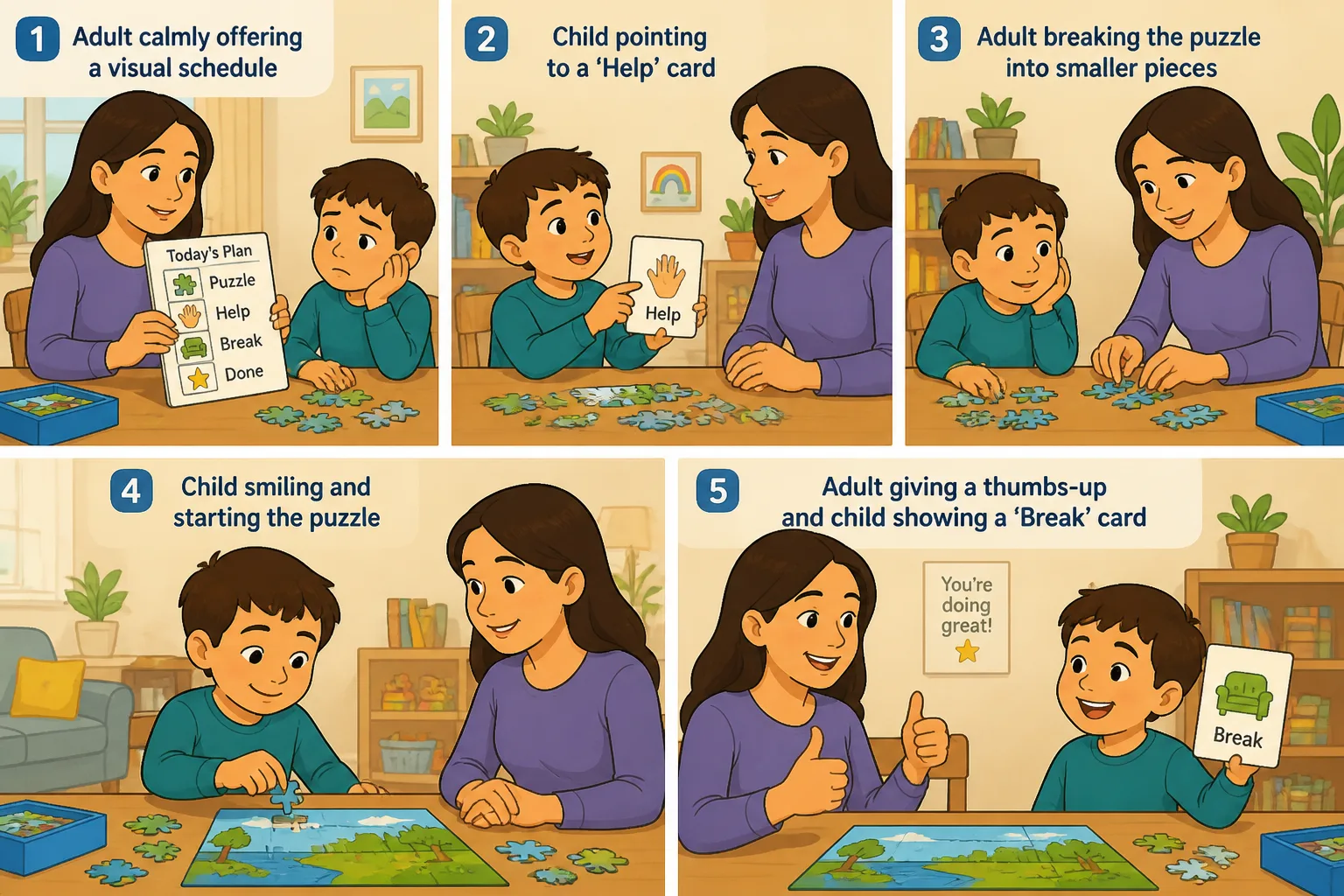
- Use Visual Supports: Visual schedules or step-by-step picture guides can clarify what is expected. For example, showing pictures of each step in a puzzle activity helps the child see the process clearly.
- Break Tasks into Smaller Steps: Large tasks can be intimidating. Dividing them into manageable parts makes starting easier.
- Offer Clear, Simple Instructions: Use short sentences and concrete language. Avoid abstract or multiple-step directions at once.
- Provide Choices: Offering simple choices (e.g., “Do you want to start with the red or blue pieces?”) gives the child a sense of control.
- Prepare the Environment: Reduce sensory distractions or discomfort by adjusting lighting, noise, or seating.
- Allow Processing Time: Give the child a few moments to understand and prepare before expecting action.
Teaching Replacement Skills
Helping children communicate their needs instead of avoiding tasks is key. Teach and reinforce these replacement skills:
- Requesting Help: Teach simple words, signs, or AAC phrases like “Help,” “Show me,” or “I don’t know.”
- Asking for More Time: Use visuals or words like “More time” or “Wait” to express needing extra moments.
- Using a Break Card: A picture or card indicating “Break” can help the child signal when they feel overwhelmed.
- Pointing to Steps: Encourage the child to point to the next step on a visual schedule to guide themselves.
How Adults Can Respond During the Difficult Moment
When a child hesitates or resists starting a task, adults should:
- Stay Calm and Patient: Keep a gentle tone and relaxed body language.
- Acknowledge the Child’s Feelings: Say things like, “I see this feels tricky right now.”
- Offer Support Without Pressure: “Would you like me to help you with the first step?” or “You can take a short break if you need.”
- Use Visuals or Gestures: Point to the schedule or cards to remind the child of their options.
- Reduce Demands Temporarily: If needed, simplify the task or pause and try again later.
After the Child Is Calm
Once the child is calm, adults can:
- Revisit the task gently, using the visual supports and breaking steps down again.
- Celebrate small successes to build confidence.
- Practice replacement communication skills during calm moments.
- Reflect on any triggers to adjust the environment or approach next time.
Practice During Calm Times
Use play or low-pressure situations to practice starting simple tasks with visual aids and communication cards. This builds familiarity and reduces anxiety when real tasks arise.
Environmental Adjustments
Consider sensory needs by adjusting lighting, noise, or seating. Keep materials organized and accessible. A predictable routine helps children know what to expect.
What Adults Should Avoid
- Don’t rush or pressure the child to start immediately.
- Avoid punishment, threats, or shaming for hesitation.
- Don’t assume the child is being defiant or manipulative.
- Don’t force eye contact or speech if the child is nonverbal or uncomfortable.
Individual Differences
Every child is unique. Some may need more sensory accommodations, others more time or different communication supports. Observe and adapt to the child’s preferences and cues.
When to Seek Professional Support
If difficulty starting tasks significantly impacts daily life, causes frequent distress, or is accompanied by other challenges, consider consulting a speech therapist, occupational therapist, or behavioral specialist for tailored strategies.
Key Takeaway
Difficulty starting tasks often signals a child’s need for clearer communication, reduced overwhelm, and supportive teaching. By preparing the environment, teaching replacement skills, and responding calmly, adults can help children begin tasks more confidently and comfortably.
What small change could you try today to help your child feel more ready to start a task?
For more strategies on supporting young children, see our articles on Asking for Help and Using Visual Schedules.
Download the images in this article