Blood-Based Metabolic Testing Shows Promise in Supporting Autism Spectrum Disorder Diagnosis

New Study Explores Metabolic Markers to Aid ASD Diagnosis
A recent clinical trial has investigated whether specific blood metabolites related to folate one-carbon metabolism (FOCM) and thymidylate synthase (TS) pathways can assist in diagnosing Autism Spectrum Disorder (ASD) in young children. Conducted at two developmental pediatric clinics, the study combined metabolic profiling with established clinical assessments to evaluate its diagnostic potential.
Study Design and Participants
The research involved 140 children aged 18 to 60 months who were referred for developmental concerns and placed on a diagnostic waitlist. Each child underwent comprehensive clinical evaluations using gold-standard tools such as the Autism Diagnostic Observation Schedule (ADOS), Mullen Scales of Early Learning (MSEL), and Vineland Adaptive Behavior Scales (VABS). These assessments, alongside medical history and physical examination, were used to confirm or exclude ASD diagnosis according to DSM-5 criteria.
Metabolic Profiling and AI Classification
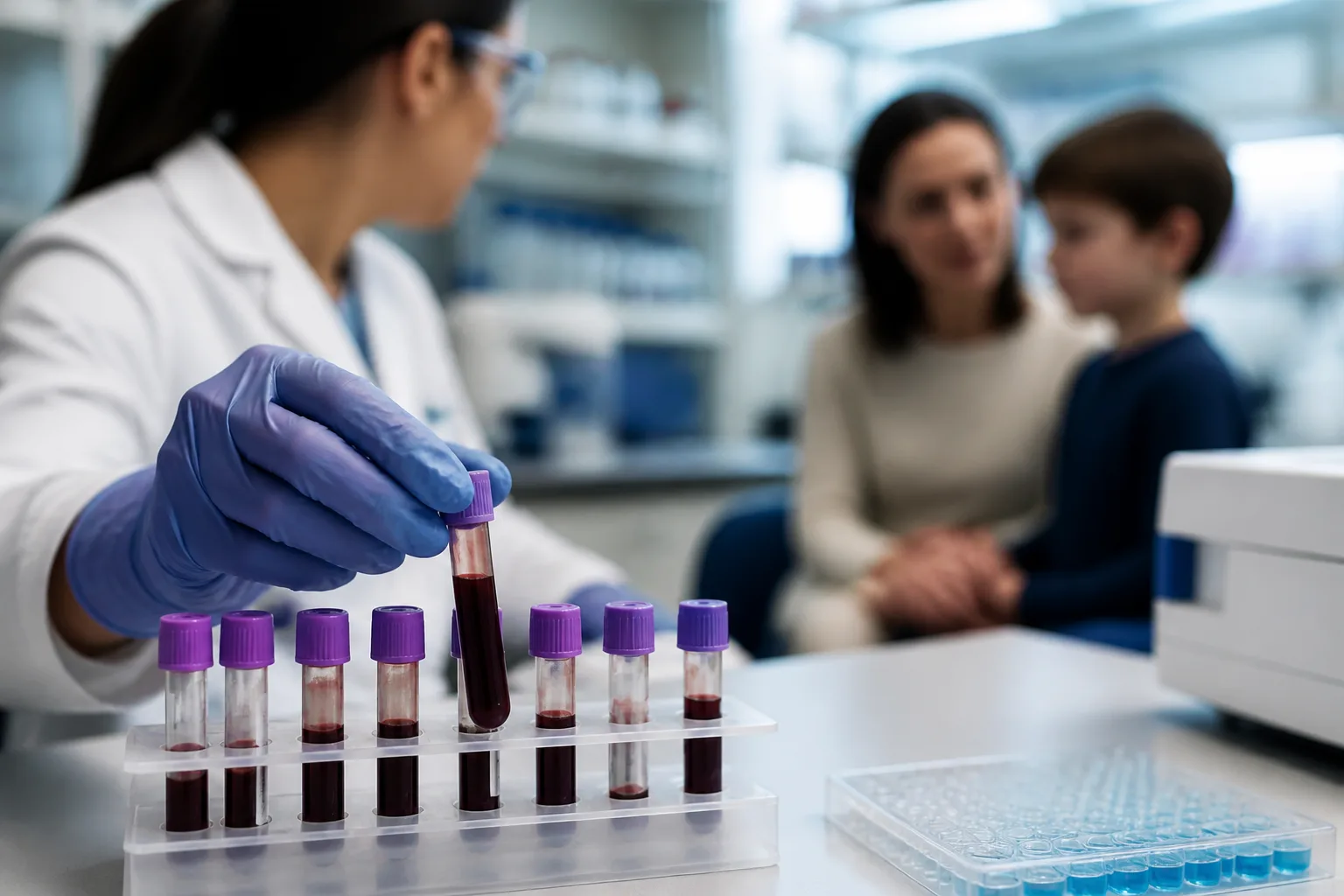
Blood samples were collected to measure metabolites associated with FOCM and TS pathways. Using artificial intelligence-based classification algorithms, researchers analyzed these metabolic profiles to differentiate between children diagnosed with ASD and those with non-ASD developmental delays. Among the participants, 114 were diagnosed with ASD, while 26 had other developmental delays.
The AI models achieved over 80% accuracy in predicting ASD diagnosis based on the metabolic data, suggesting a promising role for blood-based biomarkers in supporting clinical evaluations.
Implications for Families and Clinical Practice
This approach could potentially provide an objective, physiological measure to complement behavioral assessments, which are currently the primary method for diagnosing ASD. Early and accurate diagnosis is crucial for timely intervention, and blood-based tests might help reduce diagnostic delays.
Limitations and Future Directions
While the findings are encouraging, the authors emphasize the need for replication in larger and more diverse cohorts, particularly including more children with non-ASD developmental conditions. The current study’s sample size and composition limit the generalizability of results. Further research is necessary to validate these metabolic markers and refine AI algorithms before clinical implementation.
Study Registration and Ethical Approval
The clinical trial, known as the Metabolic Autism Prediction (MAP) Study, was registered at clinicaltrials.gov (NCT04672967) and received Institutional Review Board approval from the Biomedical Research Alliance of New York (BRANY) on August 12, 2021 (approval number: A21-10-282-888).
For more detailed information, see the original publication on PubMed.
Download the images in this article