
What This Skill Teaches
Learning words for family members helps children understand and talk about the important people in their lives. This skill teaches children to recognize and use words like “mom,” “dad,” “brother,” and “sister.” These words are part of everyday conversations and help children connect with family and others.
Why This Skill Matters
Family member words are some of the first words children learn because family is central to their world. Knowing these words supports social language, helps children express their feelings and needs, and builds early vocabulary. It also lays the foundation for talking about relationships and people in the community.
What Parents May Notice
- Your child may point to or look at family members when you name them.
- They might use gestures, pictures, or sounds to refer to family members before using words.
- Children may enjoy hearing stories or singing songs about family.
- Some children might be shy or take time to use these words, especially if they have sensory or communication differences.
The Learning Set
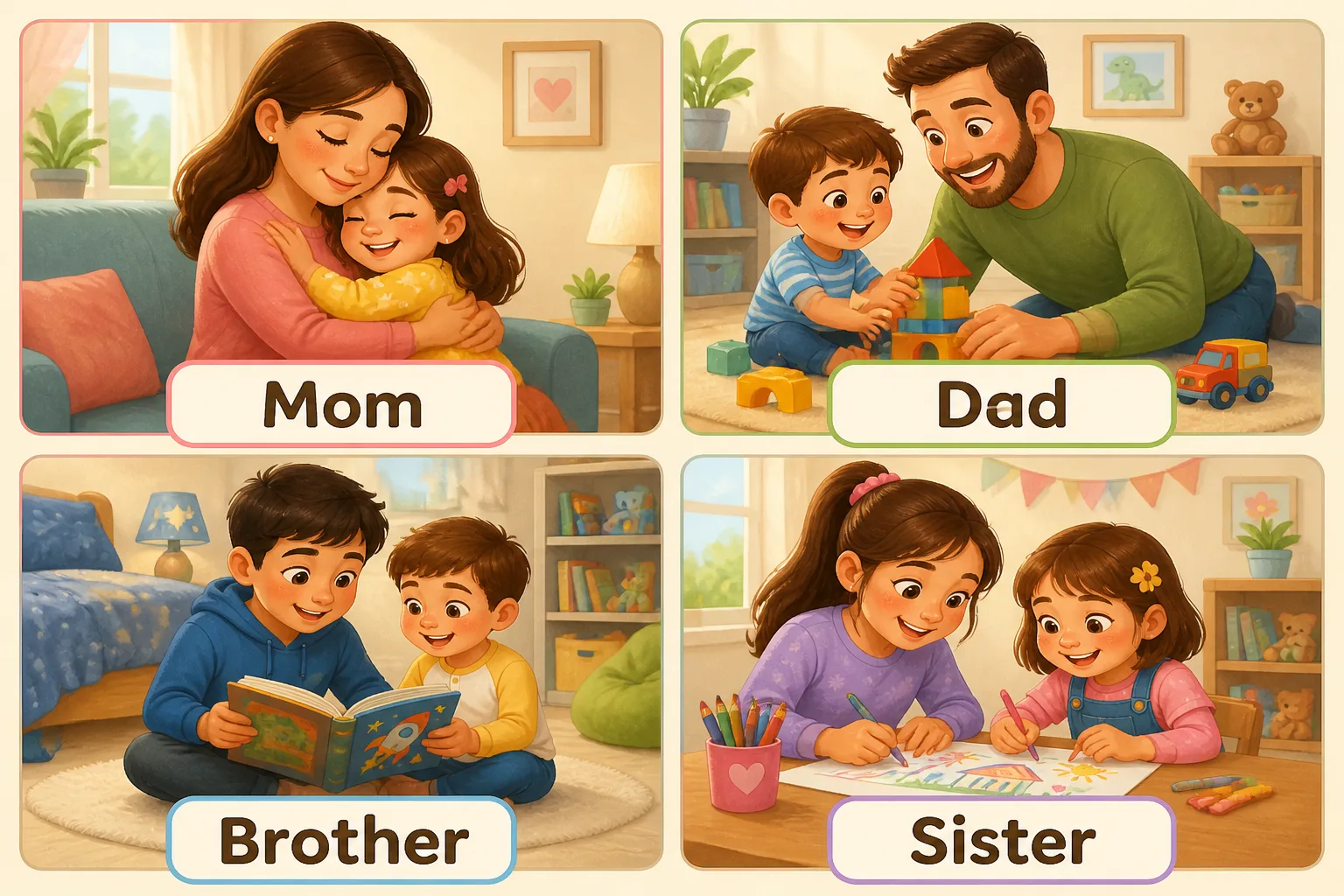
This article focuses on four key family member words:
- Mom – The child’s mother or female caregiver.
- Dad – The child’s father or male caregiver.
- Brother – A male sibling.
- Sister – A female sibling.
How to Model the Language
- Use simple, clear language: say “Mom is here” or “This is Dad.”
- Point to the family member when naming them.
- Use the child’s preferred communication method, such as gestures, signs, or AAC, while modeling words.
- Repeat words naturally during daily routines without pressure.
- Expand on the child’s communication gently, for example, if the child says “mom,” you can say “Yes, Mom is cooking.”
Easy Ways to Practice at Home
- Look at family photos together and name each person.
- Sing simple songs about family members.
- Use storybooks or picture cards featuring families.
- During play, use dolls or figures to represent family members and name them.
- Encourage the child to point or use AAC to choose who they want to talk about.
Helpful Examples to Say
- “Mom is cooking dinner.”
- “Dad is reading a book.”
- “Brother is playing outside.”
- “Sister is drawing a picture.”
Supporting AAC, Gestures, and Other Communication
- Provide AAC devices or picture boards with family member words and images.
- Use simple signs for family members if the child uses sign language.
- Encourage pointing or eye gaze to family member pictures during conversation.
- Respond positively to any form of communication about family members.
What to Avoid
- Don’t pressure the child to say words aloud.
- Avoid quizzing or rapid-fire questions like “Who is this? Say mom.”
- Don’t correct or interrupt the child’s communication attempts harshly.
- Don’t assume the child understands family roles; use clear visuals and examples.
Real-Life Example
During breakfast, a child points to their mother. The parent says, “Yes, Mom is here. Mom is making your breakfast.” The child smiles and uses their AAC device to select the word “mom.” The parent responds warmly, “You want Mom? Here she is!” This interaction supports understanding and communication without pressure.
When Extra Support May Help
If your child has difficulty recognizing or using family member words after regular practice, consider consulting a speech-language pathologist. They can provide personalized strategies and supports tailored to your child’s needs.
Key Takeaway
Learning words for family members is a meaningful step in building your child’s language skills. Use simple, natural language, support all communication methods, and make learning about family fun and pressure-free.
What is your child’s favorite family word to use or hear? Share your experiences to help others!
Download the images in this article