
What This Skill Teaches
Following one-step directions is an important early language skill that helps children understand and respond to simple instructions. This skill involves listening, processing language, and taking action. It supports communication, independence, and participation in everyday routines.
Why This Skill Matters
Being able to follow one-step directions helps children engage with their environment and caregivers. It lays the foundation for more complex language skills like following multi-step directions, answering questions, and conversational turn-taking. It also supports safety and cooperation in daily life.
What Parents May Notice
- The child may respond well to simple instructions like “Sit down” or “Pick up the ball.”
- The child might use gestures, AAC, or other communication methods to show understanding.
- The child might need extra time to process the direction before acting.
- Sometimes the child may not respond if the instruction is unclear or too fast.
The Learning Set
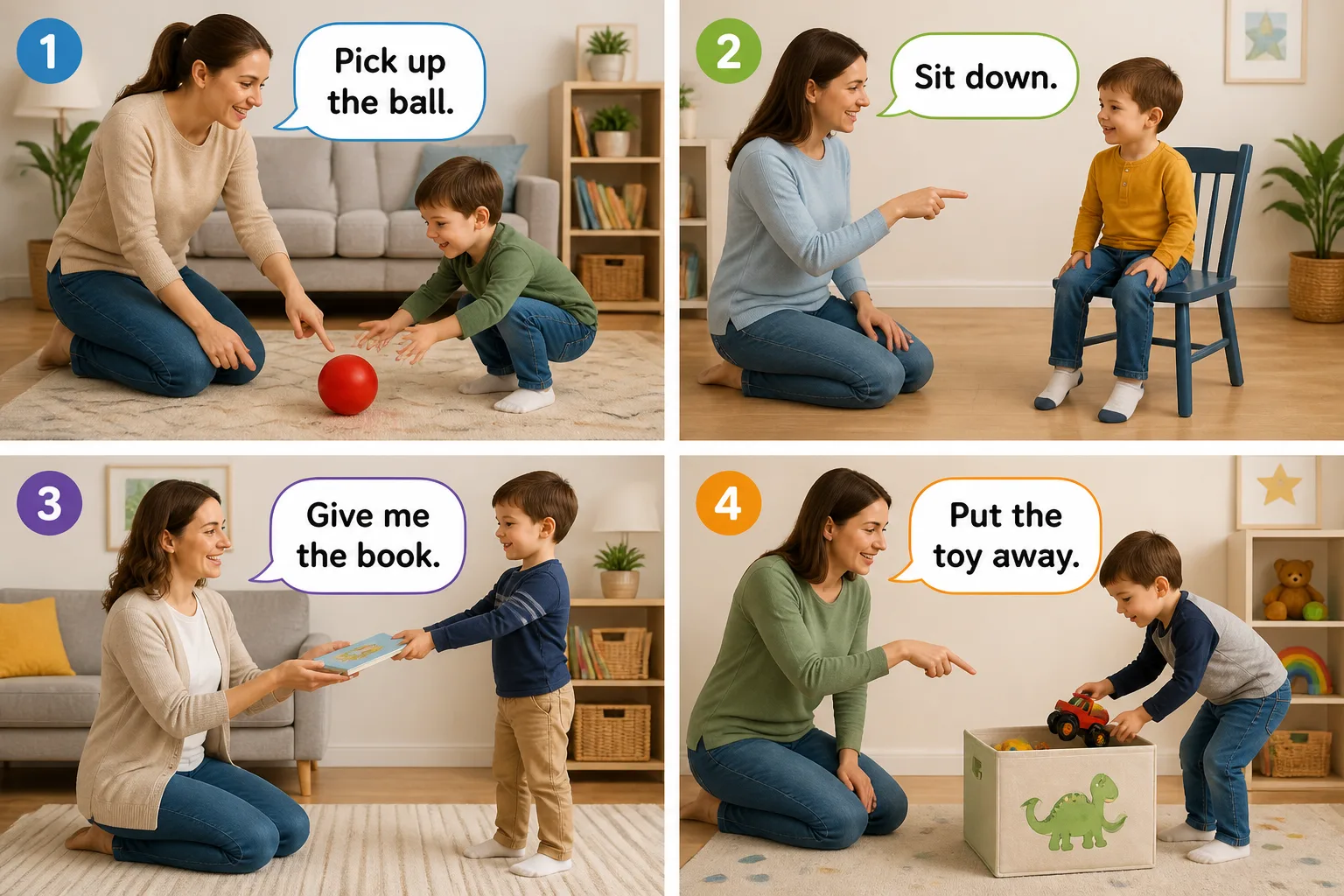
This article focuses on four common one-step directions that are easy to practice at home:
- Pick up the ball – encouraging the child to identify and pick up a specific object.
- Sit down – prompting the child to sit on a chair or designated spot.
- Give me the book – teaching the child to hand an object to another person.
- Put the toy away – helping the child practice cleaning up by placing toys in a box.
How to Model the Language
- Use clear, simple phrases with a calm tone.
- Pair words with gestures, such as pointing or demonstrating the action.
- Show the object you are talking about to help the child connect words with meaning.
- Wait patiently for the child to respond, allowing extra processing time.
- Repeat the direction naturally during daily routines without pressure.
Easy Ways to Practice at Home
- During playtime, ask your child to pick up toys or objects using the phrase “Pick up the ball” or similar.
- At mealtime or rest time, say “Sit down” to encourage the child to take a seat.
- Use books or favorite items to practice “Give me the book” or “Give me the toy.”
- Make cleanup a fun game by saying “Put the toy away” and helping your child put toys in the box.
Helpful Examples to Say
- “Can you pick up the ball?”
- “Please sit down here.”
- “Give me the book, please.”
- “Let’s put the toy away together.”
Supporting AAC, Gestures, and Other Communication
- Allow your child to use AAC devices, signs, or gestures to respond to directions.
- Respond positively to any form of communication, reinforcing understanding.
- Use visual supports like pictures or objects to accompany verbal directions.
- Encourage your child to indicate “done” or “help” if they need assistance.
What to Avoid
- Do not rush your child or demand immediate responses.
- Avoid overly complex or multi-step directions before the child is ready.
- Don’t require spoken repetition; accept any communication method.
- Don’t quiz or pressure the child with repeated questioning.
Real-Life Example
During playtime, a parent says, “Pick up the ball,” while pointing to a bright red ball on the floor. The child looks at the ball, reaches out, and picks it up. The parent smiles and says, “Great job!” This natural interaction supports language understanding and builds confidence.
When Extra Support May Help
If your child consistently struggles to follow simple one-step directions or shows limited understanding, consider consulting a speech-language pathologist. They can assess receptive language skills and recommend tailored strategies or therapy.
Key Takeaway
Following one-step directions is a foundational language skill that supports communication and independence. Use clear language, gestures, and everyday routines to model and practice these directions in a low-pressure, supportive way.
What simple one-step direction does your child respond to best? Share your experience!
Download the images in this article