
Following up after a school meeting is a vital part of effective parent advocacy and collaboration. Whether the meeting was about your child’s Individualized Education Program (IEP), classroom supports, or behavioral strategies, knowing what to do next helps ensure that agreed-upon plans are implemented and that your child receives the support they need.
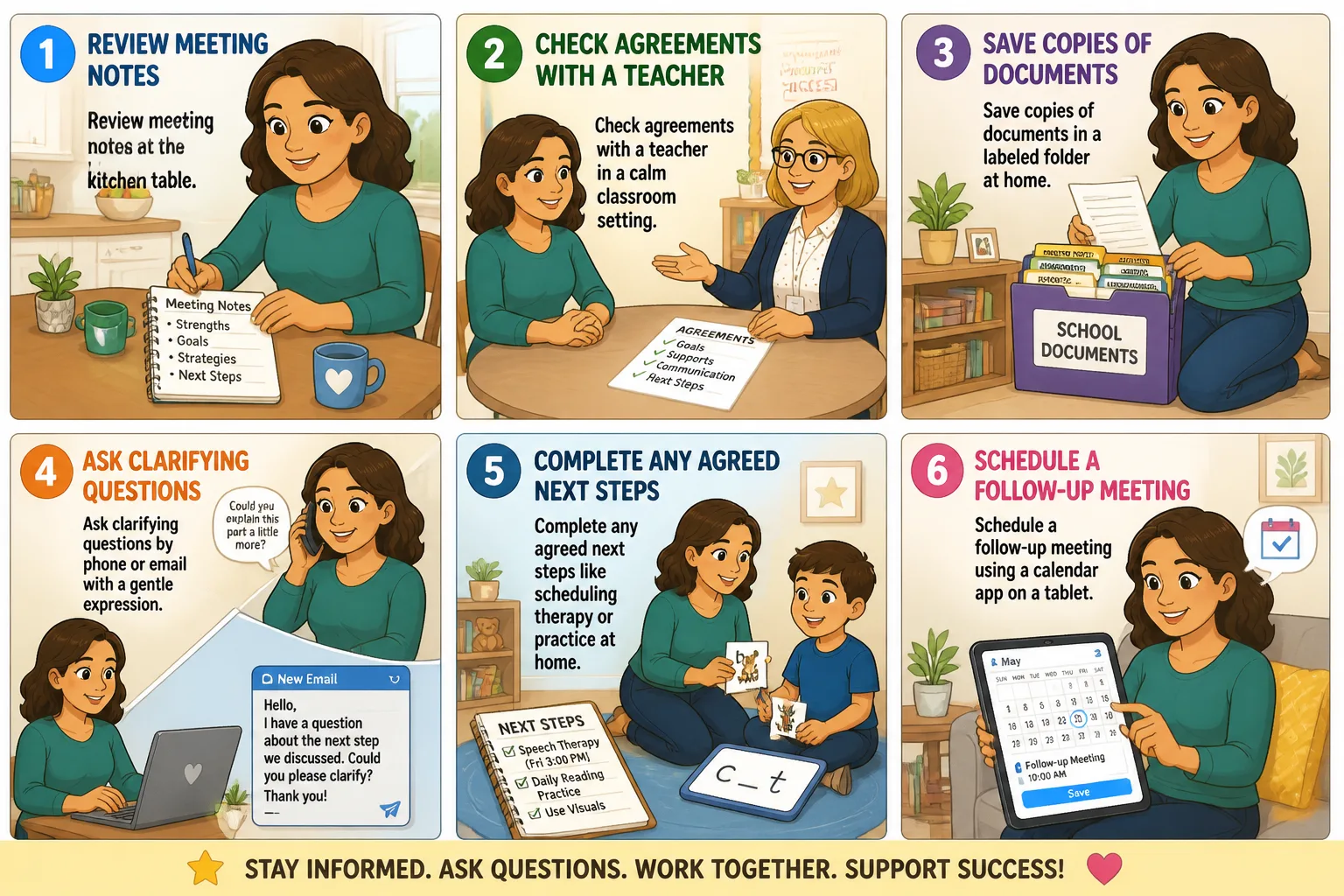
1. Review Meeting Notes Carefully
As soon as possible after the meeting, take time to read through any notes you took or were provided. This helps you remember key points, commitments, and any concerns that were raised. If you didn’t take notes during the meeting, ask for a summary or minutes from the school staff.
2. Check Agreements and Clarify Any Unclear Points
Confirm what supports, accommodations, or actions were agreed upon. If anything is unclear, don’t hesitate to reach out to the teacher, case manager, or other professionals to ask respectful clarifying questions. For example, you might ask, “Can you explain how the new communication strategy will be used daily?”
3. Save Copies of All Documents
Organize and keep copies of all meeting documents, plans, and communications in a dedicated folder. This helps you track progress over time and have important information handy for future meetings or discussions.
4. Ask Questions to Understand What Happens Next
It’s important to know the timeline and next steps. You can ask questions like, “When will the new supports begin?” or “Who should I contact if I have questions about the plan?” Clear communication prevents misunderstandings and helps you stay involved.
5. Complete Any Agreed Next Steps
If the meeting resulted in tasks for you, such as practicing a strategy at home or scheduling therapy appointments, make a plan to complete these. Your active participation reinforces the partnership between home and school.
6. Schedule a Follow-Up Meeting
Plan when to check in again to review progress. Setting a date for a follow-up meeting or call keeps everyone accountable and shows your ongoing commitment to your child’s success.
Following these steps helps parents stay organized, informed, and engaged in their child’s education. It also fosters respectful collaboration with school professionals, which benefits your child’s learning and well-being.
For more guidance on preparing for school meetings or asking for supports, see our articles Preparing for a School Meeting About Classroom Support and Asking for Visual Supports at School.
What is one question you would want to ask after your next school meeting to better support your child?
Download the images in this article